
Review · SWEDEN
Abisko: National Park Northern Lights Photo Tour
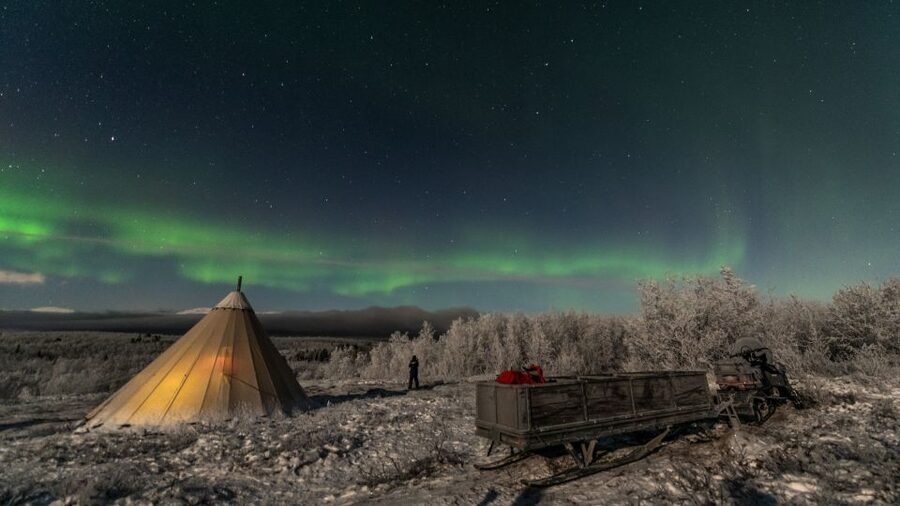
Abisko’s big advantage is not just its far-north location. The area is known for clear skies, and this four-hour outing gives you several ways to search for the aurora: on foot near a teepee, by 4×4 van, or behind a snowmobile on a cozy sleigh. I especially like the small group of eight and the fact that you get a preset DSLR, tripod, backpack, warm overalls, and a head lamp. You are not standing in the snow with only a phone and crossed fingers.
I also like the practical teaching. Guides such as Miquel, Marco, Mateo, Oliver, and Fabian have helped participants understand both camera settings and solar activity. The main drawback is the usual one with northern lights trips: clouds and weak aurora can win. Bring serious winter boots, your own SD card, and enough warm clothing to wear under the supplied overalls.
Key points before you book
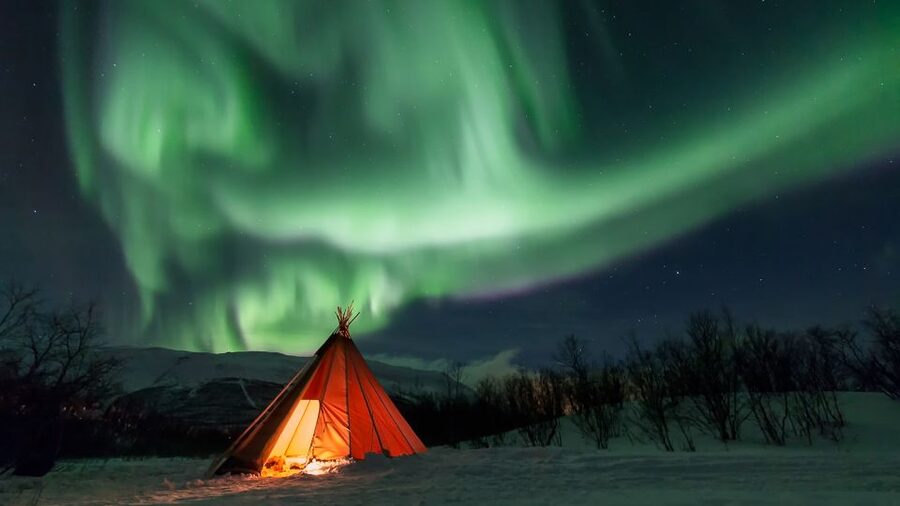
- Three ways to chase the aurora: Walk to a nearby teepee, ride in a 4×4 van, or travel by snowmobile-pulled sleigh to a wilderness camp.
- A camera is supplied: You receive a DSLR, lens, tripod, backpack, and basic instruction before photographing.
- Only eight people per group: The small format makes it easier to get help with camera settings and stay in touch with the guide.
- At least three hours outside searching: The full activity lasts four hours, with a minimum of three hours devoted to finding and photographing the lights.
- Warmth is part of the plan: Overalls, a head lamp, hot drinks, snacks, and access to warm shelter help, but you still need insulated boots and layers.
- The aurora is never guaranteed: Guides may find openings in the cloud, but weather and solar activity remain beyond anyone’s control.
Why Abisko is a smart place to hunt for the aurora
Abisko sits in Norrbotten County, in Swedish Lapland, inside and around Abisko National Park. Its reputation comes from a tendency toward clear skies, which matters just as much as being north enough to see strong auroral activity.
That does not mean you are guaranteed a show. The northern lights need darkness, suitable cloud conditions, and enough solar activity. The value of a guided outing is that you do not have to interpret every forecast app on your own or guess where a break in the clouds might appear.
The guides monitor conditions and can change the evening’s plan. One night may call for a short walk to a nearby teepee. Another may justify a drive in the 4×4 van or a ride to a wilderness camp. This flexibility is one of the strongest reasons to book a guide instead of simply stepping outside your hotel.
You also get a sense of the place beyond the lights. During the evening, the guide discusses Lapland’s natural setting, how local people interact with nature, and cultural interpretations of the aurora held in the region over past centuries. The focus is not only on taking a picture. It is also on understanding why this strange glow has mattered to people who have lived beneath it for generations.
More Northern Lights Photography in the world:
- #1 Northern Lights Tour In Iceland from Reykjavik with PRO photos
★ 4.5 · 2,887 reviews - Tromsø: Northern Lights Bus Tour with Free Photography
★ 4.5 · 1,642 reviews - Rovaniemi: Aurora Hunt – Free Photos, 100% Guaranteed Refund
★ 4.8 · 1,002 reviews
Starting the evening in Abisko
Pickup is offered from five locations in Abisko:
- Abisko Guesthouse
- Abisko Mountain Lodge
- Hotell Fjället
- Abisko Fjällturer, also listed as Abisko.net
- STF Abisko Turiststation
The stated pickup time at Hotell Fjället is 7:10 PM. Pickup from the other listed locations is generally between 7:30 and 7:45 PM. Check your exact meeting point carefully, since this tour does not pick up in Kiruna.
That last detail is important. If you are staying in Kiruna, you will need to arrange your own transport to Abisko before joining the activity. The pickup system works well for people already based in Abisko or Björkliden, but it is not a Kiruna excursion with return transportation.
Once the group is together, the guide explains the plan and checks the conditions. You are traveling into a cold Arctic environment, so this is a useful time to say if you have physical limitations. Walking in snow and standing outside for long periods can be tiring, even with warm clothing.
Three ways to search for the northern lights
The tour’s main feature is its three-part approach to aurora hunting. The exact choice depends on the weather and the aurora forecast, so you should not expect to use all three methods in one evening.
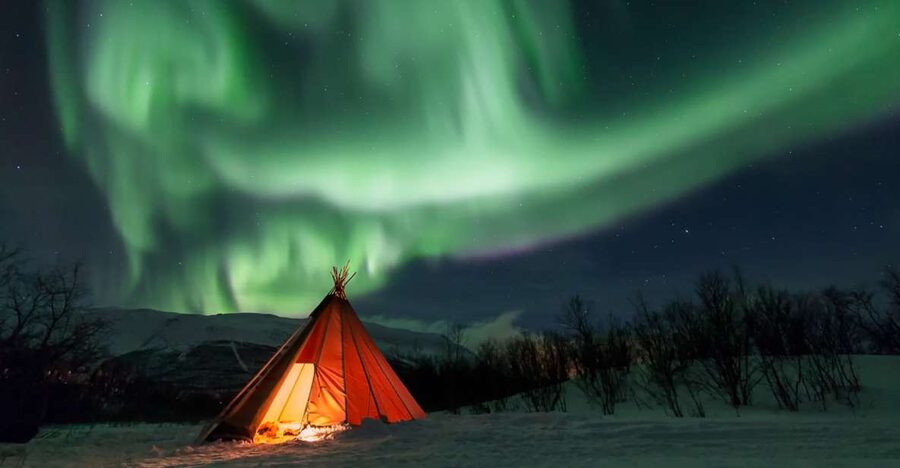
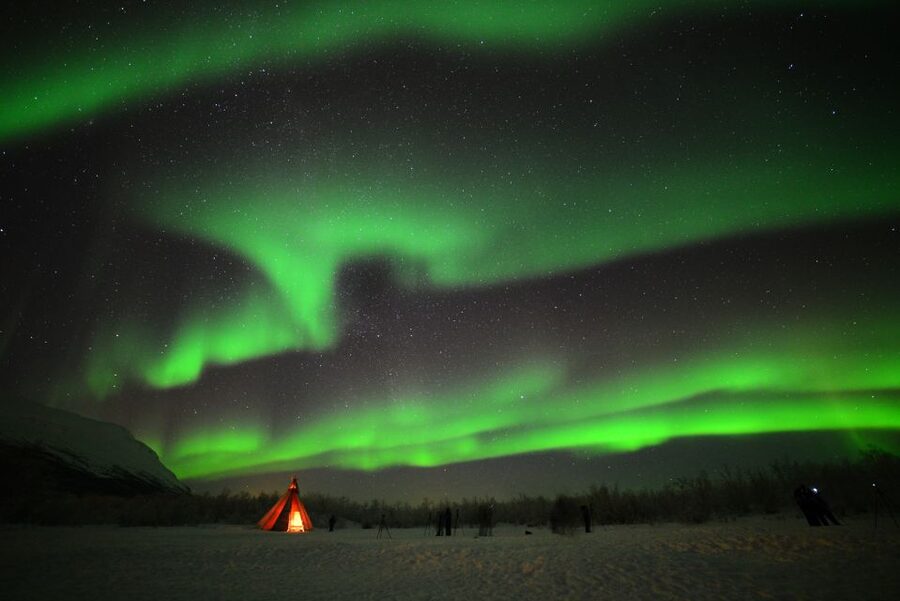
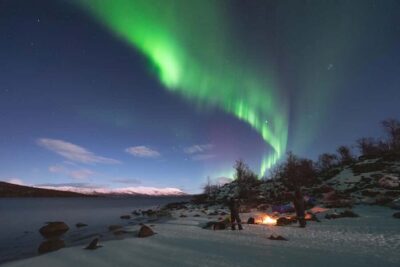
A walk to the nearby teepee
If conditions are promising close to Abisko, you may walk to a nearby teepee or fixed camp. This keeps the outing simple and gives you more time under the sky instead of spending the evening in a vehicle.
A shelter with a fireplace can make a major difference. Several participants found it useful to move in and out of the warm tent while waiting for the sky to change. A fire also gives the evening a natural pause: warm up, sip a drink, check the camera, then step out again when the guide spots activity.
The tradeoff is that a nearby site may not offer the same range as a mobile chase. If cloud cover blocks the view, the guide may need to use another option.
More Photography Tours in the world:
- Barcelona E-Bike Photography Tour
★ 5.0 · 843 reviews - Tromso: Northern Lights Photography Tour
★ 4.2 · 843 reviews - Tromsø: Northern Lights Photography Tour
★ 4.8 · 788 reviews - Rovaniemi: Aurora Hunting Photography Tour with Barbeque
★ 4.4 · 433 reviews
A 4×4 van chase
The van gives the guide more freedom to search for clearer skies around Abisko National Park. This is especially useful when one area is cloudy but another may have an opening.
A moving chase can improve your odds, but it also means some time is spent driving. The guide has to balance road time against the need to stop, set up tripods, explain the camera, and watch the sky. You are not buying a guaranteed chase across all of northern Sweden. You are joining a focused search in and around Abisko.
The scenic drive is part of the experience, but the real purpose is practical: find a darker or clearer place where the aurora can be seen and photographed.
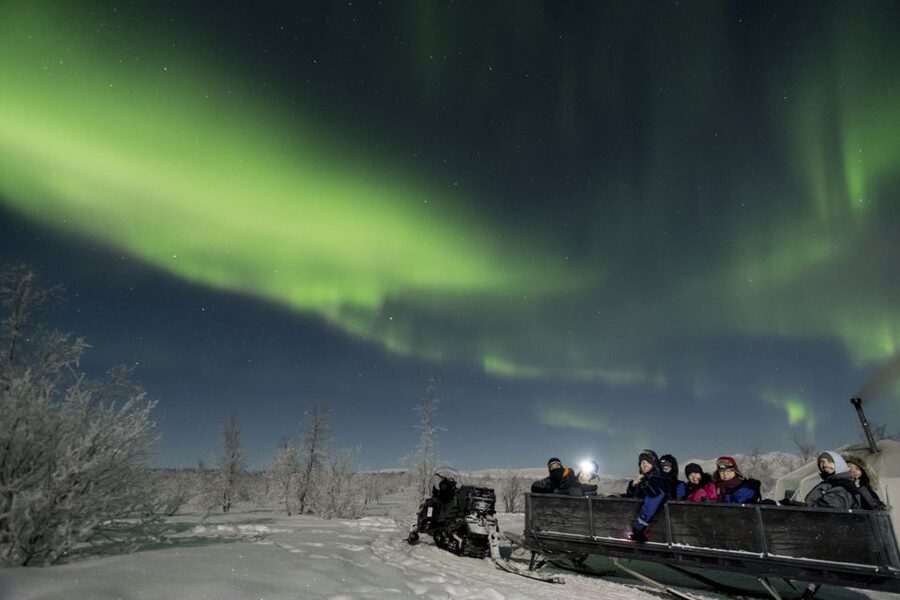
A snowmobile-pulled sleigh
When conditions suit it, you ride in a cozy sleigh pulled behind a snowmobile to a wilderness camp. This is the most distinctive transport option and gives the evening a strong Arctic feel without requiring you to drive or operate a snowmobile yourself.
The sleigh can also make the journey part of the outing rather than just a transfer. You travel through the winter darkness toward a camp, then settle in to watch the sky. Still, sleigh use depends on weather and operating conditions, so it should be viewed as one possible format, not a promise for every departure.
Learning to use the supplied DSLR
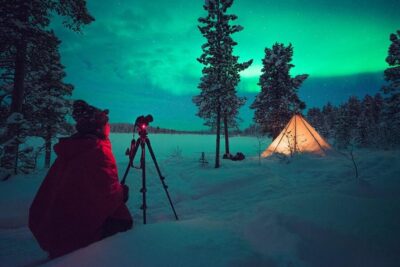
The camera setup is a real advantage for anyone who wants more than a blurry phone picture. Lights Over Lapland supplies a DSLR camera and lens, along with a tripod and backpack. The equipment is preset to help you photograph the aurora, and the guide gives you a short lesson before you begin.
You do not need to arrive as an experienced photographer. Guides help with the basic skills needed to find and photograph the lights. Miquel and Fabian were praised for explaining the camera clearly, while Oliver was singled out for combining photography skill with friendly guidance.
You should still bring your own 16 GB SD memory card. It is not included, although cards may be available to buy on the night. That is an easy detail to miss and an avoidable source of stress. If you want a wider field of view, a deluxe ultra-wide 14 mm lens upgrade is also available for an added cost.
The provided camera is useful because you can concentrate on the sky instead of trying to make unfamiliar manual settings work in the dark. The tripod matters just as much. Aurora photographs need a steady camera, and holding a camera by hand usually produces a poor result.
The guide can also explain basic terms linked to solar activity. Marco helped participants understand the measurements and forecasts used to monitor the sun, while Miquel was praised for explaining both the science and the photography. This is valuable even if the lights remain faint, because you leave with a better sense of what you are watching.
What happens when the sky refuses to cooperate
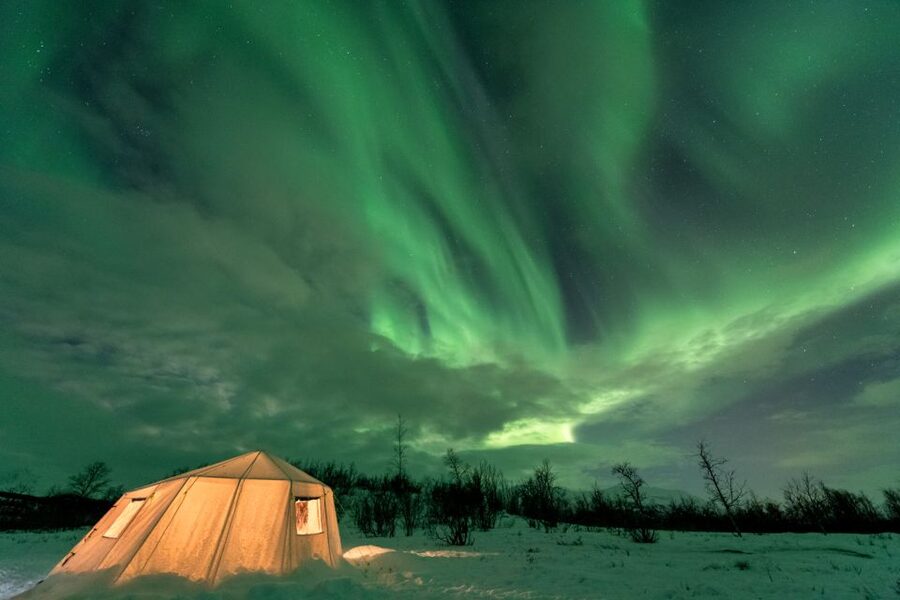
Cloud and snow are part of the risk. One outing had unusually cloudy conditions but still produced a few glimpses of the aurora. Another began in fog and looked disappointing before the sky opened into a much stronger display, including two coronas.
That is the right way to think about this tour. The guide can read conditions, drive to a better location, and keep looking. The guide cannot control the cloud or summon solar activity. You should book this as an active search, not as a theater performance with a fixed start and guaranteed finale.
The best guides keep the evening worthwhile even when the lights do not appear. On a night with no aurora, you may still learn to take night photographs, hear about the local terrain and culture, and spend time in a warm shelter with a drink and snack. That does not replace the lights, but it is better than being left outside with no plan.
The experience has received a 4.6 rating from 86 reviews, with repeated praise for the guides’ patience, camera help, optimism, and effort in difficult weather. The names that come up most often include Miquel, Marco, Mateo, Fabian, Oliver, Anne, Alex, Michel, Gavin, and Sarah. Guide assignments can change, so you cannot request a particular person with certainty, but the staff experience appears to be a major part of the outing.
Warmth, shelter, and the small comforts
The tour provides warm overalls, a head lamp, a camera backpack, a tripod, a warm drink, and a small snack. Fika-style refreshments may include warm lingonberry juice and gingerbread cookies. These are modest touches, but they matter when you are spending several hours outside in winter.
The overalls are not a substitute for proper clothing. Wear warm layers underneath and bring insulated winter boots. The operator specifically advises heavy-duty Arctic boots, with rental boots available during tours. The supplied gear does not include boots, and cold feet can end an evening faster than a weak aurora.
You should also be ready for snow and uneven winter conditions. If walking is difficult for you, tell the guide before departure. The group is limited to eight people, which helps the guide keep track of everyone and offer individual help, but it does not remove the physical demands of the Arctic.
A fixed tent with a fireplace may be available at the chosen camp or viewing site. It is a welcome place to warm up, but you will still need to spend time outside to see and photograph the sky.
Is $176 a fair price?
At $176 per person, this is not the cheapest way to look for the northern lights. The price makes more sense when you add up what is included: a professional guide, pickup in Abisko or Björkliden, at least three hours of aurora searching, a DSLR, lens, tripod, backpack, warm overalls, head lamp, drink, snack, and transport by 4×4 van or sleigh when conditions call for it.
You are also paying for local judgment. A self-guided attempt costs less, but you may not know which forecast matters, where cloud cover is likely to break, or how to set up a camera. You would also need to supply your own photography equipment and winter transport.
The value is strongest for first-time aurora watchers, people without suitable camera gear, and anyone who wants an organized evening from hotel pickup to return. Experienced photographers with a full camera kit may find the included DSLR less useful, though the local guidance and search strategy can still make the fee worthwhile.
The main financial risk is paying for a night when the aurora stays hidden. That risk applies to every northern lights outing. This tour softens it with photography instruction, cultural information, shelter, and a guide who keeps searching rather than simply accepting the first cloudy view.
Returning to your hotel after four hours
The activity lasts four hours and returns you to one of the same five Abisko drop-off locations: Hotell Fjället, STF Abisko Turiststation, Abisko Guesthouse, Abisko Fjällturer, or Abisko Mountain Lodge.
The schedule is long enough to allow time for transport, instruction, waiting, and repeated checks of the sky. A shorter outing might catch a lucky burst, but it would give the guide less room to move when conditions are poor. The minimum of three hours spent searching and photographing is a useful promise because it keeps the night from becoming mostly a briefing and a quick stop.
Do not plan a tight late-night connection after the tour. Exact return timing can depend on the weather, driving, and how long the group waits for a possible opening in the sky.
Who should book this Abisko aurora tour?
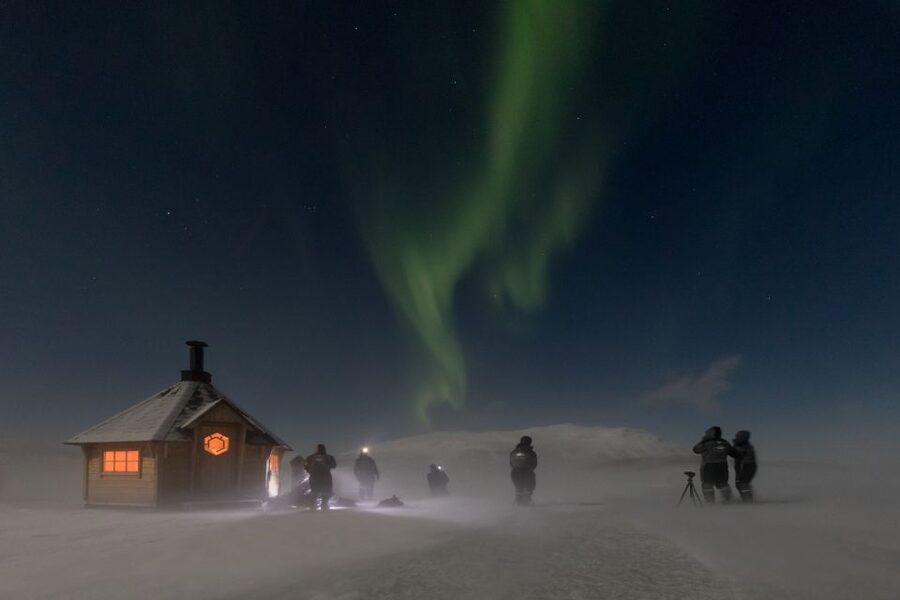
I would choose this outing if you are staying in Abisko, want to photograph the aurora, and prefer having equipment and transport handled for you. It is also a good fit if you want more than a quick viewing stop. The guide talks about solar activity, local nature, and cultural beliefs, so the evening has some substance even between aurora sightings.
The small group suits you if you want to ask questions or need help with camera settings. Beginners should feel comfortable, since the camera is prepared in advance and the lesson covers the basic skills.
I would think twice if you dislike cold, snow, waiting, or uncertain results. You also need to bring proper boots and layers, and children under 10 are not accepted. If you are staying in Kiruna, the lack of pickup there adds a separate transport problem.
Should you book it?
Book this tour if you want the strongest practical support for an aurora night in Abisko. The combination of a small group, flexible search methods, supplied camera gear, warm clothing, and guides who keep working through cloud gives you a better organized attempt than simply walking outside your hotel.
Just keep your expectations honest. No company controls the sky. Bring your own SD card, wear serious winter boots, dress under the overalls, and treat the evening as a guided Arctic search. If the aurora appears, you may come away with photographs and a memorable show. If it does not, you will still have learned how to photograph the night sky and how locals understand the lights above Abisko.
FAQ
How long does the Abisko Northern Lights Photo Tour last?
The tour lasts four hours, including transport, instruction, aurora searching, photography, and the return to your Abisko accommodation.
How much does the tour cost?
The listed price is $176 per person.
Where does pickup take place?
Pickup is available from Abisko Guesthouse, Abisko Mountain Lodge, Hotell Fjället, Abisko Fjällturer, and STF Abisko Turiststation.
Is pickup available from Kiruna?
No. Pickup from Kiruna is not offered.
What time is pickup?
Pickup from Hotell Fjället is at 7:10 PM. Pickup from STF Abisko Turiststation, Abisko Guesthouse, Abisko Fjällturer, and Abisko Mountain Lodge is between 7:30 and 7:45 PM.
Is camera equipment included?
Yes. The tour includes a DSLR camera and lens, tripod, and camera backpack. A deluxe ultra-wide 14 mm lens upgrade is not included.
Do I need to bring an SD card?
Yes. A 16 GB SD memory card is not included. Cards may be available to purchase during the tour.
What should I wear?
Bring warm clothing to wear under the supplied overalls and wear warm insulated winter boots. Heavy-duty Arctic boots are available to rent during the tour.
Can children join the tour?
Children under 10 years old are not permitted.
Is the northern lights display guaranteed?
No. The aurora depends on solar activity and weather conditions, including cloud cover. Guides search for clearer skies and may change locations, but sightings are not guaranteed.
More national parks to photograph around the world
- Hiking in Riisitunturi National Park with Photographer
★ 5.0 · 114 reviews - Private Guided Photography & Walking Tour of Zion National Park
★ 5.0 · 75 reviews - From Rovaniemi: Private Photoshoot in the Lappish Wilderness
★ 5.0 · 17 reviews - Bovec: Canyoning in Triglav National Park Tour + Photos
★ 4.9 · 9 reviews
Fresh shoots around the world
- Kiruna: Northern Light Photo Tour with Equipment★ 5.0 · 7 reviews
- Kochi Insta Photo Walk with Tuk Tuk Ride Experience★ 5.0 · 2 reviews
- Koh Samui: Private Photoshoot for Couples & Families★ 5.0 · 17 reviews
- Kiruna: Wildlife and nature photography★ 4.5 · 7 reviews
- Kamakura Tour with Pro Photographer: Anime Train & Fuji view★ 5.0 · 2 reviews
- Jökulsárlón: Glacier Hike, Ice Cave, and Photoshoot Package★ 5.0 · 4 reviews
- Kanazawa: Private Photoshoot with Professional Photographer★ 5.0 · 2 reviews
- Jaipur: Private Instagram Tour of Top Photography Spots★ 4.8 · 8 reviews
Sweden Photo Tours & Photoshoots, frame by frame.
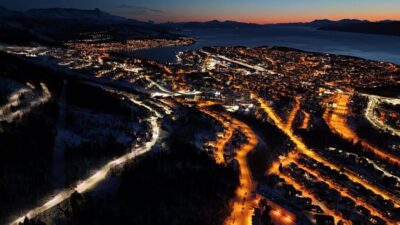
Kiruna: Northern Light Photo Tour with Equipment
Read our review →This shoot also appears in