Review · NEW DELHI
Delhi: Heritage Photography Tour
Delhi’s best photo opportunities are not always at its busiest monuments. This two-hour walk moves from the elegant Safdarjung Tomb through Lodhi Garden, where tombs, flowers, old trees, a lake, and painted walls give you far more variety than a single monument visit.
I like the mix of architecture and everyday color, and I like that the guide leaves room for you to make your own photographs. The $14 price is easy to justify if the tour runs well, but one serious booking record reports that the guide did not arrive, so dependable confirmation matters.
Key points at a glance
- Safdarjung Tomb meeting point: Start at the entrance gate and ticket counter, with the monument setting an immediate photographic mood.
- Lodhi-era monuments: Photograph Bara Gumbad, Shish Gumbad, and Sikandar Lodi Tomb while hearing stories about Delhi’s past.
- Athpula Bridge and lake: Add water, reflections, and a change of pace to the walking route.
- Rose Garden stop: Look for flowers, trees, and softer nature photographs inside Lodhi Garden.
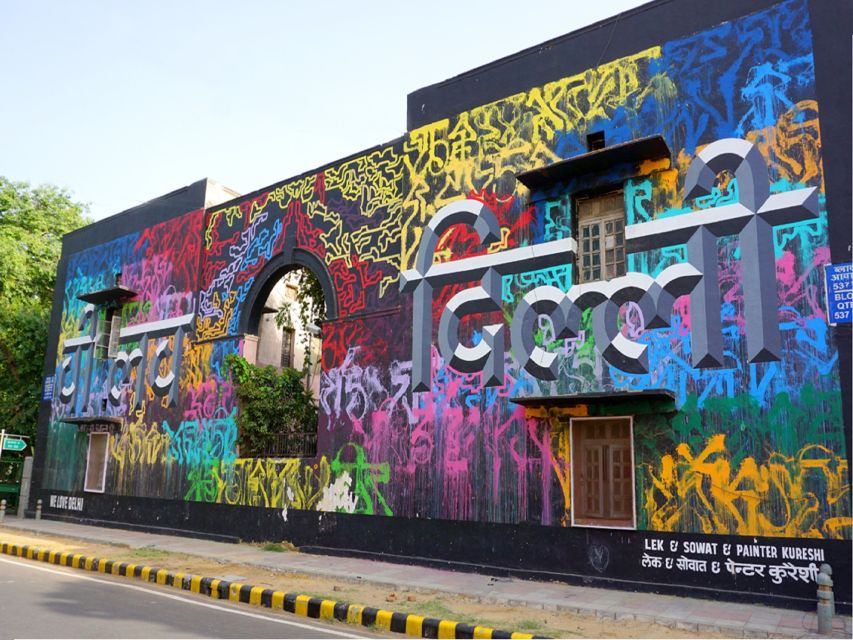
- Lodhi street art: Finish with painted walls covering subjects from nature and the origin of the world to life and death.
- Small practical cost: The $14 fee includes entry, a guide, photography tips, and one hot beverage, but not water or transport.
Why this Delhi walk works for photographers
Delhi can overwhelm you with traffic, noise, monuments, and people moving in every direction. A guided photography walk gives you a simple job: slow down and look carefully.
This route is built around places you could easily pass if you were exploring alone. It is not a greatest-hits tour focused on Delhi’s biggest sights. Instead, it uses a string of monuments and garden scenes to give your camera different subjects within a compact two-hour outing.
You can expect photographs with strong variety:
- Pale stone and carved details at Safdarjung Tomb
- Domes, arches, and old masonry around Lodhi Garden
- Trees and flowers in the Rose Garden
- Water and bridge lines at Athpula Bridge
- Painted walls and modern graffiti near the end
That variety matters. If you are using a phone, you can practice portraits of buildings, close-ups of plants, wide garden scenes, and color-focused compositions. If you carry a proper camera, you have more room to work with texture, light, symmetry, and layers.
The route also has a cultural side. The guide is expected to share stories about religious beliefs, local importance, and Delhi’s past. That can help you see the tombs as more than attractive backgrounds. Ask questions as you walk, especially if you want the meaning behind a monument or its place in Delhi’s story.
More Photography Tours in India
- Photo Tour In Holy Varanasi
★ 5.0 · 73 reviews - Private Dharavi Slum Photography Tour With Pickup
★ 5.0 · 56 reviews - Photography Tour of Taj Mahal
★ 5.0 · 54 reviews
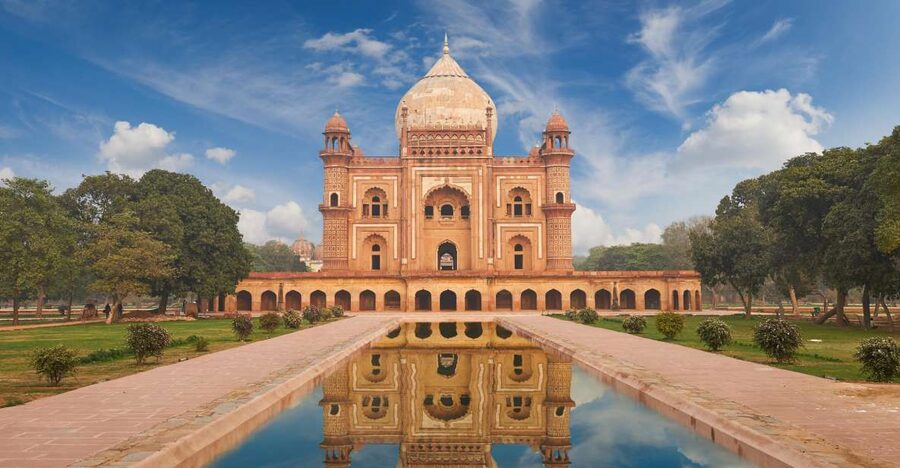
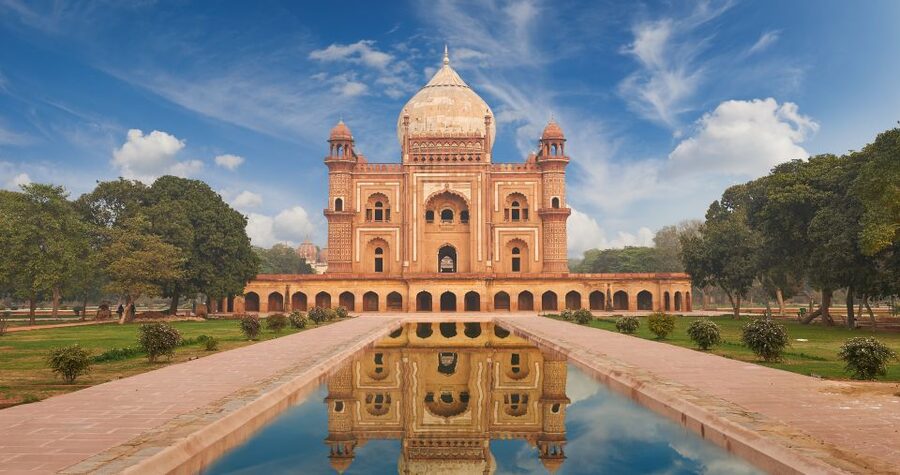
Starting at Safdarjung Tomb
Meet your storyteller at the entrance gate of Safdarjung Tomb, beside the ticket counter. This is a clear meeting point, but give yourself enough time to find the correct entrance and get settled before the walk begins.
Safdarjung Tomb gives you an impressive opening frame. The monument is associated with the later Mughal period and offers the formal arrangement you expect from a grand tomb: strong lines, domes, gateways, and carefully placed open space. From a photography point of view, it is useful because you can begin with broad architectural compositions before moving toward smaller details.
The tour includes entry to the photographic destinations, which is important at this price. You are not paying separately at every stop, though the information provided does not state whether every possible site has an additional photography rule.
Take advantage of the first stop to test your camera settings. Delhi light can change quickly, and you do not want to spend half the walk adjusting basic controls. Your guide can offer photography tips, but this is not described as a technical workshop, so expect practical help rather than a long lesson in camera theory.
Muhammad Shah Sayyid Tomb and Delhi’s earlier chapters
The next part of the walk brings you to the Muhammad Shah Sayyid Tomb. The site displays relics connected with Delhi’s past and adds another period and architectural style to the outing.
This stop is useful because it breaks up the familiar story of Delhi into different eras. You are not simply photographing one grand building and moving on. You are seeing how tomb design, religious practice, and political memory appear across separate sites.
For your camera, look for differences between the tombs. Compare the shape of the dome, the amount of decoration, the way openings frame the sky, and how the building sits within its surroundings. I would keep a few minutes free for quiet detail shots rather than making every photograph a full-building view.
The guide’s role is especially useful here. A good explanation can turn an old structure into a place with human meaning. The tour promises conversations about religious beliefs and local importance, so this is a natural point to ask how the tomb is remembered today.
Lodhi Garden, where nature shares the frame
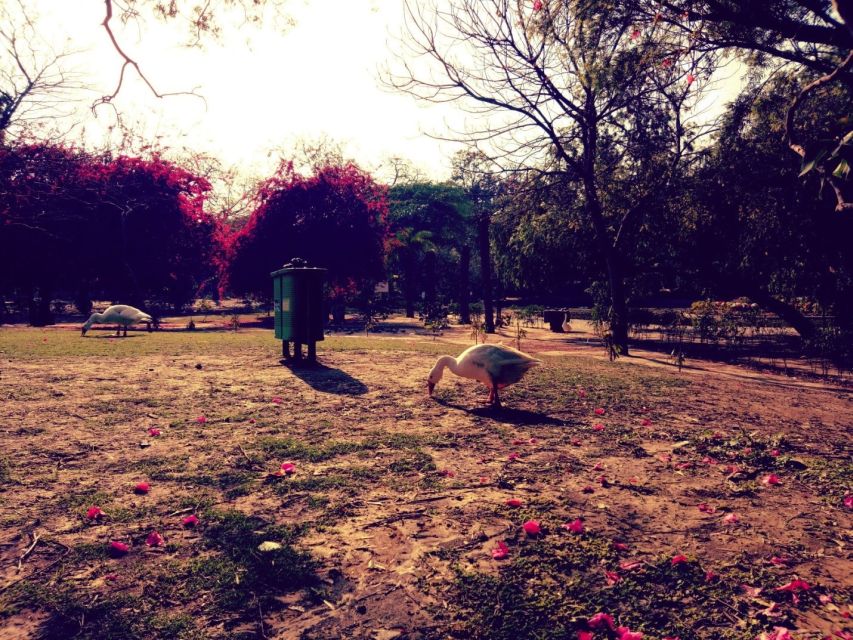
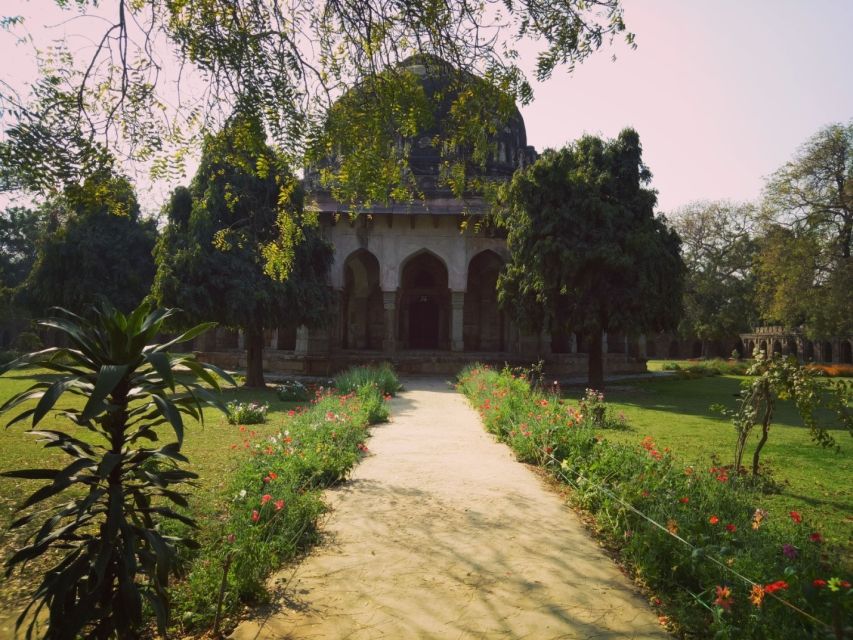
Lodhi Garden is the main setting for the walk, and it is the part most likely to please photographers who want more than monuments. The route passes through wide lanes, old buildings, embassy areas, and garden spaces filled with trees and flowers.
I like this section because you can change your visual approach without leaving the route. One moment you are working with a dome or arch. A few minutes later, you are looking for a flower, a trunk, a shaded path, or the contrast between greenery and stone.
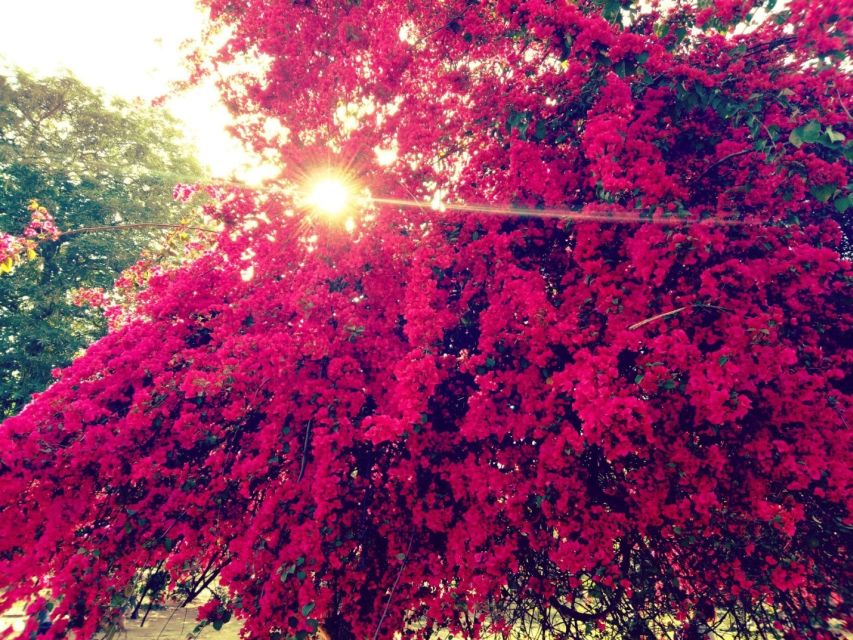
The Rose Garden is particularly useful for close-up photography and color. The tour description does not promise a particular bloom season, so do not book it solely for roses. Instead, treat it as a nature stop that may offer flowers and plant detail along with the wider garden setting.
The garden also gives you a break from Delhi’s city movement. The stated itinerary includes embassies and broad lanes, but it does not include hotel pickup or a vehicle. You are walking from place to place, so comfortable shoes are essential.
Same backdrop, another way to frame it:
- Private Tour of Jaipur’s Most Instagrammable & Photogenic Spots
★ 5.0 · 182 reviews - Insta Photoshoot in South Goa
★ 5.0 · 143 reviews - Jaipur: Instagram Tour of The Best Photography Spots
★ 4.8 · 119 reviews - Private Beach Photoshoot in North Goa by Professional Photographer
★ 4.5 · 78 reviews
Bara Gumbad and the 15th-century architecture
Inside Lodhi Garden, you will pass the 15th-century Bara Gumbad tomb and mosque. This is one of the route’s strongest architecture stops, with the tomb and mosque offering related but different subjects for your camera.
Bara Gumbad rewards a patient eye. Photograph the full structure first, then look for arches, shadow, stone surfaces, and repeated shapes. If your guide gives you time, try viewing the buildings from different angles rather than settling for the first obvious composition.
The mosque adds another layer to the stop. You can compare its religious function and design with the nearby tomb. The guide may also connect the buildings with Delhi’s religious and political past, which makes the visit more than a quick photo stop.
Do not expect a long lecture at each monument. The entire experience lasts only two hours and includes several locations. The best balance is a short explanation followed by time to make photographs.
Crossing Athpula Bridge over the lake
Athpula Bridge brings a welcome change in shape and setting. Instead of photographing only walls, domes, and courtyards, you cross a bridge over a lake.
Water gives you a chance to work with reflections, horizontal lines, and open space. Depending on the light and conditions, you might find a quieter composition here than at the monuments. The bridge also helps the walk feel like a connected journey through the garden rather than a list of separate buildings.
Your guide can point out useful angles, but do not rush across. If photography is your reason for booking, this is one place where a pause may pay off. Look back toward the garden, frame the bridge itself, and check how the water changes the balance of your image.
The provided details do not promise a particular water view or special lighting, so keep expectations sensible. It is a photographic opportunity within the route, not a guaranteed postcard scene.
Shish Gumbad and the last Lodhi lineage
Near the end, the route reaches Shish Gumbad, described as the last lineage of the Lodhi Dynasty. This gives the tour a clear historical close before it moves into contemporary street art.
Shish Gumbad is another chance to photograph a domed monument, but repetition can be helpful. By this point, you can compare it with Safdarjung Tomb, Muhammad Shah Sayyid Tomb, and Bara Gumbad. Notice how the buildings differ in scale, decoration, age, and setting.
The historical explanation matters here. A guide can connect the monument to the final phase of the Lodhi period, helping you understand why this building belongs in a walk about Delhi’s changing dynasties. If you are interested in religious architecture, ask about the tomb’s use and the beliefs linked to the site.
The walking route covers several monuments in a short time, so you may need to choose your priorities. If you prefer careful tripod-style compositions or long sessions at each building, two hours may feel tight. If you like changing subjects and moving through a city at a steady pace, the timing makes more sense.
Rose Garden and the move from old stone to living color
The Rose Garden brings the route back to nature. It is a good place to slow down after the tombs and bridge, especially if your photographs have so far focused on architecture.
Use this stop to make a different set of images. Try close views of flowers, wider pictures with paths and trees, or contrasts between delicate plants and heavy stone buildings. The route’s strength is this change of scale. You do not spend the full walk pointing at monuments.
The garden is also a practical reason to carry a small camera or phone rather than a large bag. Large luggage and large bags are not allowed, and the activity does not provide a water bottle. Bring your own water in a suitable small container if permitted, but do not arrive with heavy luggage.
Lodhi street art and a modern ending
The final stop is Lodhi street art, where painted walls explore themes including nature, the origin of the world, and life and death. This is a strong ending because it moves the tour from historic stone to modern public art.
Street art gives you bold color, graphic shapes, and larger subjects than the tombs. It can also help you think about how Delhi represents itself today. Photograph the walls straight on for clean patterns, or use the surrounding space for a wider scene.
This section may appeal to photographers who enjoy visual storytelling. The themes are broader than simple decoration, and the guide can help explain their local importance. If you prefer old architecture only, this part may feel less essential. If you want a fuller picture of Delhi’s visual culture, it adds useful contrast.
Guides, languages, and the human side of the walk
The tour provides a friendly storyteller who speaks English and Hindi, with Spanish listed as an available tour language. The guide is expected to offer photography tips and lead conversations about religion, belief, and local importance.
Two guides associated with past bookings are Rajeev and Ameesha. Ameesha was described as patient, good at staying in touch by phone, and comfortable giving a photographer space to work. That last point is important. A photography guide should help you without constantly hurrying you or taking over your camera choices.
Rajeev was also described as informative during an evening-light outing. That suggests the experience can work well later in the day, but starting times vary, so check availability when you book.
There is one important caution. A May 2023 booking record reports that the guide did not arrive at Safdarjung Tomb, with staff at the entrance saying no guide had shown up. That is a serious service failure, even though other booking records describe well-organized walks and helpful guides. I would confirm the meeting details and guide contact before setting out.
Is $14 good value for two hours?
At $14 per person, the tour is inexpensive for a guided city walk that includes entry to the photographic destinations, photography advice, and one hot beverage. You also get a route that links several places you might not connect easily on your own.
The value is strongest if you are traveling alone, new to Delhi, or keen to find photo locations beyond the biggest tourist stops. A guide saves you the work of planning the sequence and gives the old buildings some context.
The value is weaker if you only want a formal photography class. The experience is a walking tour with photography tips, not a dedicated professional workshop. It also does not include hotel pickup, drop-off, or a water bottle.
The short duration keeps the cost and time commitment low, but it limits how long you can stay at each site. You are paying for range and guidance, not an entire day of careful shooting.
Who should book this walk?
I would recommend it to:
- First-time Delhi visitors who want a calmer introduction to historic sites
- Phone photographers looking for varied subjects
- Amateur photographers who appreciate tips without a formal classroom
- Visitors interested in tombs, religious architecture, gardens, and street art
- Anyone with two free hours near Safdarjung Tomb
I would think twice if you have limited mobility, are pregnant, or plan to carry luggage. The experience is not suitable for pregnant women or wheelchair users, and large bags are not allowed.
You should also choose comfortable shoes. The route moves through gardens, monuments, lanes, and a bridge, and there is no transport between stops.
Should you book the Delhi Heritage Photography Tour?
Book it if you want a low-cost, guided walk through Delhi’s historic south-central sights with plenty of visual variety. The strongest parts are the combination of Safdarjung Tomb, Lodhi Garden’s monuments, the Rose Garden, Athpula Bridge, and the modern street art finish.
The tour is best for someone who wants to keep moving and photograph many subjects rather than spend an hour at one building. Ask for the guide’s name and confirm the meeting arrangement before you go, because the no-show report is the main concern.
If that small risk is addressed, $14 is a fair price for two hours of entry, local storytelling, photography advice, and a route that would be easy to miss on your own.
FAQ
Where does the Delhi Heritage Photography Tour begin?
Meet your storyteller at the entrance gate of Safdarjung Tomb, at the ticket counter.
How long does the photography tour last?
The walking tour lasts two hours.
How much does the tour cost?
The listed price is $14 per person.
Which languages are available?
The tour lists English, Hindi, and Spanish as available languages.
Are monument entry fees included?
Yes. Entry to all the photographic destinations is included.
Is a photography lesson included?
The guide provides photography tips. The experience is a guided photography walk rather than a stated professional photography course.
Is a hot drink included?
Yes. One hot beverage is included.
Do I need to bring water?
Water is not included, so you should plan to bring your own bottle. The activity information specifically lists a water bottle as not included.
Can I bring luggage or use a wheelchair?
Large bags and luggage are not allowed. The tour is not suitable for wheelchair users, and it is also not suitable for pregnant women.
More history to photograph around India
- Heritage Trivandrum Photography Walk Tour With Tuk Tuk Ride
★ 3.8 · 10 reviews - New Delhi: Guided Night Photography & Heritage Tour of Delhi
★ 5.0 · 5 reviews - Rome: Vespa Photo Tour with Historic City Highlights
★ 5.0 · 395 reviews - Hanbok Photoshoot and History Tour at Gyeongbokgung Palace
★ 5.0 · 276 reviews
Fresh shoots around India
- Heritage Trivandrum Photography Walk Tour With Tuk Tuk Ride★ 3.8 · 10 reviews
- From Delhi: Taj Mahal with Photographer & Elephant SOS Tour★ 5.0 · 3 reviews
- From Delhi: Taj Mahal Tour with Professional Photographer★ 5.0 · 7 reviews
- From Delhi: Taj Mahal Tour with Professional Photographer★ 4.9 · 15 reviews
- Delhi: Photography Taj Mahal Tour with Boat Ride & Transfers★ 5.0 · 2 reviews
- New Delhi: Guided Night Photography & Heritage Tour of Delhi★ 5.0 · 5 reviews
- Agra: Taj Mahal Guided Tour with Photography & Rental Saree★ 5.0 · 4 reviews
- Agra: Taj Mahal Vip tickets with Professional Photographer★ 3.6 · 5 reviews
New Delhi Photo Tours & Photoshoots, frame by frame.
Old Delhi Photography & Food Tour with Rickshaw Ride to Masterji Kee Haveli
Read our review →
Delhi Like a Local: Food & Photography Full Day Tour
Read our review →
New Delhi: Guided Night Photography & Heritage Tour of Delhi
Read our review →