
Review · FRANCE
DIJON: Enjoy a photo tour with a professional photographer
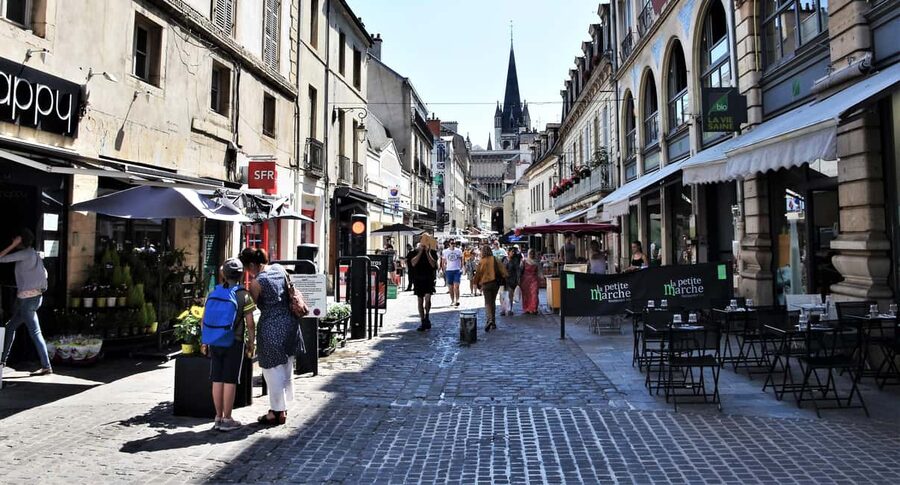
Dijon’s old center rewards people who look up. A carved doorway, half-timbered façade, stone detail, or quiet view can tell you more about the city than a quick march between major sights. Tony, a professional photographer and postcard artist, leads you toward those details and explains the history behind them.
I like the tiny group size, capped at four, and the relaxed pace. I also like the useful follow-up: Tony emails an information sheet after the walk, so you can match locations with the photos you took instead of scribbling notes while trying to frame a shot.
The main consideration is that this is a friendly photo walk, not a technical photography course. You bring your own camera or phone, and museum entry, food, drinks, and transport are not included.
Key points to know before you book
- Meet Tony at Porte Guillaume: Look for the guide in a red Washington Nationals baseball cap with a large W.
- Photograph Dijon’s historic center: The walk focuses on period buildings, architectural details, and locations suited to personal photos.
- Small groups matter: Four people is the normal limit, giving you room to ask questions and stop without holding up a crowd.
- English and easygoing: The experience is designed to be fun and friendly rather than technically demanding.
- Two hours for $70: The price buys personal guidance, local background, and photo advice, but not equipment or admissions.
- Bring weather gear: Comfortable shoes, a charged phone, water, sunscreen, and rain protection will make the walk easier.
Starting at Porte Guillaume with Tony
Your meeting point is Porte Guillaume, Dijon’s William Gate, at the listed map coordinates 47.32336492621492, 5.034763803460934. Tony wears a red Nationals baseball cap with a large W, which gives you a simple visual marker in a city center where meeting groups can otherwise be hard to spot.
Starting here makes practical sense. You begin near one of Dijon’s recognizable historic entrances, then set out on foot into the older part of the city. The exact path can be shaped by the group, the weather, and the photographic opportunities Tony sees along the way. Do not expect a rigid checklist of named stops. The point is to learn how to notice and frame the city.
Tony’s background gives the walk a useful angle. He is a professional photographer and artist who produces and sells postcards in tourist offices and other places around the region. That means his eye is trained not only on famous façades, but also on the small visual details that make a good image work.
You do not need a large camera. A smartphone is fine, provided it is charged. If you use a digital camera, bring the equipment you already understand. The tour is not the place to discover that your battery is flat or that you have left the memory card in your hotel room.
More Photography Tours in France:
- Nice, France: Individual photo walk in Nice
★ 5.0 · 8 reviews - Individual photo walk in the Old Town of Nice
★ 5.0 · 3 reviews - Tromso: Northern Lights Photography Tour
★ 4.2 · 843 reviews
Reading Dijon through its buildings
The historic center of Dijon received UNESCO World Heritage status in 2015. That designation matters to this experience because the walk is built around the city’s surviving architecture, not simply around a few famous postcard views.
Dijon grew and changed over many periods, yet many older buildings remain visible in the central streets. Tony helps you connect what you photograph with the city’s past and explains why particular architectural features deserve attention. You might be encouraged to frame a whole façade, then move closer to find a carved detail or a change in stone and timber.
That approach suits Dijon well. A first visit can tempt you to focus only on the broad view. A photographer’s walk slows your eyes down. You begin to notice symmetry, lines, texture, shadows, doorways, upper stories, and the way older buildings sit beside later additions.
I like that the tour leaves room for imagination. Tony gives guidance, but he is not asking everyone to copy one official composition. You can use his suggested locations as starting points and create your own record of the city.
The historical information also gives your photographs more meaning. A picture becomes easier to remember when you know what you were looking at and why it survived. Tony’s follow-up document helps here. After the tour, you receive information about the various locations, allowing you to connect the written background with the images saved on your phone or camera.
What the two-hour walk feels like
The advertised duration is 120 minutes, but the experience allows for extra time when needed. No additional charge applies if the tour runs longer, since stopping for photographs and questions can make a strict finish time unrealistic.
That is good news for photographers. A two-hour walk can disappear quickly when several people are adjusting a composition, asking about a building, or waiting for better light. You should still plan the rest of your day with some flexibility, especially if you have a train, meal reservation, or timed admission afterward.
The pace is casual. You walk through the city, stop at locations, hear historical and architectural background, and receive advice on making stronger images. Tony describes the tour as friendly and fun rather than demanding, so you should not expect a formal lesson in exposure, lenses, or advanced editing.
That makes the outing approachable. A beginner can ask basic questions without feeling out of place. Someone with more experience can use Tony’s local eye to find subjects that might otherwise be missed.
The small group is one of the strongest practical features. With no more than four participants, you get more space to discuss a composition and more chance to ask about the city. A larger group would make the walk slower and make personal advice harder. More people can be accommodated by arrangement, but the standard format is intentionally intimate.
Photo guidance for beginners and experienced shooters
If you are new to photography, this tour can help you move beyond taking only a record shot. Tony can point out how a building’s details, angle, or setting may make a better image. You can ask for help with what to include and what to leave out.
You should not expect a classroom-style syllabus. No specific camera model, technical skill level, or editing method is required. The value lies in having a professional photographer beside you while you look at real streets and buildings.
Experienced photographers may appreciate the freedom more than a step-by-step lesson. You can bring your own style and use Tony’s suggestions as prompts. His work producing postcards means he understands the need to find clear, memorable images that communicate a place quickly.
Still, you should book with the right expectations. If your main goal is mastering manual settings, night photography, portrait lighting, or post-processing, the activity may feel too broad. Its focus is Dijon, observation, composition, and local context.
The best results will come if you arrive ready to experiment. Try a wide view, then a close detail. Look above street level. Notice repeating shapes, contrast between materials, and the way a historic building is presented from different angles. You do not need to imitate Tony’s images. Use his suggestions to make your own visual record.
More photo tours and photoshoots around France:
- Paris: Private Photoshoot at the Eiffel Tower
★ 4.7 · 2,636 reviews - Paris: Eiffel Tower Photoshoot
★ 4.7 · 2,351 reviews - Paris: Photoshoot Around Eiffel Tower with 55 Edited Photos
★ 4.8 · 702 reviews - Paris: Professional Photoshoot with the Eiffel Tower
★ 4.9 · 565 reviews
Why the historical background improves your pictures
A city walk can become a blur of façades if you do not know what you are seeing. Tony’s explanations give the buildings a place in Dijon’s story and help you remember the stop later.
This is especially useful after you return home. The emailed information document lets you identify the locations in your photographs. You can look back at an image and recall not only the composition, but also the building detail and the historical setting that Tony explained.
That follow-up is more useful than it may sound. Many holiday photos lose their context within a few months. You remember the city, but not which street produced which image. A location guide gives your photo collection a clearer record.
The tour also suits people who want more than a quick sightseeing circuit. You are not simply being led past buildings and told their names. You are encouraged to decide what interests you and to use each place as a prompt for your own photographs.
Dijon’s UNESCO designation adds a reason to pay attention, but it does not turn the walk into a formal heritage lecture. The tone is personal and practical. You learn enough history to understand the setting, then return to the camera.
Price and what you receive for $70
At $70 per person, the tour is not the cheapest way to see Dijon. You are paying for a two-hour private-feeling experience with a professional photographer, historical background, and advice aimed at helping you make better images.
The value improves if you are traveling as a couple or in a very small group. A group of two gets a lot of room to ask questions and shape the pace. The same price may feel less compelling if you mainly want a general city walk and have no interest in photography.
There are no extra charges if the walk runs beyond the advertised time. That is a welcome point because photography naturally creates delays. You are not forced to choose between asking a question and watching the clock.
The price does not cover a camera, smartphone, food, drinks, transport, museum entry, or admission to historical buildings. You should treat this as an outdoor walking experience. If a building or museum interests you enough to enter later, you will pay separately.
I would compare the tour with the cost of a standard guided walk. Here, you receive less of a broad sightseeing script and more help with seeing and photographing. If that matches your interests, $70 can be fair. If you want extensive interior visits or a full city history lecture, choose a different type of tour.
Weather, clothing, and daily planning
Most of the experience takes place outdoors, so weather matters. Wear comfortable shoes, comfortable clothing, and layers suited to the day. A sun hat, sunscreen, drinks, and weather-appropriate outerwear are sensible choices.
Bring rain gear rather than assuming a cloudy forecast will stay dry. Outdoor photography can be enjoyable in changing light, but wet streets and poor clothing can make a two-hour walk less pleasant.
A charged smartphone is useful even if you carry a camera. You can use it for quick reference, maps, or backup photographs. If your phone is your main camera, charge it fully and make sure you have enough storage.
The meeting point is central, but no travel expenses are included. Plan your own way to Porte Guillaume and allow time to find the exact gate. Tony’s red cap should help once you reach the meeting area.
Children under 16 are not suitable for this activity. The tour is offered in English, and the usual group limit is four people. Free cancellation is available up to 24 hours before the start, and you can reserve now and pay later, which helps if your Dijon plans are still shifting.
Who will enjoy this photo walk most
I would recommend it most strongly to couples, solo visitors, and small groups who want a personal way to see Dijon’s old center. It is also a good choice for anyone who already takes photos but wants a local professional to point out subjects and details.
Beginners should feel comfortable joining. The experience is not presented as a demanding technical workshop, and you do not need specialist equipment. A phone can be enough to benefit from the advice.
It is also useful for first-time visitors who want historical context without spending several hours in a formal lecture. The walk gives you a sense of the city’s architecture while keeping your camera involved.
I would be more cautious if you dislike walking, need frequent indoor stops, or want guaranteed entry to museums and historic interiors. Those are not part of the price. I would also look elsewhere if your sole aim is advanced camera instruction.
The feedback available for the experience points to Tony’s friendly manner and broad local advice as major strengths. Joseph, visiting Dijon for the first time with his wife, found Tony welcoming and well informed about the city. Kylie also appreciated the easy conversation and advice that extended beyond Dijon to the surrounding area. That suggests you can expect a personal exchange, not just directions from one photo stop to the next.
Should you book Tony’s Dijon photo tour?
Book it if you want to slow down, notice the architecture, and return home with photographs tied to a better understanding of Dijon. The four-person limit, flexible timing, professional eye, and emailed location notes give the experience more personal value than a quick group walk.
The strongest reason to choose it is the combination of photography and local background. Tony does not simply point you toward attractive streets. He helps you see why details matter and gives you a way to remember where each image was made.
Skip it if you want a museum-heavy tour, a technical photography master class, or a fully fixed itinerary with every stop named in advance. For the right person, though, this is a relaxed and useful way to meet Dijon through its buildings, one frame at a time.
FAQ
Where does the Dijon photo tour meet?
The meeting point is Porte Guillaume, also called the William Gate. The listed Google map coordinates are 47.32336492621492, 5.034763803460934. Tony wears a red Nationals baseball cap with a large W.
Who leads the photo tour?
The guide is Tony, a professional photographer and artist who also produces and sells postcards in tourist offices and other locations in the region.
How long does the experience last?
The tour is scheduled for two hours, or 120 minutes. It may run longer when needed, with no additional charge for the extra time.
Is photography equipment provided?
No. You need to bring your own camera or smartphone. A charged smartphone is specifically recommended.
Is the tour suitable for beginners?
Yes. The activity is designed to be friendly and not technically demanding. Tony offers guidance for both novice and experienced photographers.
How many people can join?
The regular group limit is four participants. More people may be accommodated by arrangement. Children under 16 are not suitable for the tour.
Fresh shoots around France
- Instagrammable Paris: Icons & Hidden Gems with a Local★ 4.8 · 7 reviews
- Instagram tour of Paris with a private photographer★ 5.0 · 2 reviews
- Individual photo walk in the Old Town of Nice★ 5.0 · 3 reviews
- Immortalize your memories in Paris with a professional photo shoot!★ 5.0 · 12 reviews
- Marriage Proposal in Paris + Photographer 1h-Proposal agency★ 5.0 · 2 reviews
- Eiffel Tower privat Photoshoot★ 5.0 · 2 reviews
- Eiffel Tower Reserved Access with Photoshoot stops★ 3.6 · 17 reviews
- Photo session for couples with flowers around Eiffel tower★ 5.0 · 3 reviews
France Photo Tours & Photoshoots, frame by frame.
Photo Session in Paris – Photographer at the Eiffel Tower
Read our review →
Private Guided Professional Photoshoot by the Eiffel Tower
Read our review →
Paris Private Walking Tour with a Personal Photographer
Read our review →This shoot also appears in