
Review · THE USA
Mauna Kea Stargazing Experience + Photos
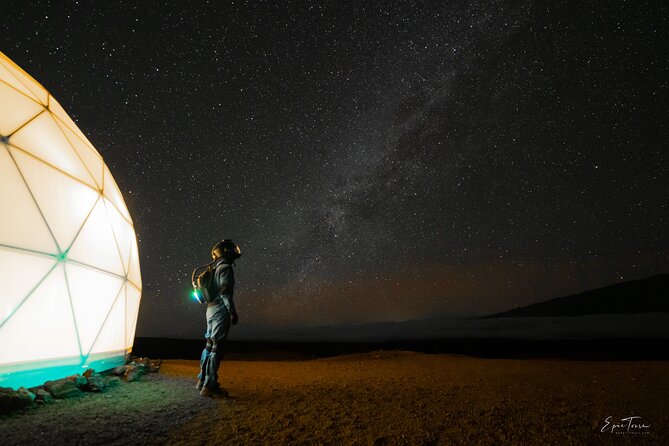
The best part of this Big Island evening is the setting: a quiet, remote spot away from the headlights and crowds around the usual visitor center. An astronomer such as Dylan leads the sky talk, while a professional photographer captures portraits with the Milky Way behind you. The telescope views are a real highlight, especially for seeing nebulae, galaxies, and star clusters up close.
I like the stargazing guarantee, which removes some of the risk from booking a weather-dependent activity. I also like that parkas, blankets, chairs, astronomy guidance, and medium-resolution photos are included. The catch is the price, $299 per person, plus a long self-drive to a dark mountain location and possible paid upgrades for larger photo files.
Key points to know before you book
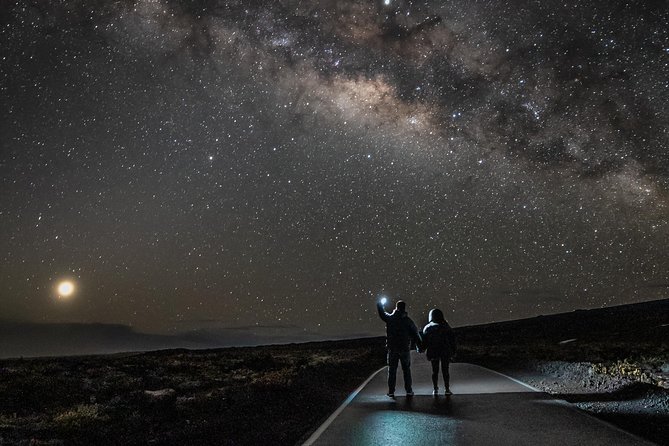
- Remote viewing instead of a crowded lookout: The tour uses quiet locations on Mauna Kea or Mauna Loa, selected to reduce headlights, crowds, and moonlight.
- A real astronomy presentation: Guides such as Dylan use a green laser pointer, answer questions, and explain stars, galaxies, nebulae, black holes, and traditional sky stories.
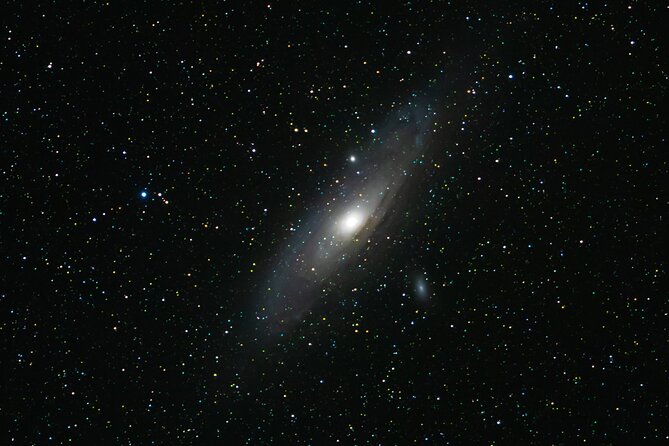
- Smart telescope observations: The Celestron Origin telescope brings distant objects into view on a screen, including the Andromeda Galaxy and Orion Nebula.
- Photos are part of the experience: A dedicated photographer takes private group portraits with the Milky Way behind you, with medium-resolution files included.
- Plan for serious cold: Temperatures can reach about 30 F. Parkas are supplied, but you should still bring warm layers, gloves, and a hat.
- No hotel transportation: You drive to Pu’u Huluhulu Cinder Cone parking lot and return there after the session.
What the Mauna Kea night is really about
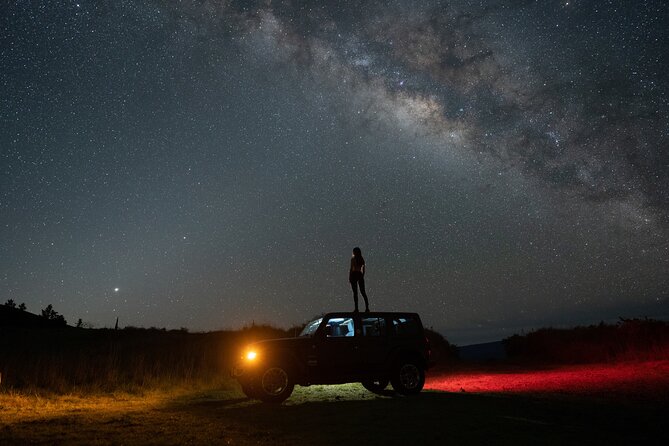
This is not a quick stop to point at a few constellations. The evening is built around sitting outside for roughly 90 minutes to two hours while an astronomer explains what you are seeing and uses a smart telescope to bring faint objects closer.
That matters because the Big Island has plenty of dark sky, but simply arriving at a dark parking area does not automatically teach you how to read it. Your guide may move from visible constellations to planets, nebulae, galaxies, black holes, and current astronomy. You can ask questions throughout, so the quality of the evening depends partly on how curious you are willing to be.
The tour team has included James, Dylan, Shannon, Malia, Ali, and Luke in different roles. Dylan is particularly associated with the astronomy presentation, while Shannon or Malia may handle the photography. The exact team can vary, but you should expect an astronomer and a photographer rather than one person trying to do everything.
The group limit is 30 people. That is not a private tour, but it is far smaller than a busy public viewing area. The remote setup is important here. The appeal is not only more stars. It is also fewer headlights, less noise, and more time to look up without a stream of cars passing nearby.
More photo tours and photoshoots around the USA:
- The ‘OG’ Manatee Snorkel Tour with In-Water Guide/Photographer
★ 5.0 · 2,539 reviews - Manatee Swim Tour with In Water Photographer
★ 5.0 · 2,300 reviews - Guided Small Group Manatee Snorkeling Tour with In-Water Photographer
★ 5.0 · 1,336 reviews
Arriving at Pu’u Huluhulu Cinder Cone
You meet at the Pu’u Huluhulu Cinder Cone parking lot, not at your hotel. Hotel pickup and drop-off are not included, so allow plenty of time for the drive and make sure your phone has the meeting details before leaving.
The final approach can be dark and curvy, with a narrow one-lane mountain road in the last section. Oncoming cars may require one vehicle to pull aside. This is the part of the outing most likely to unsettle you, especially if you are driving after sunset or are not comfortable on remote mountain roads.
Clear directions and last-minute location updates matter because the team may shift between Mauna Kea and Mauna Loa to find better conditions. Keep an eye on your phone and check messages before setting out. The meeting point can change when clouds, wind, or visibility make another site a better choice.
The tour does not take you to the summit after dark. The experience takes place at a lower, remote location chosen for sky conditions and safety. That distinction is useful when comparing it with other Big Island astronomy outings. A summit drive is not part of this product.
Sitting under a dark Mauna Kea sky
Once you reach the viewing site, chairs are set out and parkas and blankets are available. You sit back while the guide begins the star talk, often using a green laser pointer to trace constellations and explain how the sky changes through the night.
The reclining chairs are more valuable than they might sound. Stargazing means looking upward for a long time, and a chair that lets you lean back is much easier on your neck than standing beside a car. Still, you are outdoors for the full session, and no supplied coat can replace proper clothing.
Bring pants, sturdy closed-toe shoes, a warm base layer, gloves, and a hat. The listed temperature can reach 30 F, while conditions may feel less severe on some nights. Do not count on the supplied parka alone. A cold person will spend the evening thinking about cold feet instead of Orion.
Hot drinks have been offered on some outings, including coffee, cocoa, and tea, but the core inclusions specifically promise parkas, chairs, activities, and photos. Treat warm drinks as a possible extra rather than something to rely on.
The site can be wonderfully quiet. Some evenings have only a small number of people in the area, rather than the hundreds of cars that can gather at more popular viewing points. That makes the presentation easier to hear and gives the photographer a cleaner, darker background.
The Celestron Origin smart telescope
The Celestron Origin smart telescope is the technical center of the experience. Instead of relying only on what your eyes can see, the guide uses the telescope to show distant objects with far more detail.
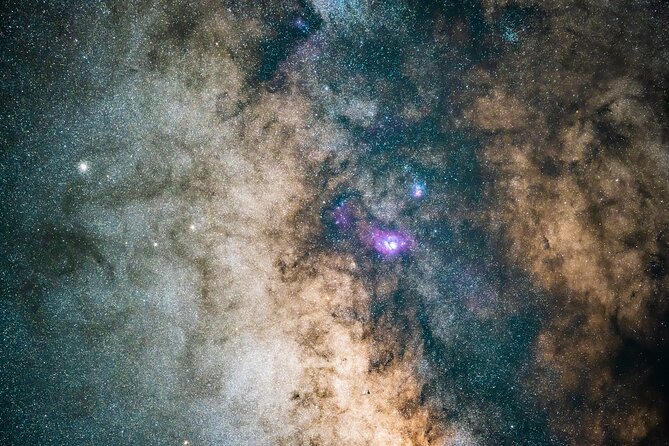
You may view nebulae, star clusters, and galaxies. The Andromeda Galaxy, Orion Nebula, Horsehead Nebula, and other deep-sky objects have been included in past sessions, though the exact selection depends on the date, visibility, and the position of the sky.
The telescope is best understood as a viewing tool, not a classic eyepiece telescope where each person takes a turn pressing an eye to glass. One low rating objected that the setup felt more like a camera with a zoom lens. That is a fair expectation to clarify before booking. If you want old-school eyepiece observing, this may not match your idea of a telescope. If you want a guide to use modern imaging technology to show faint deep-sky objects to a group, it makes more sense.
The astronomy talk is also a major part of the value. Guides have explained everything from basic constellations to relativity, string theory, UFO questions, and modern astrophysics. You do not need a science background. You only need enough interest to ask questions and stay engaged.
Same backdrop, another way to frame it:
- LA: Hollywood Sign Tour with Comedians, Dogs, & Epic Photos
★ 4.9 · 1,193 reviews - Murals of Nashville Instagram Tour by Golf Cart
★ 5.0 · 950 reviews - Small group Manatee Tour with In-Water Divemaster/Photographer
★ 5.0 · 751 reviews - Lake Tahoe Small-Group Photography Scenic Half-Day Tour
★ 5.0 · 649 reviews
Milky Way portraits and photo expectations
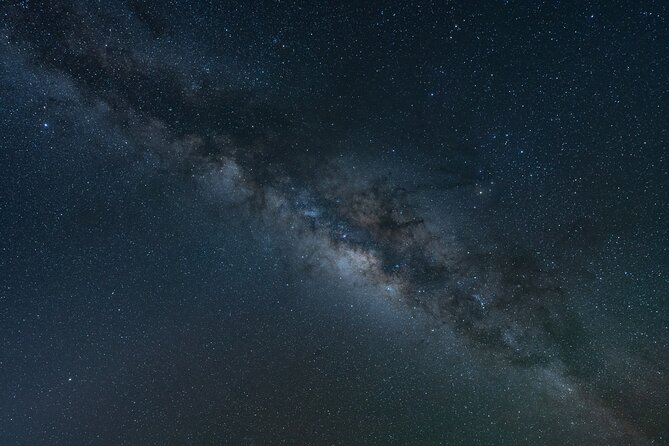
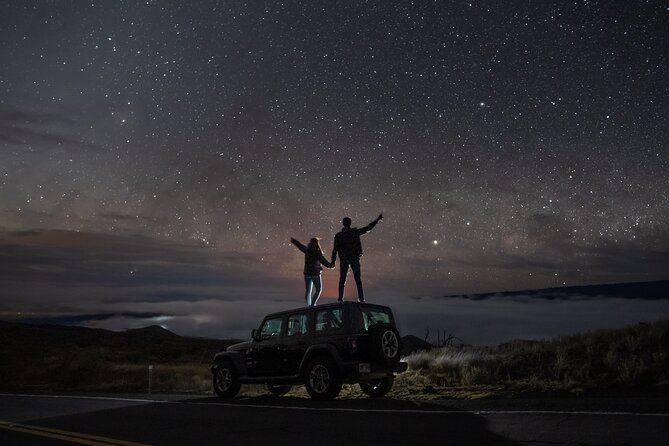
The photographer takes complimentary portraits of your group with the Milky Way as a backdrop. This is more than a quick snapshot beside a tour sign. The point is to create a souvenir that shows both you and the night sky.
Medium-resolution photos are included at no additional cost. They are generally suited to sharing online, but do not assume they are full-resolution print files. Paid photo upgrades are available, and the exact price and file package should be confirmed before booking. Different information has circulated about upgrade costs, so ask the photographer or operator on the night if print-quality files matter to you.
The photographer may take several images so you have a choice. Ask for another pose if you are not happy with the first portrait. One portrait received criticism for being too light and not showing the person clearly, while other images have captured the Milky Way, Andromeda, lava glow, and even a shooting star.
That range is part of the appeal, but night photography has limits. Your face may be less prominent than in a normal portrait, and the final image depends on clouds, moonlight, posture, focus, and the photographer’s technique. You should book this for the unusual setting and the chance of a memorable image, not for a guaranteed studio-quality family portrait.
The photo delivery process deserves your attention. Before leaving, confirm how the files will be sent and how your group will be identified. This is especially useful when many people attend and several groups are photographed. If you do not receive the promised files, contact the operator promptly through the contact method provided at booking.
Is $299 a fair price?
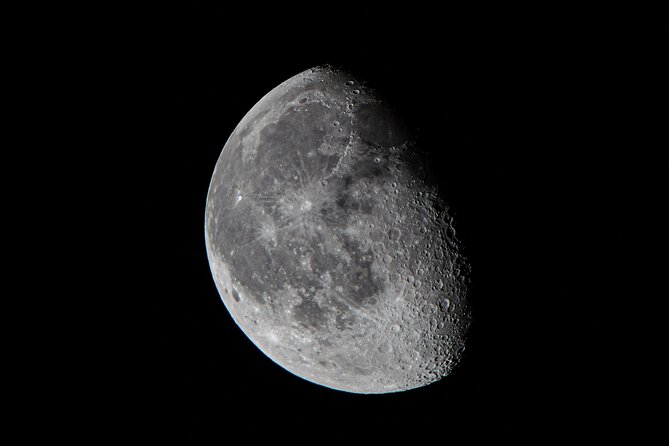
At $299 per person, this is an expensive two-hour activity. You are paying for more than access to a dark patch of ground, but you are also not receiving transportation, a full meal, or a summit visit.
The price includes the astronomy presentation, smart telescope viewing, a photographer, parkas, chairs, blankets, and medium-resolution photos. For a couple, the included portrait session adds real value. A separate professional astrophotography session could cost a substantial amount, though the included files are not the highest-resolution option.
The price is harder to justify if you mainly want to sit outside and identify constellations. You can see many stars from a dark location without paying for a tour, especially if you already know the sky or use a stargazing app. The tour earns its price through the guide’s explanation, the telescope, the remote location, and the photography.
I would compare it this way: book it if you want a guided astronomy event plus a professional-looking souvenir. Skip it if you want a cheap night outdoors or if your main goal is a long telescope session with individual eyepiece time.
The weather guarantee improves the value. If clouds prevent stargazing, the operator says the tour is free, with a full refund offered when the experience is canceled because of poor weather. That does not make a cloudy evening convenient, but it limits the financial risk.
Weather, cancellations, and physical demands
The activity operates in all weather conditions, but useful stargazing depends on clear skies. The operator may change the location or cancel when clouds and visibility make the outing impractical. If the company cancels for poor weather or fails to meet its minimum number of participants, you can choose another date or receive a full refund.
You can cancel for a full refund up to 24 hours before the start time. Changes or cancellations inside that window are not accepted under the stated policy.
This is a physically demanding outing in modest ways. You need to drive on dark mountain roads, walk around an outdoor site, sit outside in the cold, and manage a late evening. The activity is not recommended for people with mobility restrictions, back or heart problems, hearing problems, serious medical conditions, or some senior visitors. If you are pregnant, discuss the outing with your doctor first.
Children must be accompanied by an adult. Service animals are allowed. The group can include up to 30 people, so the experience is social rather than fully private.
Who will enjoy this stargazing experience?
I would choose this for couples who want a striking night photo, families with older children who are fascinated by space, and anyone who would rather hear a lively astronomy talk than quietly watch the sky alone.
It is also a strong choice if you have already visited the Big Island’s volcanic sights and want an evening activity that feels different. The combination of lava country, high elevation, cold air, and a crowded-free viewing site gives the night a clear sense of place.
I would hesitate if you dislike cold weather, night driving, uncertain meeting points, or activities that depend on nature cooperating. I would also think twice if you need hotel transport or want guaranteed high-resolution photos included in the base price.
Give yourself room in your schedule. The session is advertised at about two hours, but the astronomy presentation can run longer when questions are flowing. Do not book a late dinner immediately afterward unless you are comfortable with a flexible finish.
Should you book it?
Book this experience if you want a polished, guided evening with an astronomer, modern telescope views, and a Milky Way portrait. The strongest reasons to go are the remote setting, the passionate astronomy guidance associated with Dylan and James, the included parkas and chairs, and the weather guarantee.
The main cautions are equally clear: $299 is a premium price, you must drive yourself, the mountain approach can be dark and narrow, and the free photos are medium resolution rather than full-quality files. Bring serious winter clothing and confirm photo delivery before you leave.
For a memorable Big Island night, I think it is worth considering, especially for a first visit or a special occasion. Just make sure you are paying for the full package, astronomy, setting, telescope, and photography, rather than expecting a simple free look at the stars.
FAQ
Where does the Mauna Kea stargazing experience meet?
The meeting point is the Pu’u Huluhulu Cinder Cone parking lot on the Island of Hawaii. The activity ends back at the meeting point.
Is hotel pickup included?
No. Hotel pickup and drop-off are not included, so you must arrange your own transportation to and from the meeting point.
How long does the experience last?
The experience lasts approximately two hours, with the listed guided stargazing portion lasting about 90 minutes. The astronomy presentation may continue longer when the group has questions.
What happens if clouds block the stars?
If poor weather prevents the stargazing experience, you may be offered another date or a full refund. The operator also describes this as a stargazing guarantee.
Are photos included in the price?
Medium-resolution photos are included. Optional photo upgrades are available if you want larger or higher-quality files.
What should I wear?
Wear pants and closed-toe shoes, and bring warm layers, gloves, and a hat. Temperatures can reach about 30 F. Parka jackets are supplied, but the operator warns they may not be enough for everyone.
Fresh shoots around the USA
- Instagram tour of New York with a private photographer★ 4.0 · 5 reviews
- Las Vegas: Haunted House Wedding Ceremony + Photography★ 5.0 · 3 reviews
- Hanksville/Torrey: Bentonite Hills Drone/Photography Tour★ 5.0 · 12 reviews
- Half-Day RMNP Mountains to Sky Tour-RMNPhotographer★ 5.0 · 3 reviews
- Half-Day RMNP Lakes and Meadows Tour-RMNPhotographer★ 4.9 · 13 reviews
- Las Vegas: Game of The Wedding Rings Ceremony + Photography★ 5.0 · 2 reviews
- Full-Day RMNP Over the Top Tour – RMNPhotographer★ 5.0 · 9 reviews
- From Kanab: 3-Hour Peek-a-Boo Slot Canyon Hiking/Photo Tour★ 4.9 · 25 reviews
USA Photo Tours & Photoshoots, frame by frame.
LA: Hollywood Sign Tour with Comedians, Dogs, & Epic Photos
Read our review →
Murals of Nashville Instagram Tour by Golf Cart
Read our review →
Lake Tahoe Small-Group Photography Scenic Half-Day Tour
Read our review →
NYC Professional Photoshoot and Walking Tour with Private Guide
Read our review →
This shoot also appears in