Review · TOKYO
Tokyo Cyberpunk Street Photo Tour
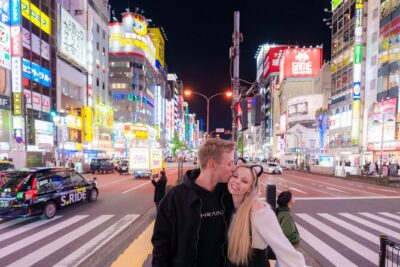
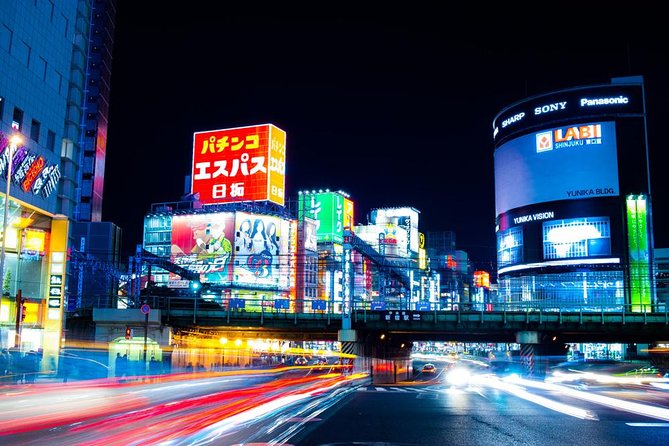
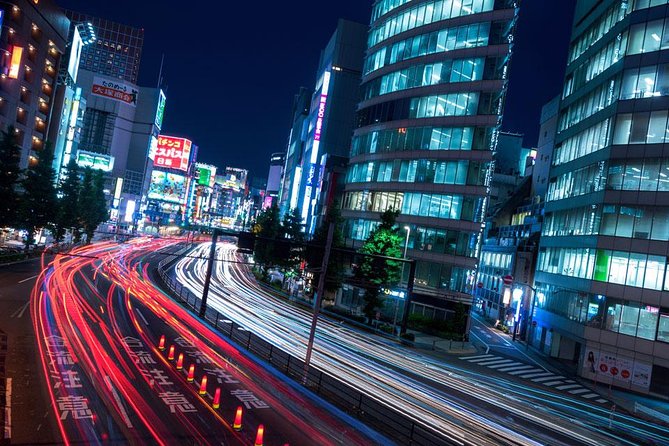
Tokyo looks most cinematic after dark, when Shinjuku neon reflects off wet pavement and the crowds at Shibuya Crossing become a moving subject. This three-hour photo walk gives you a practical way to shoot that scene, even if your camera skills end at pointing and pressing the button.
I like the tiny group, capped at four, and the hands-on teaching. Guides such as Charles and Lukasz have helped people adjust settings on Canon and Fujifilm cameras, while also showing iPhone users how to control exposure, contrast, and focus. The main drawback is the pace: one guest lost contact with the guide after struggling to keep up, so this is not ideal if you need frequent breaks.
Key points before you book
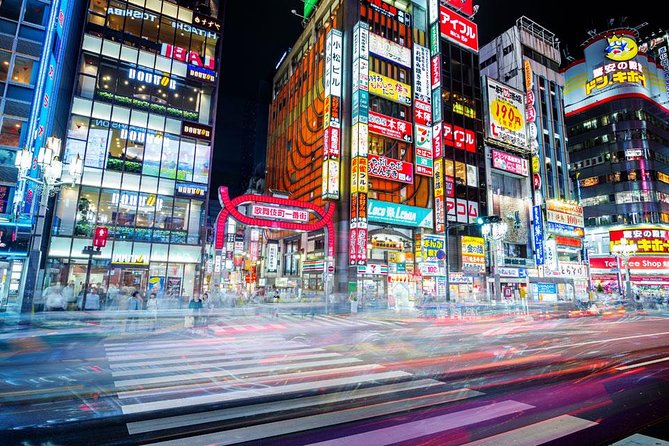
- Shinjuku starts the lesson: Kabukicho and Omoide Yokocho offer neon, narrow lanes, signs, crowds, and plenty of subjects within a short walk.
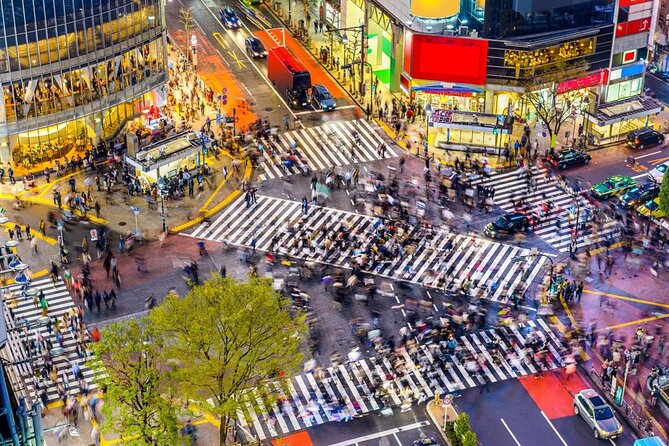
- Shibuya supplies the grand finale: You finish at Shibuya Crossing, where long exposure can turn the pedestrian flow into a striking blur.
- Phone users are welcome: You do not need a dedicated camera, and guides have offered useful advice for iPhones and other smartphones.
- The group is genuinely small: With a maximum of four people, the guide can spend time checking your settings and helping you find a better angle.
- Train fare is extra: You travel from Shinjuku to Shibuya during the tour, with transportation paid separately.
- The meeting point needs care: Shinjuku Station is huge, and the start is at Happy Lemon Keio Shinjuku Shop, not simply anywhere inside the station.
What this Tokyo night photo walk is really about
This is a photography workshop with a city walk attached. You are not signing up for a broad lecture on Tokyo culture or a long list of historic facts. The focus is on seeing light, movement, framing, and color in the city after sunset.
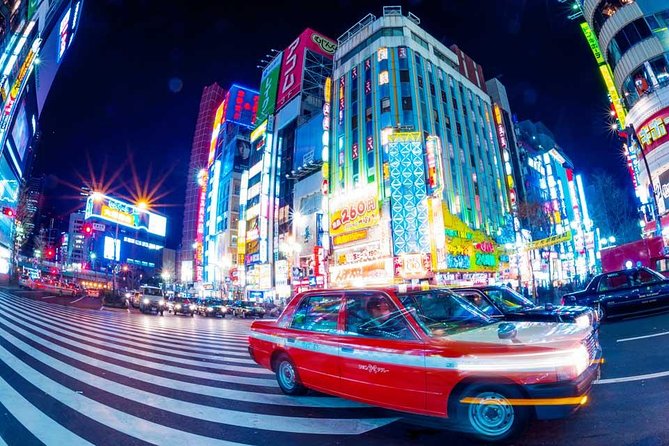
That focus is useful. Tokyo at night can overwhelm you with choices. One street has a wall of signs, a bright vending machine, a stream of umbrellas, and a taxi sliding through the frame. A good guide helps you decide what belongs in the picture and what should be left out.
You will learn by making images on the spot. The guide can suggest a shutter speed, help you find the right exposure, or point out why your composition feels crowded. Then you try again. This demonstration and practice method is one of the strongest parts of the experience.
You can bring a proper camera, but you do not need one. Several guides have worked with phone users and have shown them simple controls, including exposure adjustments, contrast, and focus lock. If you use a smartphone, expect useful shooting ideas rather than an advanced technical course.
More Photography Tours in Japan
- Tokyo by Night Photography Tour (Private Option Available)
★ 5.0 · 151 reviews - Tokyo Shinjuku Night Photo Tour with Pro Gota
★ 5.0 · 142 reviews - Tokyo: Evening Photography Tour
★ 4.8 · 61 reviews
Starting in Shinjuku at 7 pm
The tour begins at 7 pm outside Happy Lemon Keio Shinjuku Shop, at 1-chōme-1-4 Nishishinjuku. Give yourself extra time to find it. Shinjuku Station is vast, and arriving at the right station is not the same as arriving at the right meeting point.
This is one of the few practical snags that can spoil an otherwise good evening. A clear station exit and a map on your phone will help. The supplied meeting address is specific, so use it rather than relying on a vague search for Shinjuku Station.
Once the group is together, you head into the evening streets. The small group size matters immediately. With no more than four people, the instructor can look at each person’s camera and adjust the lesson to match your level.
Guide names associated with this experience include Charles, Lukasz, Luke, Stephane, and Stefane. The exact guide is not guaranteed, but the teaching style described across the experience is practical and personal. Charles has been especially praised for patience and camera help, while Lukasz has worked comfortably with both beginners and more experienced photographers.
Kabukicho: neon, signs, and moving subjects
The first main stop is Kabukicho, where you spend about an hour. This is a strong place to begin because there is no shortage of visual material. Illuminated signs, restaurant fronts, traffic, and people moving through the district give you many ways to practice.
You may work on keeping bright signs from washing out. You may also try to include a person in the frame without making that person the entire subject. The guide can help you look for lines, color contrasts, reflections, and small moments instead of simply photographing the biggest sign.
For camera users, this is where basic night settings start to make sense. The guide can explain how shutter speed changes the look of moving people and vehicles, and how to balance exposure when neon lights are much brighter than the surrounding street.
You should not expect a private photo shoot with unlimited time at every corner. The tour has several stops and a set end point, so the guide needs to keep the group moving. That makes the experience efficient, but it also means you may need to choose between following the lesson and pausing for every tempting subject.
Omoide Yokocho and the smaller Tokyo frame
The next stop is Omoide Yokocho, also called Memory Lane, for about 30 minutes. This compact area offers a different kind of night image from Kabukicho. Instead of wide streets and large signs, you get narrow lanes, close-set restaurants, warm light, and layered details.
This is a good place to practice composition. You can look down a lane, frame a person between signs, or use the repeated lines of small restaurants to lead the eye. The setting rewards a slower approach than Shibuya Crossing.
The lane is also a reminder that the most famous Tokyo image is not always the best one. Your strongest photograph may come from a side street, a reflection, or a small pool of light. The guide’s local knowledge is useful here because finding a workable position in a crowded area can take time.
Remember that this is still a working dining district. Be aware of people, doorways, and restaurant activity. The guide can help you find a safe position, but you should not block a narrow passage while waiting for the perfect frame.
More Street Photography Tours in Tokyo:
- Saigon Street Photography Experience
★ 5.0 · 56 reviews - Learn the art of street photography in the heart of Montmartre!
★ 5.0 · 33 reviews - Istanbul Street Photo Tour
★ 5.0 · 31 reviews
The train to Shibuya
After Shinjuku, you travel by train to Shibuya. The fare is not included, and the information for the experience also lists bus fare as excluded, so budget for your own local transportation.
This transfer breaks the evening into two distinct sections. Shinjuku gives you close-up street scenes and back alleys. Shibuya brings a much larger public space and a famous urban rhythm.
You should keep your ticket or payment method ready and stay with the group. One account of the experience warns that losing the guide in a crowded area can lead to real trouble, especially if you do not know Tokyo well. The group is small, but Shibuya can still swallow people quickly.
Shibuya Crossing after dark
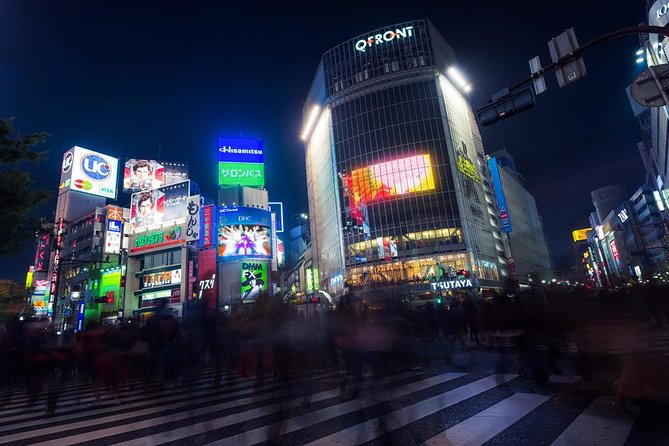
The tour spends about 45 minutes at Shibuya Crossing and ends near Shibuya Station, at 2-chōme-2-1 Dōgenzaka. This is the most recognizable part of the route, but it is also the place where a guide adds real value.
A beginner often points straight at the crossing and takes a wide snapshot. The guide can help you do more. You might try a slower shutter speed to blur the crossing crowd, wait for a pleasing pattern of umbrellas or coats, or frame the surrounding signs so the intersection feels enclosed by light.
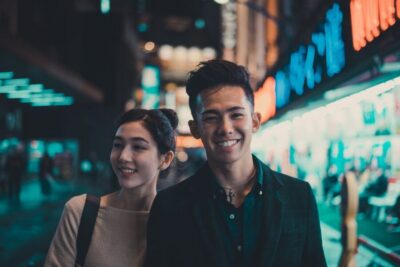
This is where the tour’s cyberpunk theme makes the most sense. The artificial light, moving bodies, reflective surfaces, and towering signs can suggest a scene from a science-fiction film without requiring any special effects.
Forty-five minutes is enough to work through several attempts, but not enough for endless experimentation. If you want a long personal photo session at the crossing, you may find the schedule too tight. If you want a focused lesson and a set of strong locations, the timing is sensible.
What the guide can teach you
The strongest feedback centers on direct instruction. People have described guides correcting camera settings, explaining composition, and giving each person time to practice. That is more useful than a guide who simply leads you from one famous spot to the next.
You can expect help with:
- Shutter speed and long exposure
- Overall exposure in bright neon
- Composition and what to include in the frame
- Finding a better position before taking the picture
- Phone controls such as contrast and focus lock
- Adjusting settings for rain or changing light
- Making street images feel less cluttered
You do not need expert skills. Beginners have found the workshop approach manageable, while experienced photographers have used the guide for fresh ideas and local shooting positions.
The instruction is not identical with every guide. Charles, Lukasz, Luke, and Stephane have different personalities and styles, and the exact guide may vary. Still, the repeated strength is hands-on assistance rather than a scripted talk.
Cameras, phones, and useful equipment
A camera with some control over shutter speed or overall exposure is the best fit. A tripod is suggested in the practical information, especially if you want to work on longer exposures.
You can still enjoy the tour with a phone. This is important because many visitors carry only an iPhone or another smartphone. The guide can show you controls that are easy to miss, such as exposure adjustment and focus lock.
A tripod is not stated as included, so you should bring your own if you want one. The professional photography instructor is included, but equipment rental is not listed. Keep your setup light enough for a three-hour walk through crowded districts.
Rain can affect the plan. One session continued with alternate arrangements during wet weather, but the experience requires good weather overall. If poor weather causes cancellation, you are offered another date or a full refund.
Is the $184.99 group price good value?
The cost is $184.99 for a group of up to two people. For a couple, that works out to about $92.50 per person before local transportation. A third or fourth person can make the cost better per person, since the price is set by group rather than by individual.
The value depends on what you want. If you only need a guide to show you Shibuya Crossing, the price is high for a three-hour walk. You can visit the crossing without paying for an experience.
If you want personal help with night photography, the price becomes easier to justify. You are paying for an instructor who can help with your own camera, suggest positions, and save you time searching for workable viewpoints. The small group also means you are not standing at the back of a crowd during every explanation.
The tour is booked an average of 25 days ahead, so popular dates can fill early. The booking is non-refundable and cannot be changed for personal reasons. That makes weather and schedule planning important before you commit.
Who should book this experience?
I would choose this tour if you want to bring home better night images and prefer learning by doing. It suits a beginner with a phone, an amateur with a mirrorless camera, or someone who already knows the basics but wants help with urban night scenes.
It also works well near the start of a Tokyo visit. The route gives you an early feel for Shinjuku and Shibuya, and you may learn locations to revisit later on your own.
I would think twice if you dislike walking at a steady pace, need frequent rest stops, or want a detailed cultural tour. The experience is centered on photos. One lower-rated account specifically described it as a fast-walking tour, with the participant eventually losing contact with the guide and missing the final hour.
The small group should help, but you still need to stay close. In crowded Shinjuku and Shibuya, do not assume you can stop far behind and catch up later.
Should you book the Tokyo Cyberpunk Street Photo Tour?
Book it if your goal is practical night photography, especially if you want help using a phone or camera in difficult light. The combination of Kabukicho, Omoide Yokocho, and Shibuya Crossing gives you three different kinds of urban subject, from tight restaurant lanes to a huge pedestrian intersection.
Skip it if you mainly want sightseeing commentary or a relaxed stroll. You can also skip it if a strict no-change cancellation policy makes you uneasy.
For most photo-minded visitors, this is a focused and worthwhile evening. Bring a charged phone or camera, arrive early at the exact meeting point, budget for the train, and stay close to the guide. Do that, and you should return to Shibuya Station with more than familiar Tokyo snapshots. You should also have a clearer idea of how to make your next night photograph work.
FAQ
How long does the Tokyo Cyberpunk Street Photo Tour last?
The experience is listed as approximately three hours. The detailed schedule describes a photo adventure of about two and a half hours, so you should allow roughly three hours in your evening.
What time does the tour start?
The tour starts at 7 pm.
Where does the tour begin?
It begins at Happy Lemon Keio Shinjuku Shop, 1-chōme-1-4 Nishishinjuku, Shinjuku City, Tokyo 160-0023, Japan.
Where does the tour end?
The tour ends near Shibuya Station at 2-chōme-2-1 Dōgenzaka, Shibuya, Tokyo 150-0043, Japan.
What places are visited?
The route includes Kabukicho District, Omoide Yokocho Memory Lane, and Shibuya Crossing. The tour begins in Shinjuku and finishes in Shibuya.
Can I use a smartphone instead of a camera?
Yes. The experience allows you to use a camera or smartphone, and the guide can offer tips for phone photography.
Is transportation included?
No. The train journey from Shinjuku to Shibuya is paid separately. Bus fare is also listed as not included.
How many people can join?
The maximum group size is four people. The price covers a group of up to two.
What happens if bad weather cancels the tour?
The experience requires good weather. If it is canceled because of poor weather, you are offered a different date or a full refund. Personal cancellations and amendments are non-refundable.
More Photography Tours in Tokyo
- Asakusa Kimono Photography Tour
★ 5.0 · 8 reviews - Tromso: Northern Lights Photography Tour
★ 4.2 · 843 reviews - Barcelona E-Bike Photography Tour
★ 5.0 · 843 reviews - Tromsø: Northern Lights Photography Tour
★ 4.8 · 788 reviews
Fresh shoots around Tokyo
- Asakusa Kimono/Yukata Rental & Photography_Tsutsuji★ 5.0 · 12 reviews
- Asakusa Kimono Photography Tour★ 5.0 · 8 reviews
- Tokyo: Photo Shoot with a Private Vacation Photographer★ 5.0 · 53 reviews
- Tokyo 6hr Instagram Highlights Private Tour with Licensed Guide★ 5.0 · 38 reviews
- Tokyo: Private photo shoot★ 5.0 · 31 reviews
- Tokyo: Evening Photography Tour★ 4.8 · 61 reviews
- Tokyo:Genuine Tea Ceremony, Kimono Dressing, and Photography★ 5.0 · 33 reviews
- :Tokyo,Shibuya/ Pro Photography in Kimono / English-Friendly★ 5.0 · 26 reviews
Tokyo Photo Tours & Photoshoots, frame by frame.
Kimono Dressing, Walking, and Photography Session
Read our review →
Best Go Kart Experience in Shibuya Crossing with Iconic Photos
Read our review →
Tokyo by Night Photography Tour (Private Option Available)
Read our review →