
Review · BERLIN
Discover Berlin Underground through Mobile Photography
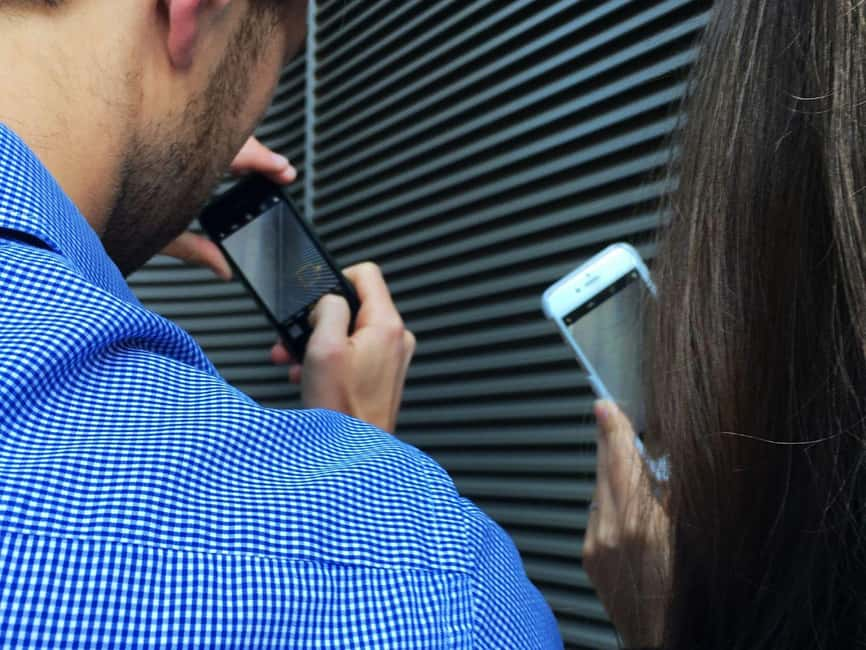
Berlin’s U-Bahn is more than a way to get across town. Some stations are full of bold mosaics, old design details, sculptures, and odd little surprises that most riders pass without a glance. This two-hour experience turns the network into a moving photography class, led in English by Danylo, the guide behind Smartphones Are Not For Calling.
I like two things right away: you use the city’s public transport as your classroom, and you get practical help with the phone you already carry. Danylo also brings in stories about station design and Berlin life, so you are not just collecting attractive pictures. The main consideration is clear: photography comes first, while history and cultural background play a supporting role.
Key points to know
- Start at Paracelsus-Bad: Meet Danylo in the middle of the U8 platform, with his red-cased smartphone making him easy to spot.
- Learn by shooting: You practice composition, geometric lines, portraits, framing, and other phone techniques as you move through the network.
- See selected U-Bahn stations: The route focuses on several of Berlin’s most photogenic stops rather than trying to cover all 175 stations.
- Expect personal guidance: Private and small-group options allow Danylo to give direct feedback on your pictures.
- Bring an AB ticket: Public transport is not included. A day pass is usually the simplest choice for the two-hour route.
- Good for all skill levels: You do not need professional equipment. A recent smartphone is the central tool.
Why Berlin’s U-Bahn makes a fine photo classroom
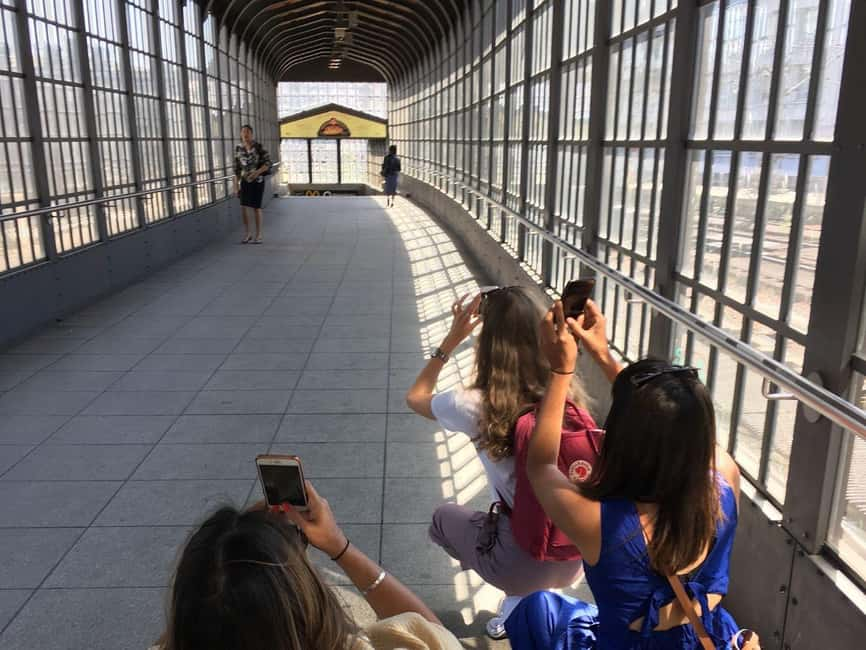
The best part of this experience is the setting. Berlin’s U-Bahn is practical, gritty, historic, and often unexpectedly decorative. A station may offer a wall of tile, a strong row of columns, a retro sign, or a composition made from nothing more than rails, lights, and repeating shapes.
That gives you a useful photography lesson. You are not waiting for a famous landmark to appear in perfect light. You are learning to notice what is already around you. Danylo helps you look for lines, balance, color, framing, and human scale in places that usually feel like transit points rather than subjects.
This is especially useful if your phone photos tend to look flat. The experience is not built around complicated camera settings or expensive equipment. It is about seeing more carefully and making better choices before you press the shutter.
You should expect a lively, hands-on session rather than a formal lecture. Some time is spent on the train, where Danylo uses the journey for quick tips and photo exercises. That keeps the two hours moving, though it also means the experience is not a long stop at each station.
More photo tours and photoshoots around Berlin:
- Berlin: Fotografiska Photography Exhibition Ticket
★ 4.6 · 168 reviews - Berlin Essentials: Private Photoshoot at Berlin’s top sites
★ 4.8 · 75 reviews - 5hours: Guide, Chauffeur & Photographer in Berlin private Tour
★ 5.0 · 66 reviews
Meeting Danylo at Paracelsus-Bad
The meeting point is the middle of the platform at Paracelsus-Bad on the U8 line. Danylo will be holding a smartphone with a red case, which gives you a simple way to identify him in a working metro station.
Starting on the platform makes sense. You can meet your guide, check your phone, and get ready before the route begins. Bring a valid AB-zone ticket for the full experience. The ticket is not included in the price, and a day pass is usually the easiest option if you plan to use Berlin public transport before or after the tour.
Because the experience involves several stations, wear shoes you are comfortable walking in. The supplied information does not promise long walks or accessibility details, so ask before booking if you need specific arrangements. The group can be private or small, which is helpful if you want more time for questions or feedback.
Danylo’s approach appears to be warm and informal. He focuses on making people comfortable with their phones, not on making the lesson feel technical or intimidating. That matters for beginners, especially anyone who normally takes quick snapshots but has never thought much about composition.
The first station exercises: seeing instead of passing through
The exact station sequence can vary, so you should not book this expecting a fixed checklist of named stops. Danylo chooses from Berlin’s most visually striking stations, with the route built around architecture, artistic details, and good opportunities to shoot.
Early exercises are likely to help you slow down. Instead of photographing everything at once, you may work on finding one strong subject, noticing how lines lead through the frame, or using a station’s repeating forms to create order.
U-Bahn stations are well suited to this kind of practice. Platforms provide long lines, signs, tracks, and columns. Walls can supply blocks of color or patterns. Stairways and passageways offer changes in height and perspective. Even a moving train can become part of the lesson when you photograph through windows or work with the rhythm of the carriage.
Danylo’s job is not simply to point at attractive details. He gives step-by-step mobile photography advice and then lets you try it. That combination is valuable because phone photography often improves through small corrections: move closer, change your angle, leave more space, simplify the background, or wait for a person to enter the frame.
Mosaics, sculptures, and retro details
The stations selected for the route are described as having bold mosaics, retro artifacts, sculptures, playful installations, and other design features. These details give you plenty of subject matter, but they also create a useful problem: how do you make a photograph that says more than this wall is colorful?
That is where composition becomes important. You might frame a section of a mosaic rather than the whole wall. You might use a sculpture as a foreground shape. You might look for a contrast between old station design and modern passengers. The point is to turn decoration into a considered image.
I particularly like this focus because it changes how you move through Berlin. You begin noticing that public spaces carry clues about the city’s character. The station is not just a background for your picture. It can suggest a period, a design idea, a neighborhood mood, or the practical creativity that makes Berlin feel distinct.
Danylo also shares facts and stories about the stations. The cultural material is not the main purpose, so you should not expect a full architectural history tour. Still, these short explanations help you understand why a particular station deserves attention and give your photographs more context.
Same backdrop, another way to frame it:
- Berlin: Private Photo Session with Professional Photographer
★ 4.9 · 52 reviews - Berlin: Ticket for Photography Exhibitions at C/O Berlin
★ 4.5 · 39 reviews - Berlin: Early Morning Private Photoshoot to avoid the Crowd
★ 4.8 · 20 reviews - Berlin U Bahn Cinematic Photography Tour
★ 4.9 · 9 reviews
Geometric lines and portraits underground
A major part of the session is learning to work with shape. U-Bahn stations offer plenty of geometric subjects: tracks, tiled walls, staircases, signs, beams, and repeating lights. Danylo encourages you to experiment with strong lines and unusual angles, which can make a familiar phone camera feel more capable.
You also get the chance to make portraits against colorful station backdrops. This is useful if you usually avoid photographing people. A bold wall gives the portrait a clear setting, while the station itself adds a sense of place.
The experience is not presented as a professional portrait shoot, so you should expect guidance rather than polished production. The value is in learning where to place a person, how to simplify the background, and how to use the station’s colors and shapes without letting them swallow the subject.
The underground setting helps here. You are working with real public spaces and changing conditions, not a controlled studio. That can be challenging, but it is also good practice. You learn to make a picture quickly and adapt to what is in front of you.
What happens on the train between stations
Train time is part of the program, not dead time. Danylo uses it for quick tips and photo exercises, giving you a chance to test ideas while the route continues.
This makes the experience feel different from a standard walking tour. You are not simply moving from one stop to another while listening. The train itself becomes a place to observe reflections, windows, seats, passengers, signs, and the changing relationship between motion and still images.
There is a practical tradeoff. Two hours is enough for a focused introduction, but not enough for long photography sessions at every station. If you need several minutes to set up each image, you may feel the pace. The format suits people who want a compact lesson with variety rather than a slow, highly technical workshop.
The small-group or private format should help keep the exercises useful. Danylo can look at your shots, suggest a change, and help you understand why one version works better than another. That direct feedback is more useful than a list of generic phone settings.
The photography skills you take home
The strongest benefit is confidence. Many people own a good smartphone but use only its most basic functions. A guide who shows you simple ways to frame and time a shot can make the device feel less like a point-and-shoot camera and more like a creative tool.
Expect help with ideas such as:
- Finding a clear subject in a busy station
- Using lines and repeating shapes
- Changing your viewpoint instead of relying on eye-level shots
- Making portraits against colorful backgrounds
- Looking for reflections and unexpected details
- Using the train journey for quick, spontaneous images
- Reviewing your shots and making small corrections
The supplied information does not list particular phone models or advanced editing apps, so you should not expect a brand-specific course. The focus is on techniques that work across recent smartphones.
You can also bring a camera if you wish, but the experience is designed around mobile photography. A professional camera is not needed. If your phone is reasonably recent and charged, you have the main equipment required.
Is $57 a fair price?
At $57 per person, this costs more than simply riding the U-Bahn and taking pictures alone. That comparison is fair, but it misses what you are paying for: route planning, a guide who knows which stations offer strong visual material, hands-on instruction, and personal feedback.
The value is best if you are new to phone photography or want help seeing Berlin in a different way. A private or small-group format can make the price easier to justify because you have more room to ask questions and show Danylo your shots.
The price is less convincing if you already have strong photography skills and mainly want a history tour. The cultural and design stories are present, but the central product is instruction. You are paying for a photography session with a Berlin setting, not a detailed survey of the entire U-Bahn system.
The public transport ticket costs extra, so include that in your budget. A day pass can be practical if you are using the network for other sightseeing as well.
Who will enjoy this most
I would recommend this experience to several types of visitors:
- First-time phone photographers who want clear, friendly instruction
- Travelers who have already seen Berlin’s major sights and want a different view of the city
- Couples or friends who want portraits in unusual settings
- Design fans interested in station architecture and public art
- Solo visitors who prefer a private or small-group activity
- Anyone looking for an indoor option that works in changing weather
It is also a good choice for people who feel shy about photography. The tone is designed to be positive and encouraging, and Danylo’s strength is helping you try ideas without making the process feel like a test.
I would hesitate to recommend it to someone seeking a long historical lecture, a full list of Berlin’s famous stations, or a specialist camera workshop. The route is selective, the pace is active, and smartphone photography takes priority.
Timing, preparation, and small practical matters
Plan on about two hours. Check the available start time when booking, since the schedule can vary.
Charge your phone before you meet Danylo and clear a little storage space if your camera roll is crowded. The activity depends on taking pictures, so a low battery could spoil the lesson. Bring your AB-zone ticket, and consider a day pass if you will ride elsewhere in Berlin.
The experience is conducted in English. Private and small groups are available. You can cancel up to 24 hours in advance for a full refund, and the reserve-now, pay-later option keeps your plans flexible.
The meeting point is not at a major landmark, so allow enough time to reach Paracelsus-Bad. Once on the platform, look for the red phone case.
Should you book Smartphones Are Not For Calling?
Book it if you want to make better phone photos while seeing Berlin through its U-Bahn system. Danylo’s mix of creative exercises, personal feedback, station stories, and good humor gives the experience a clear purpose. You leave with more than a set of underground pictures. You also have a better sense of how to find strong images in ordinary places.
Skip it if photography is not important to you or if you want a detailed history-focused tour. For everyone else, the $57 price is reasonable for a focused two-hour lesson, especially in a private or small group. Bring a charged phone, an AB ticket, and a willingness to look twice at the stations you normally rush through.
FAQ
Where does the experience begin?
Meet Danylo in the middle of the platform at Paracelsus-Bad station on Berlin’s U8 line. He will be holding a smartphone with a red case.
How long does the experience last?
The activity lasts around two hours.
What language is the experience conducted in?
The experience is conducted in English.
Is the main focus history or photography?
Smartphone photography is the main focus. Danylo also shares design and cultural information about the stations, but most of the time is spent on creative mobile photography techniques.
Do I need a professional camera?
No. The experience is designed around smartphone photography, and any recent phone model should work.
Can I bring a camera instead of a smartphone?
You are asked to bring a smartphone or camera, but the instruction is centered on mobile photography. A smartphone is the main tool for the session.
Do I need a public transport ticket?
Yes. You need a valid AB-zone ticket for the duration of the experience. A day pass is usually the easiest option.
Are private or small-group bookings available?
Yes. Private and small-group options are available.
What kinds of photography will I practice?
You will work on techniques involving composition, geometric lines, portraits, colorful backgrounds, and creative phone photography. Some exercises also take place on the train.
Can I cancel and receive a refund?
You can cancel up to 24 hours in advance for a full refund. You can also reserve now and pay later.
Fresh shoots around Berlin
- Instagram Tour in Berlin★ 5.0 · 2 reviews
- Berlin: Premium 60-Minute Photoshoot at Iconic Landmarks★ 5.0 · 2 reviews
- Berlin: Ticket for Photography Exhibitions at C/O Berlin★ 4.5 · 39 reviews
- Berlin: Private Photo Walk with Professional Photographer★ 4.5 · 2 reviews
- Berlin U Bahn Cinematic Photography Tour★ 4.9 · 9 reviews
- Berlin: Instagram Tour of the most visited spots★ 4.7 · 6 reviews
- Berlin Love Story: Surprise Proposal Photography Session★ 5.0 · 7 reviews
- Berlin: Your Personal Vacation Photographer★ 4.2 · 6 reviews
Berlin Photo Tours & Photoshoots, frame by frame.
Berlin Essentials: Private Photoshoot at Berlin’s top sites
Read our review →
5hours: Guide, Chauffeur & Photographer in Berlin private Tour
Read our review →
Berlin: Private Photo Session with Professional Photographer
Read our review →
Berlin: Ticket for Photography Exhibitions at C/O Berlin
Read our review →
Berlin: Early Morning Private Photoshoot to avoid the Crowd
Read our review →

Berlin by Night: Private Photoshoot at Illuminated Cityscape
Read our review →This shoot also appears in