Review · LONDON
Private Night Photography Tour in London
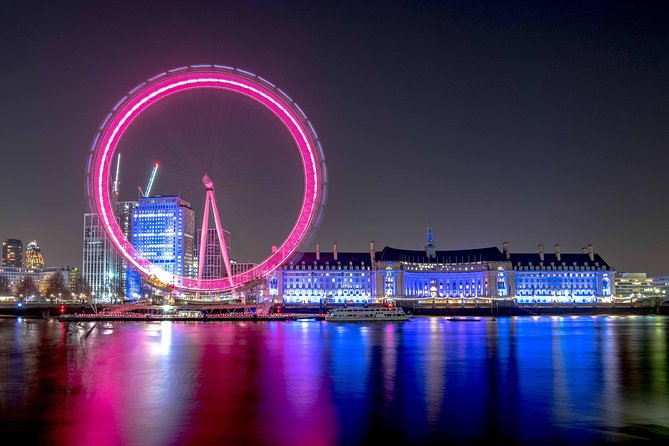
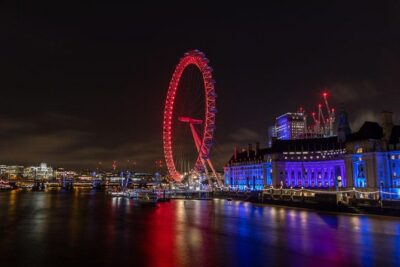
London looks made for night photography. The London Eye glows beside the Thames, car lights stretch into bright ribbons, and passing boats can turn into soft streaks across a long exposure. On this private walk, photographer David helps you make those effects yourself rather than simply pointing out good views.
I especially like two things here: you can use a phone or a serious camera, and the instruction is personal enough to cover your own equipment and skill level. The e-guidebook is another useful touch. The main consideration is practical: you need to be ready for a walking photography session, and a tripod is important for many of the longer exposures.
Key points to know before you book
- David teaches the technique, not just the route: Expect help with camera settings, framing, and creative choices at each stop.
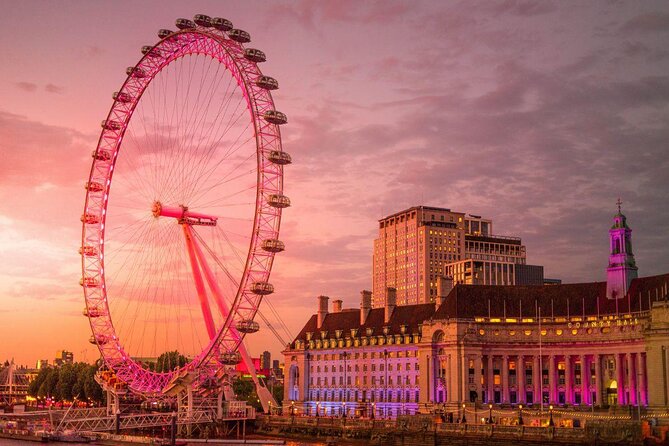
- The London Eye starts the visual story: It gives you bright curves, reflections, and light effects beside the river.
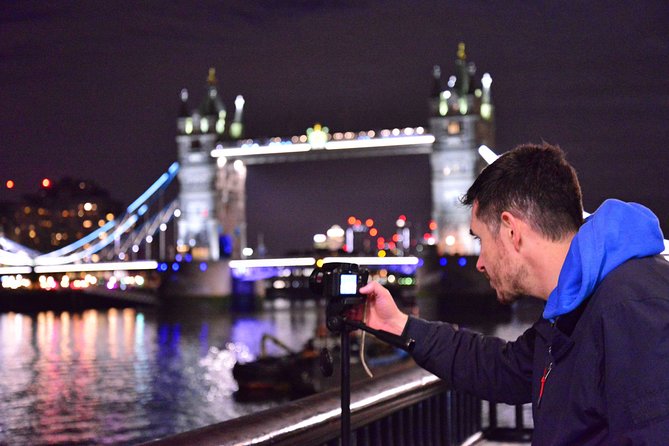
- St. Paul’s and Tower Bridge suit long exposures: These stops offer strong architectural subjects and chances to work with moving traffic and water.
- Your phone is welcome: The tour has helped people use both an iPhone and a Canon on the same evening.
- Bring or request a tripod: David has carried a spare for a participant, but sharing can limit your freedom to shoot.
- The private format needs clarification: The activity is sold as private, yet one account described a three-person group, so confirm the exact arrangement if one-on-one teaching matters to you.
Why London after dark works so well for photography
Night photography gives familiar London sights a different job. In daylight, you often concentrate on the landmark itself. After dark, you start watching reflections, passing headlights, illuminated windows, boat movement, and the balance between bright and shadowed areas.
That change is the real point of the tour. You are not simply collecting four standard postcard views. You are learning how to use time and movement inside a picture. A stationary building can remain sharp while a bus becomes a red or white line. A boat can turn into a blurred shape. The Thames can reflect the city lights in broken bands.
The session lasts about two and a half hours, although the description also refers to it as a three-hour night tour. Allow a little flexibility rather than planning a tight dinner reservation immediately afterward. The route covers central London, and you should expect to walk between photography locations.
David works with beginners, hobby photographers, and more experienced camera users who want to improve at night. That range matters. A first-time photographer can learn basic controls, while a more practiced user can experiment with multiple exposures, zoom effects, or a more deliberate composition.
The teaching is hands-on. You receive demonstrations, then try the settings yourself. David can help with framing and adjustments, but the useful result is not just a nice photograph from one evening. You leave with techniques that can also improve your daytime travel pictures.
More Photography Tours in London
- Private Tour: Night Photography Tour in London
★ 5.0 · 48 reviews - Photography Tour walking the back streets of London’s West End (3 hours)
★ 5.0 · 24 reviews - London Photography Tour – Private Tour
★ 5.0 · 17 reviews
Meeting at Caffè Nero near Westminster
The tour begins at Caffè Nero, Unit B, Portcullis House, 1-2 Bridge Street, London SW1A 2JH. This is near the Westminster area and puts you close to the first photography zone around the London Eye.
Take care with the meeting point. It is not described simply as a landmark or a major station entrance, so check the full address before setting out. A mobile ticket is provided, and confirmation arrives when you book.
The activity ends back at the meeting point. That makes the return simple, but it also means you should think about your onward plans. Food and drinks are not included, so eat beforehand or plan something after the walk. The tour is about photography, not a food stop.
You should also arrive with a charged battery and enough storage. One participant had a battery die during the evening and switched to an iPhone, which worked well for continued practice. That is a useful reminder, not a substitute for preparation.
The London Eye: curves, reflections, and light trails
The first stop is the London Eye. Its large circular structure gives you an easy lesson in composition. You can frame the wheel as a complete circle, isolate part of its curve, or use the surrounding lights and river reflections to build a more layered image.
This is also a good place to start with night settings. David can show you how small changes in exposure and camera control affect brightness, sharpness, and movement. If you use a phone, you can work with its night mode or manual controls where available. If you use a DSLR or mirrorless camera, you have more direct control over shutter speed, aperture, and sensitivity.
The London Eye is particularly useful for creative effects. A longer shutter speed can record moving lights as streaks, while a stable camera can keep the wheel and nearby structures clear. You might also experiment with reflections along the Thames rather than aiming only at the wheel itself.
Do not expect every image to work on the first try. Night photography often involves checking the result, changing one setting, and trying again. That is why instruction in the field is more useful than a list of camera tips read before the trip.
The area around the Eye can feel visually busy, with bright lights competing for attention. David’s role is to help you simplify the frame and find a stronger angle. The best picture may not be the obvious front-on view.
St. Paul’s Cathedral: a lesson in controlled exposure
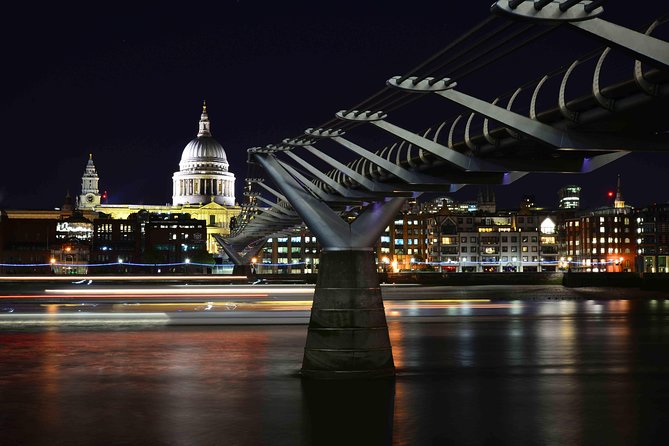
St. Paul’s Cathedral is the next major subject. Its dome and stone details give you a more fixed architectural composition after the moving lights around the London Eye.
Here, long exposure work becomes easier to understand. The building can remain still and sharply defined while traffic or people add motion in the foreground. You can also learn how to protect detail in bright areas while keeping darker sections from turning into a black mass.
St. Paul’s is a useful stop for photographers who want to improve beyond automatic settings. The subject does not change, so you can concentrate on the camera rather than chasing a fleeting moment. David can demonstrate settings, then help you make small changes for your own camera.
One practical point is support. Long exposures are much easier with a tripod. A participant whose luggage was delayed had lost access to a tripod and used a spare supplied by David, sharing it with another person. That arrangement allowed useful photographs, but it reduced flexibility. If you own a compact tripod that is suitable for your equipment, bring it if permitted and practical.
Your camera also matters. David has worked with several brands, but one account noted that he was less familiar with a newer Fuji model. This did not prevent the session from working because the photographer knew the camera’s menus. If you use less common equipment, arrive knowing the basic controls. The tour is instruction, not a replacement for learning where every button is located.
More Photography Tours in the UK
- Iconic London Photo Walking Tour
★ 4.6 · 11 reviews - A Professional Photo Walk Experience in London
★ 5.0 · 4 reviews - Colourful Notting Hill Photography Tour
★ 5.0 · 3 reviews
The City of London: finding less obvious angles
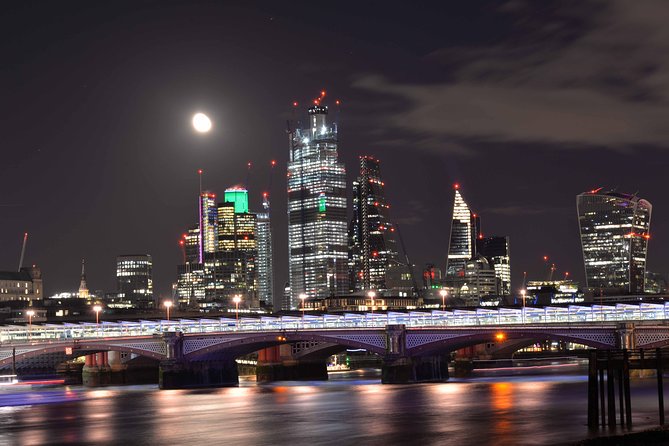
The City of London adds variety. This part of the route lets you move beyond the most familiar tourist postcard and look for corners, angles, and details that frame the city in a less expected way.
The experience includes stops in smaller nooks and less obvious viewpoints. That does not mean you should expect a secret attraction or a private rooftop. It means David can guide you toward angles that make a standard landmark feel more personal.
This is where the tour’s creative side comes forward. You might photograph a sharp architectural edge against a dark sky, use a reflection to double a light source, or place traffic movement across the lower part of the frame. The aim is to notice how a photograph is built, not simply to tick off sights.
David can also demonstrate effects such as zooming the lens during a long exposure and using multiple exposures. These are not essential skills for a beginner, but they give experienced photographers something new to try. The results can be unpredictable, which is part of the fun, though you should not expect every experimental frame to become a keeper.
The City stop is also a good reason to book this tour early in your London visit if photography is a major interest. You can use the ideas later at other sights on your own. The advice applies to everyday travel images, not only to the route taken that night.
Tower Bridge: water, traffic, and a strong final frame
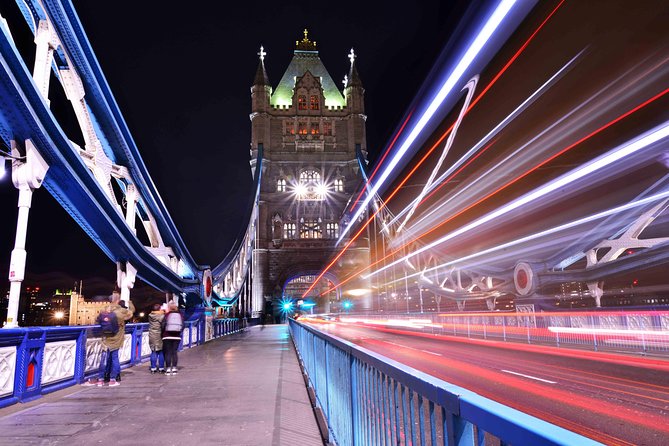
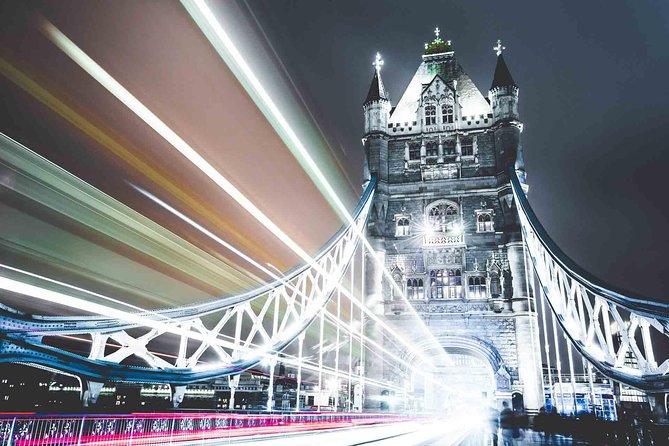
Tower Bridge provides the grand closing subject. Its towers and upper walkway create a strong composition, while the Thames gives you moving water and reflections to work with.
This is one of the best places on the route for combining several night photography elements. The bridge can remain crisp, while boats become soft forms and passing vehicles create light lines. You may also find that a slightly different position changes the balance between the bridge, river, and city lights.
The stop is not only about getting a picture of Tower Bridge. David can help you decide how much of the bridge to include, where to place the horizon, and how long to keep the shutter open. Those choices are what turn a record shot into a more deliberate photograph.
The river also brings variables. Boats move, lights change, and reflections break apart. That means patience helps. You may need several attempts before the movement falls in the right place. A tripod gives you more control, especially if you want to keep the architectural details clean.
The route description also refers to nearby sights such as Westminster Abbey and Big Ben in the context of possible London views. The listed stops are the London Eye, St. Paul’s Cathedral, the City of London, and Tower Bridge, so do not book expecting a guaranteed stop at every central landmark. David may help you frame additional sights depending on the route and conditions, but the four named stops are the reliable plan.
What David actually teaches you
The strongest part of the experience is the practical coaching. David does not only explain what a setting does. He can show you how that setting changes the image in front of you.
You may work on:
- Long exposures: Keep the camera steady while turning moving lights and water into motion.
- Light trails: Use traffic and other moving lights as lines within the composition.
- Creative zoom effects: Change the lens position during an exposure for a more abstract result.
- Multiple exposures: Combine frames for an effect your camera may already support.
- Low-light control: Learn how to balance bright landmarks with dark surroundings.
- Framing: Find a useful angle instead of accepting the first view.
- Phone photography: Use an iPhone for night images when a larger camera is not available.
The instruction is adjusted to the equipment in front of him. That is valuable for a mixed group, since a phone photographer needs different advice from someone carrying a full camera kit.
The approach also suits people who want more than technical rules. David is described as patient, personable, and easy to talk with, and the session includes conversation as well as demonstrations. That can make a difference when night photography feels fiddly or when a setting produces a disappointing first result.
Private tour, group size, and the fine print
The activity is presented as private, with only your group participating. That usually means you are not placed with a large public tour, and David can focus on the people who booked together.
Still, there is a point worth checking before payment. One account described a three-person group and said the session felt like a group tour rather than private instruction. Another described an outing with only the guide and one participant. The exact arrangement may depend on the booking, so contact the provider if you require true one-to-one teaching.
For a couple or family, the private format can be a good value. You can share the lesson, compare camera settings, and pause when one person needs help. Group discounts may also be available, although the supplied information does not state the discount amount.
At $164.52 per person, this is not a cheap sightseeing walk. The value depends on how much you want instruction. If you only want a guide to show you London at night, the price may feel high. If you want help with your own camera, personal feedback, and techniques you can keep using, the cost is easier to justify.
The included tour and group photos add a small extra benefit, while the e-guidebook has more lasting value. You are paying for the guided practice and access to good photographic locations, not food, drinks, attraction admission, or transport.
Who will get the most from this evening
I would recommend this experience most strongly to:
- A beginner who wants clear help without a classroom setting.
- A phone photographer who wants better night images.
- A couple or small private group with different camera skills.
- A hobby photographer who understands basic controls but lacks confidence with long exposures.
- An experienced photographer who wants creative ideas and London viewpoints.
It is less suitable if you dislike walking at night, want a relaxed sightseeing tour with little instruction, or do not want to carry a camera or phone. The physical requirement is described as moderate, so comfortable shoes and a charged device are sensible choices.
You should also check the weather before you go, while remembering that conditions can change. One participant was caught in rain and received help from David, including an umbrella. That is reassuring, but you should still dress for a London evening and protect your equipment.
Booking, cancellation, and useful preparation
The experience is offered in English and is usually booked about 22 days ahead. If your London dates are fixed, reserving early is sensible, especially because the format is private or limited to the booking group.
Free cancellation is available up to 24 hours before the start time. Changes or cancellations inside that period are not accepted for a refund, and the cut-off follows London local time.
Before setting out, I would prepare four things:
- Charge your camera and phone fully.
- Bring spare power if you have it.
- Carry a tripod if you own one and can manage it.
- Learn the basic controls of your camera before the session.
Do not worry if you are not an expert. The tour is designed for several experience levels. Just know how to switch on the camera, access the main settings, and review a picture. That gives you more time to work on creative choices with David.
Should you book the Private Night Photography Tour?
Book it if you want to learn while photographing real London sights, not simply walk past them. David’s patient instruction, phone-friendly approach, and focus on long exposures make this a strong choice for anyone who wants skills they can use after the evening ends.
Think twice if the price is a concern, if you expect a guaranteed one-on-one lesson, or if you are not prepared to walk and work with a tripod. Confirm the group arrangement before booking if privacy is important.
For the right person, this is a useful London experience because you leave with more than landmark snapshots. You learn how to see light, movement, reflections, and timing, which are the ingredients that make night photographs memorable.
FAQ
How long does the London night photography tour last?
The stated duration is approximately 2 hours and 30 minutes. The experience description also refers to it as a three-hour tour, so allow some flexibility in your evening plans.
Where does the tour start?
It starts at Caffè Nero, Unit B, Portcullis House, 1-2 Bridge Street, London SW1A 2JH, UK.
Where does the tour finish?
The activity ends back at the meeting point.
Which London sights are included?
The named stops are the London Eye, St. Paul’s Cathedral, the City of London, and Tower Bridge.
Can I use a smartphone instead of a DSLR?
Yes. The experience is designed for DSLRs, other cameras, and smartphones. Instruction has included both an iPhone and a Canon during the same session.
Is a tripod required?
A tripod is important for many long-exposure photographs. David has provided a spare tripod in at least one situation, but sharing can reduce your freedom to shoot, so bring your own if practical.
Is this a private tour?
It is described as a private activity in which only your group participates. One account described a three-person group, so contact the provider if you need to confirm a one-to-one arrangement.
What is included in the price?
The price includes the photography e-guidebook, plus tour and group photos. Food and drinks are not included unless specifically stated.
Can I cancel for a full refund?
Yes, if you cancel at least 24 hours before the experience start time. Cancellations or changes made less than 24 hours ahead are not accepted for a refund.
More Private Photoshoots in the UK
- Private Photoshoot in Edinburgh with a Professional Photographer
★ 4.5 · 43 reviews - Edinburgh Photography Masterclass – Private Photography Lesson
★ 5.0 · 40 reviews - Cotswolds Village Private Car Tour and Photoshoot
★ 5.0 · 9 reviews - Edinburgh: Photo Shoot with a Private Vacation Photographer
★ 5.0 · 6 reviews
More Private Photoshoots in London
- London: Private Photoshoot with Video Clip Option
★ 4.8 · 182 reviews - Private landmarks photoshoot for families and couples
★ 5.0 · 92 reviews - London: Private Landmark Tour with Professional Photographer
★ 4.7 · 91 reviews - London: Private Photography with Professional Photographer
★ 5.0 · 7 reviews
Fresh shoots around London
- Iconic London Photo Walking Tour★ 4.6 · 11 reviews
- Flying dress professional photoshoot with pro photographer★ 5.0 · 5 reviews
- London: East End Instagrammable Street Art & Graffiti Tour★ 4.9 · 22 reviews
- Colourful Notting Hill Photography Tour★ 5.0 · 3 reviews
- London: Private Photography with Professional Photographer★ 5.0 · 7 reviews
- A Professional Photo Walk Experience in London★ 5.0 · 4 reviews
- London Photography Tour – Private Tour★ 5.0 · 17 reviews
- Photography Tour walking the back streets of London’s West End (3 hours)★ 5.0 · 24 reviews
London Photo Tours & Photoshoots, frame by frame.
Professional Photoshoot in London Photographer
Read our review →
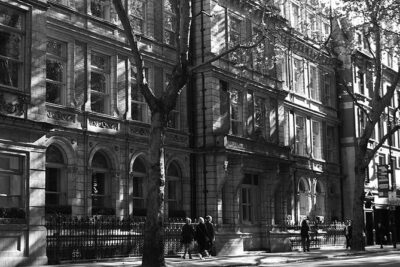
Photography Tour walking the back streets of London’s West End (3 hours)
Read our review →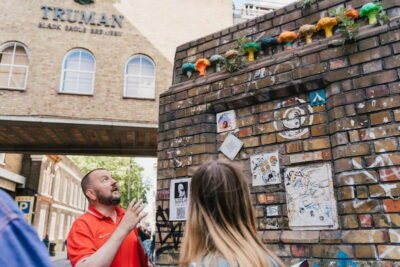
East End Instagrammable Street Art & Graffiti Tour
Read our review →