Review · LONDON
Private Tour: Night Photography Tour in London
London looks made for night photography, and this private walk puts you in front of its best subjects at the right time. With fine art photographer Lou guiding you, you’ll photograph the London Eye, Big Ben, Parliament, St Paul’s Cathedral, and the Thames while learning how to control light, movement, and reflections.
I like the one-to-one instruction and the way Lou works with everything from compact cameras to DSLRs. I also like the route, which links several famous views without leaving you to find them alone. The main consideration is price: at $337.60 per person, this makes the most sense for serious photographers or a small private group, not for someone who only wants a casual evening walk.
Key points to know
- Lou teaches at your camera’s level, from automatic settings to slow exposures and manual controls.
- The South Bank route packs in major views, including the London Eye, Big Ben, Parliament, and St Paul’s Cathedral.
- You practice useful night techniques, such as light trails, water reflections, long exposures, and freezing action.
- The tour is private, so the pace and instruction can be adjusted to you or your personal group.
- A tripod is recommended, and tripod hire may be arranged after booking.
- The three-hour walk ends near Westminster Station, making it easy to continue your evening by Underground.
Why London after dark works so well for photography
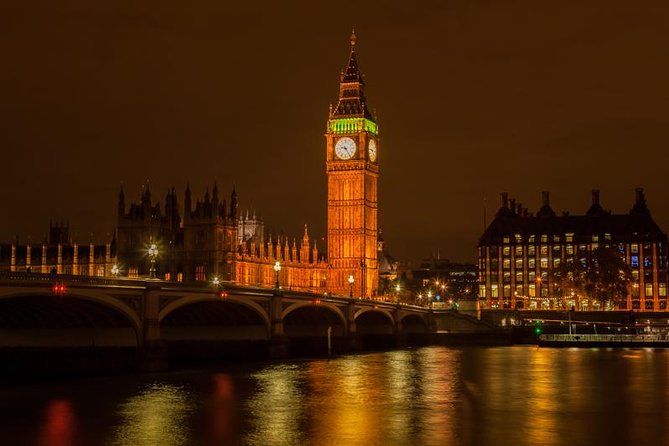
This tour is built around a simple idea: London’s landmarks become more interesting when artificial light, moving traffic, and dark water all enter the frame. During the day, Big Ben and Parliament are familiar sights. At night, slow shutter speeds can turn passing headlights into lines, while the Thames can reflect the buildings in long streaks of colour.
You are not just being led from one photo stop to another. Lou shows you how to make decisions. Should you use a longer exposure to smooth the water? Should you freeze a skateboarder’s movement? Would a low viewpoint make the London Eye feel larger? Those small choices are what turn a record shot into a photograph with some character.
The private format matters here. Night photography can be confusing when you are trying to listen to a guide, keep up with a group, and change settings in the dark. With only your group involved, Lou can stop when your camera needs attention and move on when you have the image you want.
The route also works well for first-time visitors. You get a clear introduction to the South Bank and Westminster riverfront without spending part of the evening checking a map. You can concentrate on framing and exposure instead of wondering which bridge or riverbank gives the better view.
More Photography Tours in London
- Private Night Photography Tour in London
★ 5.0 · 29 reviews - Photography Tour walking the back streets of London’s West End (3 hours)
★ 5.0 · 24 reviews - London Photography Tour – Private Tour
★ 5.0 · 17 reviews
A practical start at the London Eye
The meeting point is the London Eye Waterloo Pier. From there, the walk begins on the South Bank, where the evening skyline opens toward the London Eye, Big Ben, the Houses of Parliament, and the Thames.
The first 45 minutes focus on getting comfortable with night photography. Lou can help you set up your own camera, explain what each control does, and suggest compositions that suit the conditions in front of you. This is useful even if you already know basic photography, since night work brings different problems with focus, shutter speed, camera shake, and changing light.
Bring a fully charged battery, and take a spare if you have one. Night photography often means taking several versions of the same scene while you test different exposures. Extra memory cards are also sensible because the tour is designed to produce plenty of images.
The tour operates in all weather. That gives you flexibility when booking, but it also means you need to dress for an evening outdoors. There are no refreshments included, so carry what you need before setting off.
The London Eye and the first slow exposures
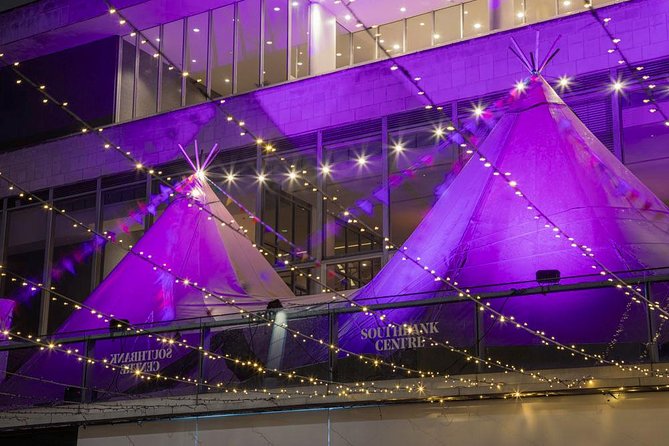
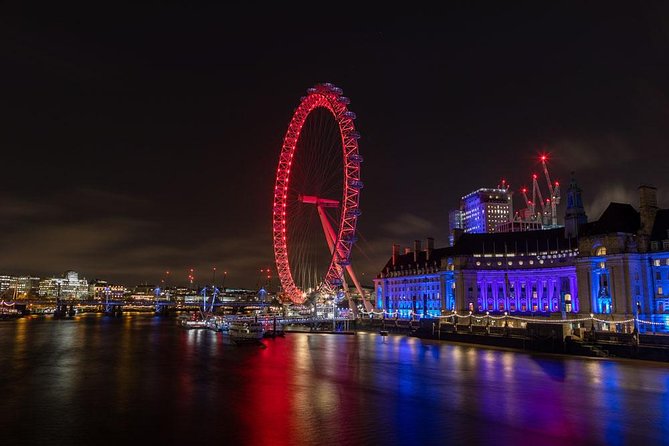
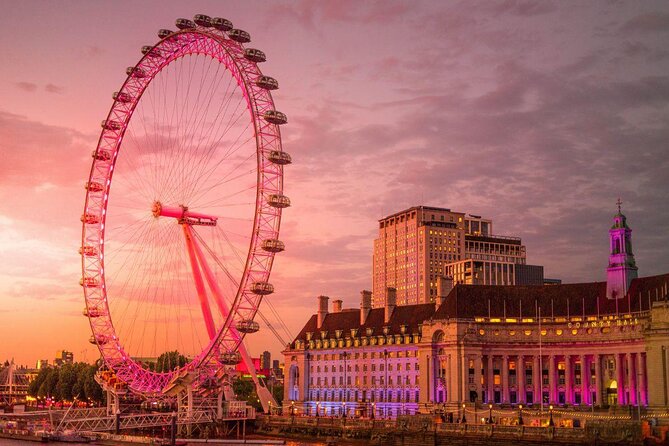
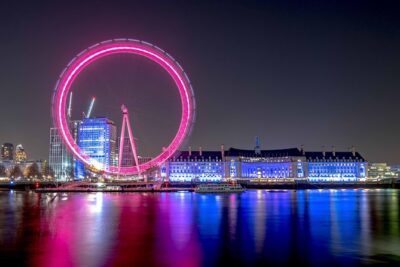
The London Eye gets its own section of the walk because it offers more than a simple landmark photograph. Its slow rotation gives you a chance to experiment with exposure time and movement.
A short exposure can freeze the wheel and keep its lights sharp. A longer exposure can suggest motion and make the lights appear to travel around the circle. Lou helps you compare these effects and adjust the camera so you can see why the results differ.
This is a good early exercise because you can immediately see how shutter speed changes an image. If you are new to night photography, it gives you a practical reason to move beyond automatic mode. If you already have experience, you can try different angles, exposure lengths, and ways of placing the wheel against the evening sky.
The stop lasts about 30 minutes. That is enough time to learn and shoot, but not enough to try every possible idea. The private format helps because Lou can focus on exactly what you want to improve instead of giving a standard lesson to a mixed group.
Along the Thames toward Jubilee Bridge
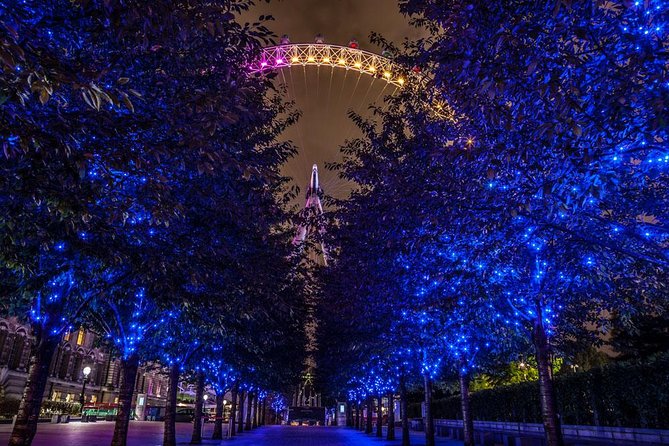
The route then follows the river toward Jubilee Bridge. This section is less about one single landmark and more about learning to use a moving city as part of the picture.
The Royal Festival Hall, National Theatre, and British Film Institute are illuminated after dark. Their lights add colour and shape to the riverfront, while people moving along the South Bank can give your photographs a sense of life and scale.
The Thames is especially useful for learning about reflections. A longer exposure can soften the water and stretch the lights into bright bands. Lou also covers composition, helping you decide how much of the river, buildings, and sky should appear in the frame.
You’ll spend about 15 minutes on this part of the route, so be ready to work quickly. It is not a long stop for wandering inside buildings or exploring the South Bank in depth. The purpose is photography, with the river and illuminated architecture treated as your working subjects.
More Photography Tours in the UK
- Iconic London Photo Walking Tour
★ 4.6 · 11 reviews - A Professional Photo Walk Experience in London
★ 5.0 · 4 reviews - Colourful Notting Hill Photography Tour
★ 5.0 · 3 reviews
Golden Jubilee Bridges and the wider view
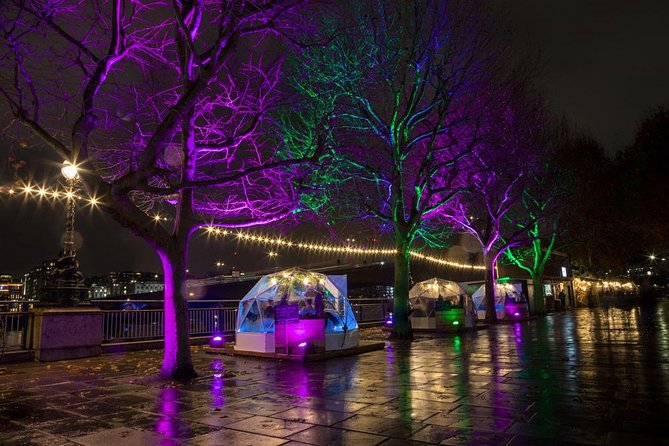
The Golden Jubilee Bridges provide an elevated viewpoint and a change in perspective. From here, you can frame Westminster, the Houses of Parliament, the London Eye, Big Ben, and St Paul’s Cathedral in broader compositions.
This is where the route’s progression makes sense. Earlier stops help you practise individual subjects. From the bridge, you can bring several major elements together and think more carefully about balance, scale, and framing.
The bridge is also a useful place to photograph the river at night. You can include traffic, lit buildings, and reflections in one image, then compare how the scene changes when you alter the exposure time.
At around 15 minutes, this is another focused stop rather than a leisurely viewpoint visit. You may need to choose your priority quickly. If you want a clean architectural view, you may frame out moving people. If you want a stronger sense of London at night, you may include the traffic and river activity.
Royal Festival Hall and the skate park
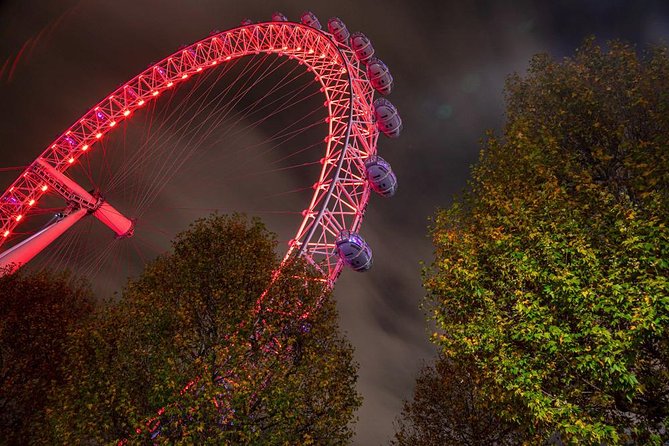
The Royal Festival Hall section adds motion to a route otherwise dominated by architecture and water. The nearby skate park gives you a chance to photograph action, with Lou explaining both fast and slow shutter techniques.
A fast shutter can freeze a skateboarder at a particular instant. A slower exposure can blur movement and create a more atmospheric result. The point is not just to take pictures of skating. It is to understand how the same subject can look completely different depending on your settings.
This stop will appeal to photographers who want variety. It also gives beginners a clear lesson in cause and effect. You can see when the shutter is fast enough to stop movement and when it is slow enough to show motion.
The area may be visually busy, so composition matters. Lou can help you identify a useful viewpoint and wait for a moment when the action, background, and lighting work together. You have about 15 minutes here, which keeps the stop lively but limits the number of attempts.
Big Ben and the Houses of Parliament
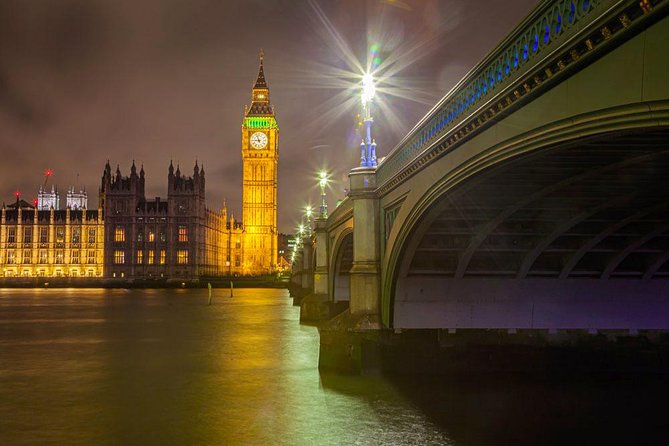
Across the river, Big Ben and the Houses of Parliament provide the tour’s most recognisable views. Their scale, detail, and lighting make them strong subjects for learning how to build a night composition.
Lou works with you on mood and framing rather than asking you to make a standard postcard image. You might include the river to create depth, use the architecture as a strong vertical shape, or frame the clock tower against open darkness.
These two stops are closely linked, but they are not exactly the same photographic exercise. Big Ben gives you a clear focal point. Parliament lets you explore a longer architectural line and the repeated forms of the building.
The historical importance of the site can add meaning to the photograph, but the lesson remains practical. You are learning how to control the bright lights on the buildings without losing the darker parts of the scene.
You should not expect a detailed sightseeing talk about Parliament. The focus is on making photographs, so this works best if you already know the main landmarks or are happy to learn about them through the viewfinder.
Westminster Bridge and traffic light trails
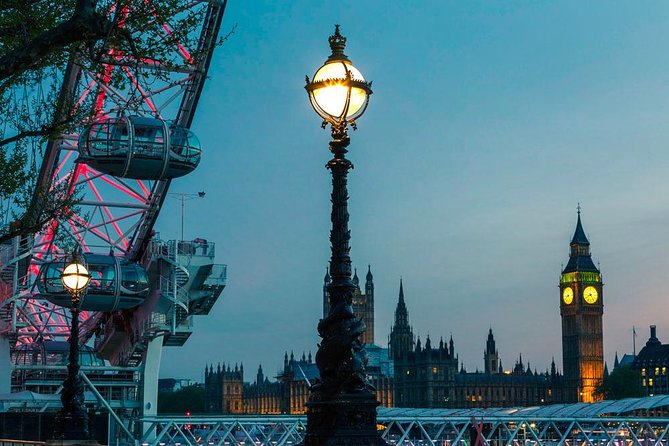
Westminster Bridge is one of the strongest teaching locations on the route. Moving traffic gives you a ready-made subject for light trails, while the bridge offers views back toward the Houses of Parliament and Big Ben.
The basic technique is simple to describe but harder to judge in practice. Keep the shutter open long enough for headlights and taillights to stretch through the frame, while adjusting the rest of the exposure so the buildings remain visible.
This is also a good point to work on timing. You may need to wait for the right flow of vehicles or change your position to keep the trails from cutting across the main subject. Lou can help you decide how to place the bridge, road, river, and buildings within one frame.
At 15 minutes, the stop is short. You will probably get the method and several attempts rather than a full technical workshop. That is fair for a three-hour walk, but photographers who want extensive practice with traffic trails may wish for more time.
Victoria Embankment and the final London Eye view
The walk finishes around Victoria Embankment, looking back across the Thames toward the London Eye. This gives you a different angle from the opening stop and lets you apply the techniques you have practised along the way.
From across the river, the full circular form of the Eye can be framed with reflections below. You can work with colour, movement, and water, using a slow exposure to suggest the rotation of the wheel and smooth the surface of the Thames.
The final location is a useful review point. You can revisit questions about composition and compare the choices you made earlier in the evening. If you started with automatic settings, this is a chance to take more control and produce a deliberate exposure.
The tour ends near Westminster Underground Station on Bridge Street. That is convenient, but remember that the walk finishes at a different place from where it begins. Plan your evening around Westminster rather than assuming you will return to Waterloo.
What Lou’s teaching style means for you
The strongest part of this experience is the hands-on tuition. Lou has extensive teaching experience and works with many types of cameras. The instruction is geared to the camera you bring, which is far more useful than a generic explanation of photography settings.
You can expect help with camera controls, exposure choices, composition, and reviewing your photographs. The aim is not simply to give you a few attractive images of London. It is to help you understand how to repeat the process later, in London or at home.
Beginners can take part. One new SLR owner arrived with little experience and often used automatic settings, yet still came away with strong photographs and a better understanding of the camera. That suggests the tour is patient and accessible, but preparation will help you gain more from it.
If you are new to your camera, read the basic controls before the tour. Know how to change shutter speed, aperture, ISO, and focus mode if your camera allows it. You do not need to be advanced, but familiar buttons mean more time taking pictures and less time searching through menus.
More experienced photographers may appreciate the location advice and composition help. The tour can also be adapted to your aims, so tell Lou in advance if you care most about architecture, light trails, reflections, action, or blue-hour images.
Price, private format, and real value
The price is $337.60 per person. That is a serious cost for three hours, but this is not priced like a basic sightseeing walk. You are paying for a private session with a professional fine art photographer, personal instruction, location planning, and help with your own equipment.
The value improves if two or more people in your party share the experience and can use available group discounts. It also improves if you genuinely want to improve your photography. Someone looking only for a few snapshots may find the price hard to justify.
A private tour can save time in another way. You do not have to wait for a large group, follow a fixed teaching level, or spend the evening trying to ask questions while walking. If your camera is difficult to use, that focused attention can make a real difference.
Refreshments are not included. A tripod is recommended, and you can contact the provider after booking about hiring one. That option is useful if you are travelling light, since a stable tripod makes long exposures much easier.
The tour is offered in English, uses a mobile ticket, and confirmation is provided at booking. Service animals are allowed, and the experience is near public transport. Most people can participate, but the route is still a three-hour outdoor walk, so comfortable shoes and suitable clothing matter.
Who should book this night walk
I would recommend it most strongly to photographers who want practical instruction and a private pace. It suits beginners who feel unsure about their camera, as well as intermediate photographers who want better night compositions in London.
It is also a good choice if you have visited London before and want to see the city through a different activity. The route gives you famous sights, but the main purpose is learning how to photograph them.
Families or friends can book together if everyone is interested in photography. The private format lets the guide adjust the lesson, though people with very different interests may need to agree on a shared pace.
I would hesitate if you dislike walking outdoors at night, do not want to carry a camera, or mainly want a history-focused tour. I would also think twice if the cost would prevent you from enjoying the rest of your trip. This is a specialist experience, and its value depends on how much you want to practise.
Cancellation is free up to 24 hours before the start time for a full refund. Changes or cancellations made less than 24 hours ahead are not accepted, with cut-off times based on London time.
Should you book it?
Book this tour if you want more than attractive London snapshots. Lou’s patient, camera-specific teaching can take you from automatic settings to more confident use of slow exposures, light trails, reflections, and composition.
The main strengths are the private instruction, the carefully chosen riverside route, and the number of major views covered in three hours. The main weakness is the high per-person price, along with limited time at each stop and the need to work outdoors in whatever weather arrives.
Bring a charged camera, spare battery, extra memory cards, and a tripod or arrange to hire one. If you do that, you’ll be ready to make the most of a focused evening that teaches skills you can keep using long after the London Eye and Westminster lights have faded.
FAQ
How long does the London night photography tour last?
The tour lasts approximately three hours.
Where does the tour begin and end?
It begins at London Eye Waterloo Pier and ends near Westminster Underground Station on Bridge Street.
Is the tour private?
Yes. Only your group participates, and the instruction can be tailored to your interests and skill level.
What camera should I bring?
The tour is suitable for all types of cameras, from compact cameras to DSLRs. Bring your own camera, a fully charged battery or spare battery, and additional memory cards.
Is a tripod required?
A tripod is recommended for night photography but is not stated as required. If you want to hire one, you can contact the provider after booking.
Can I cancel for a full refund?
Yes. You can cancel at least 24 hours before the experience start time for a full refund. Cancellations or changes made less than 24 hours before the start time are not accepted.
More Private Photoshoots in the UK
- Private Photoshoot in Edinburgh with a Professional Photographer
★ 4.5 · 43 reviews - Edinburgh Photography Masterclass – Private Photography Lesson
★ 5.0 · 40 reviews - Cotswolds Village Private Car Tour and Photoshoot
★ 5.0 · 9 reviews - Edinburgh: Photo Shoot with a Private Vacation Photographer
★ 5.0 · 6 reviews
More Private Photoshoots in London
- London: Private Photoshoot with Video Clip Option
★ 4.8 · 182 reviews - Private landmarks photoshoot for families and couples
★ 5.0 · 92 reviews - London: Private Landmark Tour with Professional Photographer
★ 4.7 · 91 reviews - London: Private Photography with Professional Photographer
★ 5.0 · 7 reviews
Fresh shoots around London
- Iconic London Photo Walking Tour★ 4.6 · 11 reviews
- Flying dress professional photoshoot with pro photographer★ 5.0 · 5 reviews
- London: East End Instagrammable Street Art & Graffiti Tour★ 4.9 · 22 reviews
- Colourful Notting Hill Photography Tour★ 5.0 · 3 reviews
- London: Private Photography with Professional Photographer★ 5.0 · 7 reviews
- A Professional Photo Walk Experience in London★ 5.0 · 4 reviews
- London Photography Tour – Private Tour★ 5.0 · 17 reviews
- Private Night Photography Tour in London★ 5.0 · 29 reviews
London Photo Tours & Photoshoots, frame by frame.
Professional Photoshoot in London Photographer
Read our review →
Photography Tour walking the back streets of London’s West End (3 hours)
Read our review →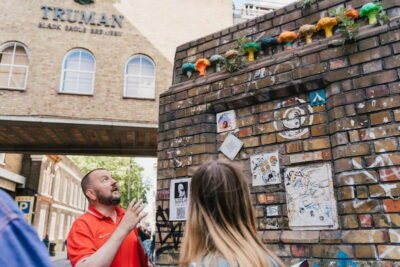
East End Instagrammable Street Art & Graffiti Tour
Read our review →