
Review · TOKYO
Tokyo Ryogoku Sumo Morning Practice + Photo Shoot with Wrestlers
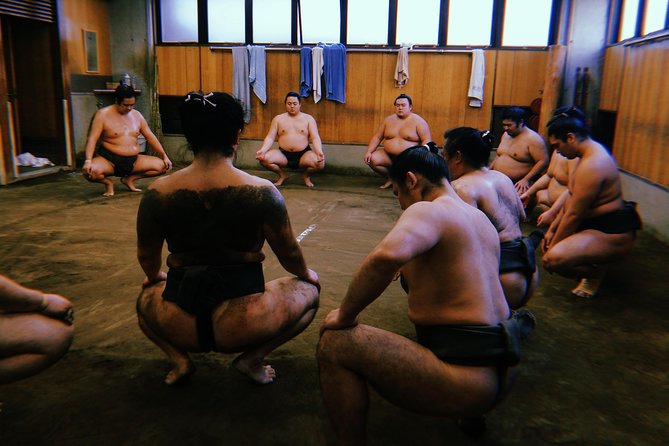
Seeing sumo wrestlers train just a few feet away is the heart of this Tokyo experience. You watch real practice, not a staged show, with wrestlers warming up, drilling techniques, and sometimes competing in hard, physical bouts. I like the small group size of up to seven and the chance to learn how the stable system, rankings, rules, and daily life fit together. The main catch is that you may sit on the floor for well over an hour, and photo opportunities depend entirely on the stable.
I also like that the tour gives you access that is difficult to arrange on your own. Guides such as Mayu, Masao, Ayaka, and Yumiko have helped guests understand what they are seeing, while the best guides add useful notes about etiquette and sumo life. Still, the quality of the explanation can vary, and some visits begin partway through practice or place your group toward the back.
Key points at a glance
- Real morning training: Watch wrestlers work through warm-ups, technique drills, and practice bouts in an active stable.
- Close-up view: You may sit only a few feet from the wrestlers, with front-row places assigned on a first-come basis.
- Quiet, formal setting: You must follow the stable’s rules, including no talking during practice and possible restrictions on photography.
- Small group format: The advertised maximum is seven people, though larger bookings may be split between stables.
- Ryogoku context: After practice, your guide walks with you around Tokyo’s sumo district, including a short stop near Ryogoku Kokugikan.
- Important physical detail: Most stables use tatami flooring rather than chairs, so you may sit on the floor for 80 to 90 minutes or longer.
Why morning practice beats watching only a tournament
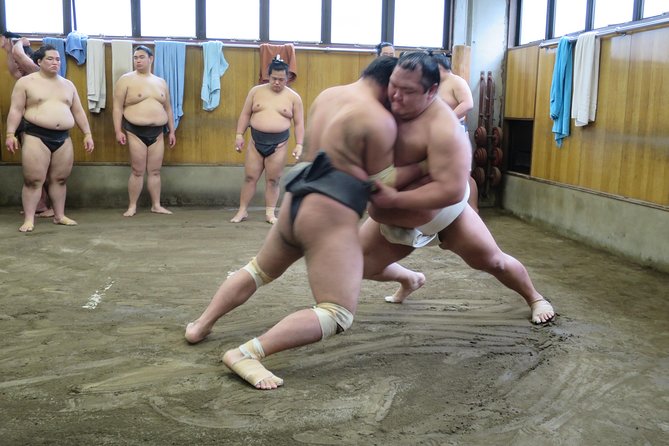
A sumo tournament gives you the spectacle: packed stands, ceremonial entrances, rankings, and bouts with official winners. Morning practice gives you something quieter and more revealing. You see the repetition behind the public event, including warm-ups, stretching, strength work, technique drills, and bouts between wrestlers.
The practice is not performed for the group. That matters. You are observing a working training session, so the pace may feel slow at first, and no one pauses to explain every movement. Then a bout begins, bodies collide, and the room suddenly feels very small. The physical force is striking because you are close enough to notice footwork, balance, breathing, and the way wrestlers reset after each exchange.
You may also see familiar competitors if you follow professional sumo. The experience suits serious sumo fans, but it also works for first-time visitors who want a look at an important part of Japanese sporting life without attending one of the six official tournaments.
More early-light shoots around Tokyo:
- Barcelona: Paddleboarding at Sunrise. Includes: instructor, photos, equipment
★ 4.7 · 570 reviews - Yarra Valley Sunrise Balloon Flight with GoPro Photos
★ 5.0 · 506 reviews - Cappadocia: Sunrise Balloon Watching Tour with Photographer
★ 4.8 · 466 reviews
Meeting at JR Ryogoku Station at 8:00 a.m.
The meeting point is at the east exit of JR Ryogoku Station, near Re.Ra.Ku Ryogoku Ekimae under the station structure. Look for a guide holding a red or orange MagicalTrip board.
Tokyo has two stations called Ryogoku, so take care here. The correct meeting point is at JR Ryogoku Station East Exit, not Ryogoku Station on the Oedo Line. Check the station name before you leave your hotel, and arrive early. The tour cannot wait more than 15 minutes for late arrivals, and latecomers are not allowed to join, receive a refund, or reschedule.
That strict start time is understandable. A group entering a working stable after practice has begun can disturb the wrestlers and other people observing. Still, it means you need to allow extra time for finding the correct exit, especially if you are navigating Tokyo’s rail system for the first time.
The short walk to the changing stable
After meeting your guide, you walk from the station to a stable chosen according to that morning’s practice schedule. The walk can take about five to 30 minutes, so do not assume every group visits a stable right next to the station.
This walk is a useful transition into Ryogoku, Tokyo’s sumo district. Your guide may begin explaining the stable system, the wrestlers’ training routine, and the basic rules of sumo before you enter. The quality of this introduction matters. Some guides have offered detailed explanations, written notes, and clear answers to questions. Others have kept the briefing short, leaving the practice itself to carry the experience.
If you want more background, ask your guide before entering. Once practice starts, conversation is usually not allowed. The quiet is part of the setting, but it also limits your chance to ask questions as you watch.
Inside the stable: close, quiet, and very real
The main visit lasts about 90 minutes, though practice can run longer. You sit on tatami flooring, usually without a chair, and watch from the permitted seating area. Only tatami sections are open to visitors. Other parts of the stable are off-limits.
The floor seating is the biggest practical issue. If sitting cross-legged or on your knees is difficult, this may be uncomfortable. One session lasted about 80 minutes for a group, while another continued for roughly two hours. Bring patience, and use the toilet before the tour begins because you may not be allowed to leave during practice.
The stable sets the rules for speech, clothing, seating, masks, and photography. You may be asked to remain silent throughout the training. That can feel restrictive if you expected a guided demonstration, but it protects the wrestlers’ concentration and treats the stable as a workplace rather than a theater.
Photography is not guaranteed. Some groups have been allowed to photograph practice and take posed pictures afterward. Other groups have been told not to take photos during training. The stable can also refuse photos with wrestlers, regardless of what the tour title suggests. Listen to the guide and do not raise your phone until permission is clear.
Seating is first come, first served. Arriving late can mean sitting two or three rows behind the front, and even an on-time group may not receive the best places if another group arrives earlier. For a close view, arrive at the meeting point early and follow the guide promptly.
More photo tours and photoshoots around Tokyo:
- Tokyo: Kimono Dressing, Walking, and Photography Session
★ 4.9 · 427 reviews - Best Go Kart Experience in Shibuya Crossing with Iconic Photos
★ 5.0 · 348 reviews - Tokyo Cyberpunk Street Photo Tour
★ 5.0 · 165 reviews - Tokyo by Night Photography Tour (Private Option Available)
★ 5.0 · 151 reviews
What you actually watch during training
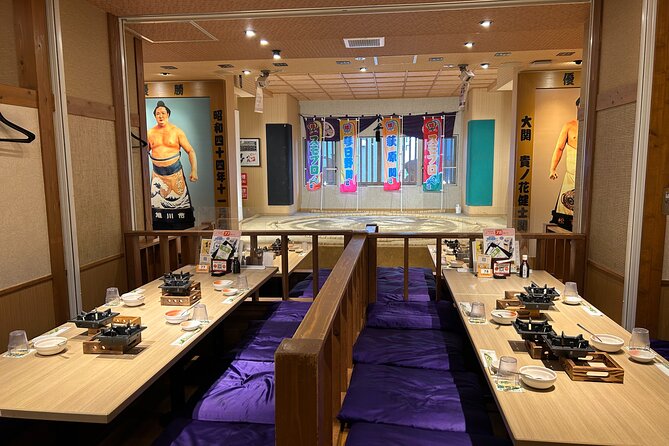
The session may begin with general exercises and warm-ups before moving into more demanding drills. You can expect to see wrestlers repeat movements, practice balance and pushing, and work through bouts that resemble the techniques used in tournament competition.
The strongest part of the experience is the contrast between ritual and exertion. Sumo includes ceremony and strict hierarchy, but practice is also sweaty, repetitive, and punishing. You see the work that supports the short bouts at a tournament.
A guide can point out details you might miss, such as the order of practice, the roles within the stable, and the difference between exercises and full practice bouts. Several guides have been praised for explaining the rules and the way of life connected with sumo. Mayu, Masao, Ayaka, and Yumiko are among the guides who have received especially warm comments, though the guide assigned to your date may be someone else.
Do not expect a constant spoken tour. The best format is usually a short explanation before practice, quiet observation during the session, and questions afterward. One weakness of the experience is that some groups receive little context, or no printed outline of what they are seeing. If you want a lesson as well as a close view, choose a guide who is willing to explain the training before and after the quiet period.
The photo opportunity after practice
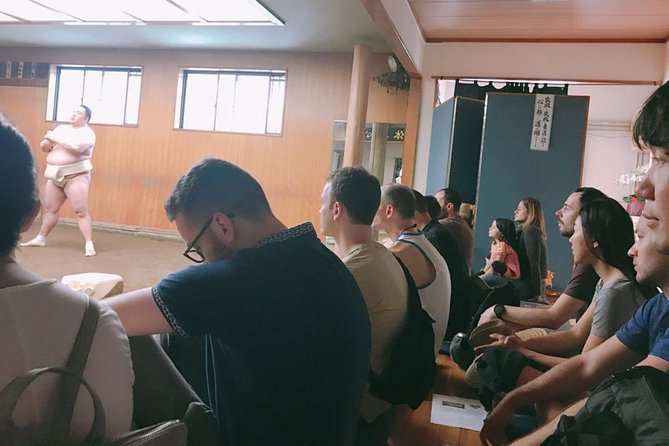
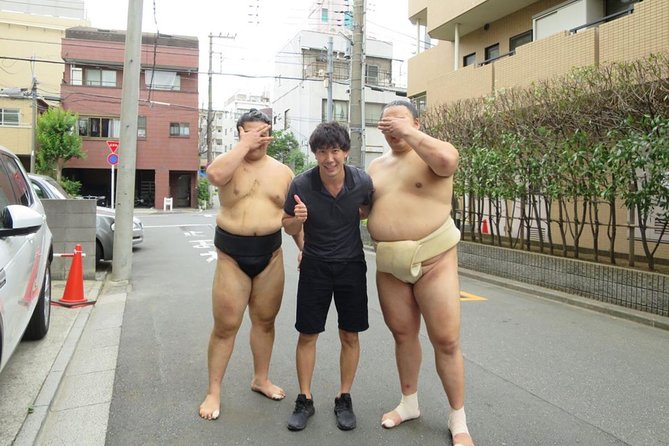
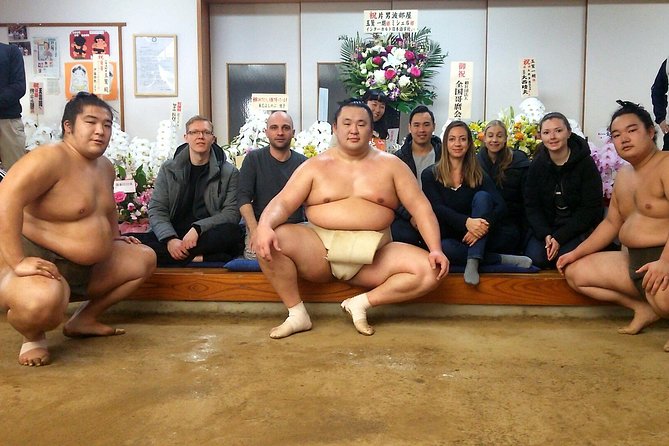
The photo shoot is a possibility, not a promise. Some wrestlers have posed with visitors after training and even answered questions. That can be a memorable ending, especially after watching them work at close range.
The stable decides if photos are allowed and if wrestlers will pose. Practice may also end early because of the wrestlers’ condition or an unexpected change in the schedule. Keep your expectations flexible, and treat a photograph as an extra rather than the main reason to book.
The same applies to informal contact. You should not expect wrestlers to chat during practice. If a short question period or posed photo is approved, follow the guide’s instructions and keep it brief.
Ryogoku Kokugikan and the short neighborhood walk
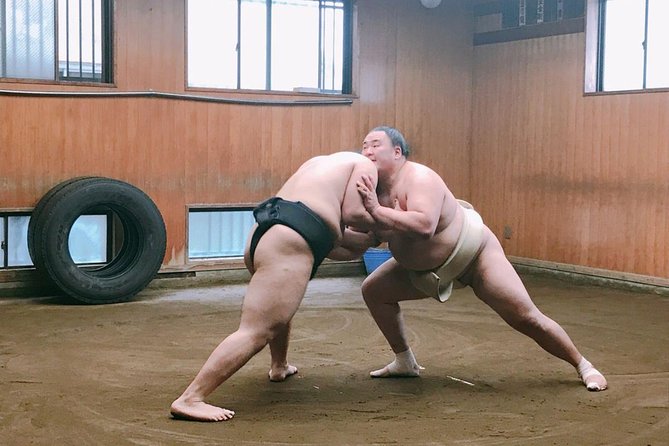
After the stable visit, the guide takes you around Ryogoku, with a short stop near Ryogoku Kokugikan, Tokyo’s major sumo arena. This portion is listed at about 10 minutes, so it is an orientation rather than a full museum or stadium visit.
That short walk helps place the stable in context. Ryogoku is not simply a meeting point. It is the part of Tokyo most closely linked with sumo, and the arena gives you a useful sense of the sport’s public side after seeing its private training side.
Some guides have also added a brief stop at Ekoin Temple, a traditional and modern temple connected with memorial practices. This extra stop is not presented as a guaranteed part of every visit, so do not book expecting a temple tour. The planned neighborhood portion remains short.
At the end, your guide walks you back to the station and the experience finishes at the original meeting point.
Is $98.16 a fair price?
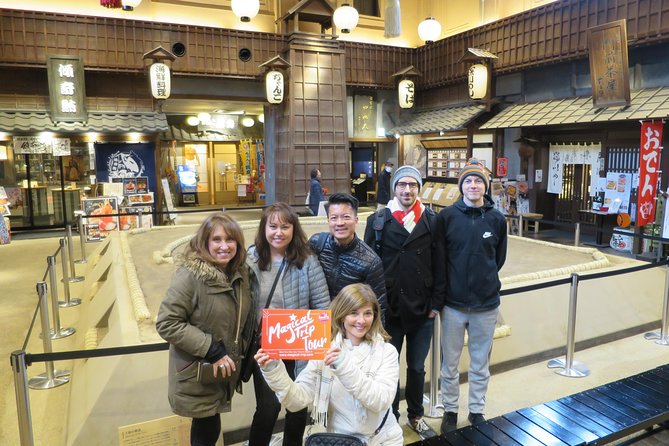
At $98.16 per person, this is not a cheap way to spend two hours in Tokyo. You are paying for arranged access, a local guide, stable admission, and the chance to observe a session that is difficult to organize without local help. There is no meal included, and the short Ryogoku walk adds context rather than a major second attraction.
The price makes sense if you care about sumo or want access to an active stable without trying to contact one yourself. It is less convincing if you mainly want a photo, a long lecture, or a polished show. You can find free or low-cost ways to see sumo-related places in Ryogoku, but they will not necessarily put you inside a stable during morning training.
Value also depends on the guide. A strong guide can explain the rankings, stable structure, rules, and daily routine. A weaker one may simply escort you in, enforce the rules, and escort you out. The practice remains interesting, but the educational value can change from one departure to another.
Who should book this experience?
I would recommend it to anyone with a real interest in sumo, Japanese sports, or daily life behind a public tradition. It is also a good choice if you cannot attend an official tournament and want to see wrestlers in a serious working setting.
It suits solo visitors well because the practice requires quiet observation, not constant conversation. Couples and small groups should also enjoy it if everyone is comfortable sitting on the floor.
I would think twice if you need an accessible seat, dislike early starts, or want freedom to move around. Children under 12 cannot enter. Summer adds heat and humidity, so bring water and wear a hat before and after the indoor visit.
The experience is also a poor fit if you need a fixed schedule. Stables may change practice times, shorten or cancel training, or ask the operator to move your booking. If the stable cancels, you should receive a full refund, but a changed time or date may be offered instead.
Practical details that affect your morning
The tour starts at 8:00 a.m. and lasts about two hours, though an extended practice can make it run late. The maximum group size is seven, but a larger booking may be divided among different stables.
Wear clothing that lets you sit comfortably on the floor. Go to the toilet before meeting the group, bring water in hot weather, and keep your phone silent. Most important, arrive early at the correct JR station exit.
The cancellation policy allows a full refund if you cancel at least 24 hours before the start time. Changes or cancellations within 24 hours are not refunded, except when the provider cancels because of weather or a sudden stable schedule change.
My verdict: book it for the practice, not the photo
I would book this tour if seeing real sumo training is high on your Tokyo list. The close view, strict setting, and physical intensity can make it one of the most memorable sports experiences in the city.
Go in knowing that this is observation, not entertainment on demand. You may sit silently on the floor, arrive during an already-running session, sit toward the back, or leave without a wrestler photo. If you can accept those limits, the chance to watch serious training inside a sumo stable is worth the cost. If your priority is guaranteed photography or a detailed, nonstop explanation, choose a different activity.
FAQ
Where does the sumo morning practice tour begin?
Meet at the east exit of JR Ryogoku Station, near Re.Ra.Ku Ryogoku Ekimae under the station structure. The guide will hold a red or orange MagicalTrip board.
Which Ryogoku station should I use?
Use JR Ryogoku Station East Exit. Do not go to Ryogoku Station on the Oedo Line.
What time does the tour start?
The tour starts at 8:00 a.m. You should arrive early because the group cannot wait more than 15 minutes for late arrivals.
How long does the experience last?
The expected duration is about two hours. The training itself usually lasts around 90 minutes, but practice can continue longer and delay the return.
Can children join the tour?
Only people aged 12 and older can join. Children under 12 are not allowed inside the sumo stable and will be denied entry without a refund.
Will I sit on a chair during practice?
You may have to sit on the floor because most stables use tatami flooring and do not usually provide chairs.
Can I take photos of the wrestlers?
Photography depends on the stable. The stable decides if photos during practice or posed photos with wrestlers are allowed, so neither option is guaranteed.
What happens if the stable cancels practice?
The stable may change or cancel practice because of its tournament schedule or the wrestlers’ condition. If the booking is canceled for this reason, you will receive a full refund. You may also be asked to change the date or time.
Can I cancel my booking for a refund?
You can receive a full refund if you cancel at least 24 hours before the experience starts. Cancellations or changes made less than 24 hours before the start time are not refunded.
Fresh shoots around Tokyo
- Asakusa Kimono/Yukata Rental & Photography_Tsutsuji★ 5.0 · 12 reviews
- Asakusa Kimono Photography Tour★ 5.0 · 8 reviews
- Tokyo: Private photo shoot★ 5.0 · 31 reviews
- Tokyo: Photo Shoot with a Private Vacation Photographer★ 5.0 · 53 reviews
- Tokyo 6hr Instagram Highlights Private Tour with Licensed Guide★ 5.0 · 38 reviews
- Tokyo: Evening Photography Tour★ 4.8 · 61 reviews
- Tokyo:Genuine Tea Ceremony, Kimono Dressing, and Photography★ 5.0 · 33 reviews
- :Tokyo,Shibuya/ Pro Photography in Kimono / English-Friendly★ 5.0 · 26 reviews
Tokyo Photo Tours & Photoshoots, frame by frame.
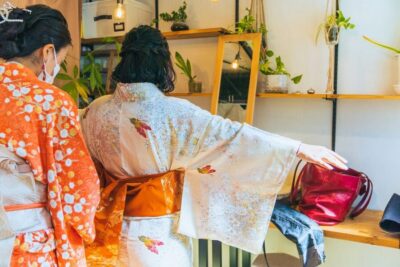
Kimono Dressing, Walking, and Photography Session
Read our review →
Best Go Kart Experience in Shibuya Crossing with Iconic Photos
Read our review →


Tokyo by Night Photography Tour (Private Option Available)
Read our review →

This shoot also appears in