
Review · GERMANY
Berlin Museum of Photography Entry Ticket
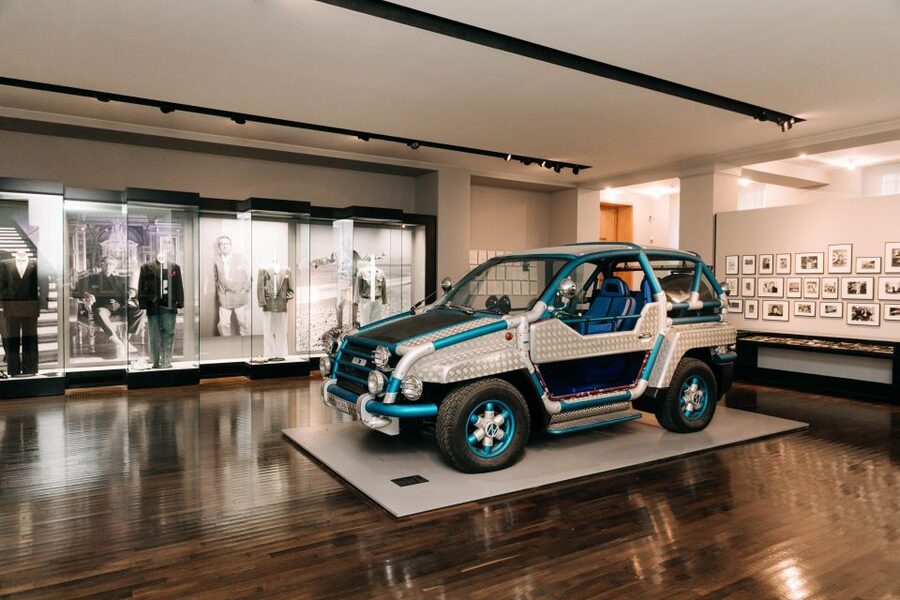
Berlin’s Museum of Photography brings together early photographic experiments, historical postcards, modern art photography, and the bold fashion work of Helmut Newton. The Newton collection is the main draw, with his cameras, personal objects, art collection, and famous Newton-mobile adding a personal side to his polished, provocative images.
I like the freedom of a full-day ticket and the mix of five collection areas, which lets you move from 19th-century photographs to current exhibitions at your own pace. The main thing to consider is that the museum may feel different from what you expect if you want only famous fashion photographs. It is a broad museum, and one short opinion rated the experience as not what was imagined.
Key points
- Helmut Newton collection: See Newton’s cameras, art collection, Newton-mobile, and objects from his life.
- Photography across two centuries: Move from early photographic images to modern work and current events.
- Five collection areas: Explore photographic archives, artistic photography, personal archives, photogrammetric holdings, and historical postcards.
- Temporary exhibitions: The program can include shows such as Body Performance and Post-War Modern Photography.
- At-your-own-pace visit: Your $14 admission is valid for one day, with no guided schedule to follow.
- Practical museum rules: Backpacks, oversize luggage, food, drinks, and heavy or wet outerwear are not allowed inside the exhibitions.
Starting with Berlin’s Early Photographs
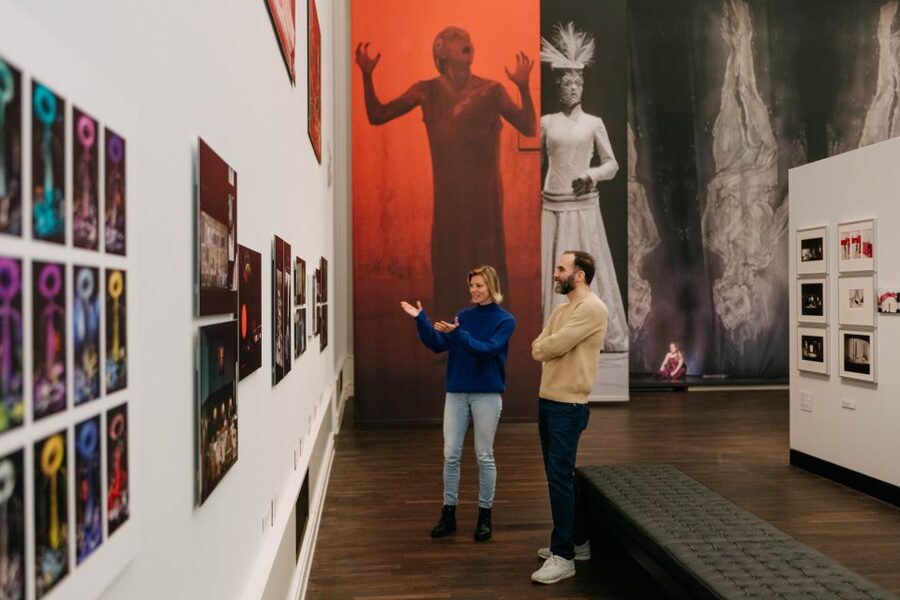
The Museum of Photography gives you a broad look at how photography changed from the 19th century to the present day. Rather than presenting one narrow story, it places different kinds of photographic work under one roof.
Begin with the older material. Early photographs can feel slower and more deliberate than modern images because each picture reflects a time when photography was still developing as a craft and a public medium. You can look closely at how people, places, and events were recorded before the speed of digital photography.
This part is useful if you enjoy context. It helps you see photography not only as art, but also as a record of daily life and current events. The museum’s holdings reach across different periods, so you can compare early images with more recent work rather than viewing each era in isolation.
I would allow time here instead of racing straight to Helmut Newton. The older collections may not deliver an instant crowd-pleaser, but they give the later displays more meaning. You begin to see how changes in technology affected the way photographers framed people and the world around them.
More museum stops around Germany:
- Berlin: Fotografiska Photography Exhibition Ticket
★ 4.6 · 168 reviews - Berlin: Ticket for Photography Exhibitions at C/O Berlin
★ 4.5 · 39 reviews - Berlin: East Side Gallery Photoshoot
★ 5.0 · 2 reviews
Five Sections That Give the Visit Shape
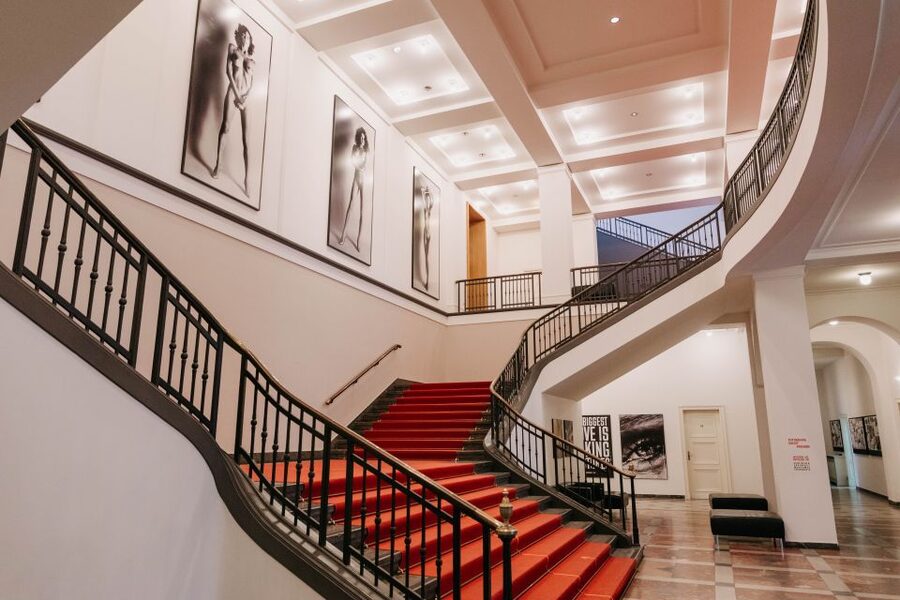
The museum is divided into five main areas, each representing a different part of its holdings. This makes the large subject of photography easier to follow.
The photographic archive presents historical material and helps establish the museum’s documentary side. It is a good place to consider how photographs preserve events, people, and changing public life.
The collection of artistic photography shifts the focus toward creative decisions. Here, the image is not simply a record of something that happened. Composition, style, subject, and the photographer’s point of view matter just as much.
The personal archive offers another angle. Personal material can show how a photographer worked, what he or she kept, and how an artistic career took shape. The supplied information does not specify every object on display, so treat this section as a chance to see the personal side of photographic practice rather than expecting a fixed list of famous items.
The photogrammetric holdings point to photography’s technical and measuring roles. This is a reminder that cameras have long served more purposes than portraiture or art. Photography can document, measure, compare, and classify.
Finally, the museum includes historical postcards. These are easy to overlook, but they can be a charming window into how places and images were shared with a wider public. Together, the five sections make the museum feel more like a study of photography as a whole than a single exhibition about one artist.
Helmut Newton’s Berlin Story
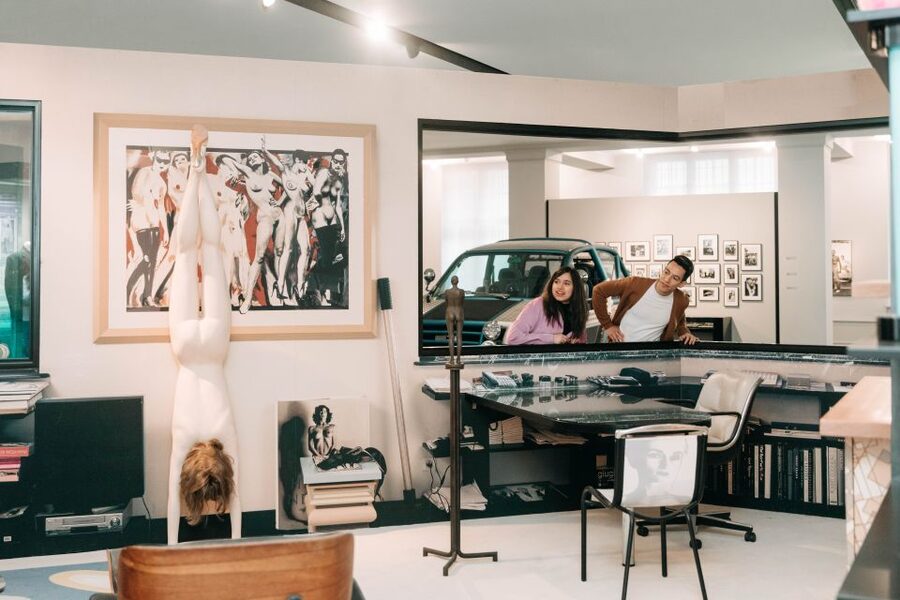
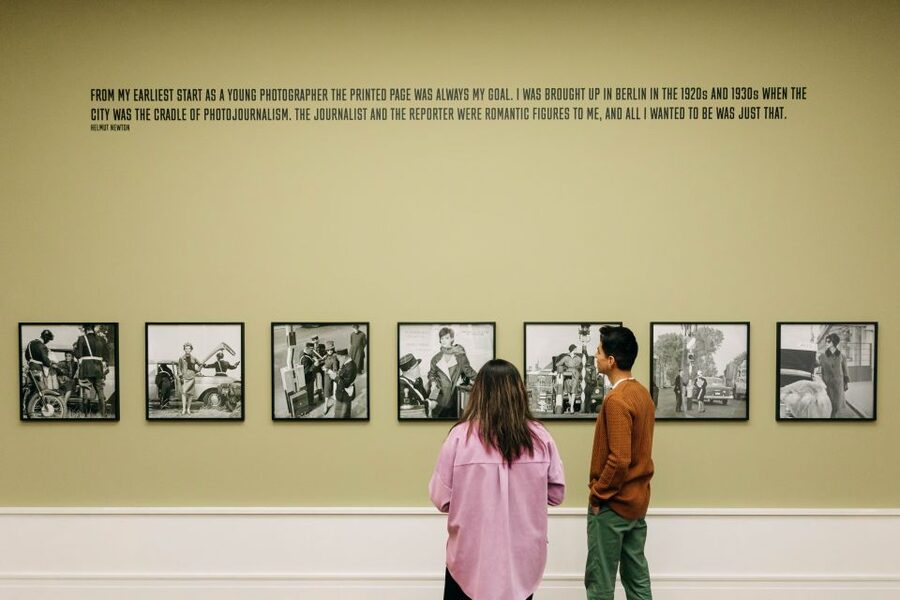
For many people, the Helmut Newton exhibition will be the visit’s main event. Newton was born in Berlin and became an influential fashion photographer known for provocative images. His work has a strong identity, and the display gives you more than a wall of finished photographs.
You can see his cameras, his art collection, and objects connected to his life. The famous Newton-mobile is another unusual feature. These objects matter because they show the person behind the photographs and give the exhibition a physical, personal quality.
If you know Newton mainly for his fashion work, this collection helps explain the tools and interests behind that work. If you are new to him, it offers an approachable introduction through both photographs and personal artifacts.
Newton’s style is not designed to please everyone. His images can be bold, theatrical, and provocative. You may admire the control and visual impact, or you may find some work uncomfortable or too stylized. That is part of the value of seeing it in a museum setting. You can form your own view rather than encountering isolated images without context.
I also like the contrast between Newton’s highly recognizable fashion photography and the museum’s quieter historical holdings. One room may focus on glamour and attitude, while another asks you to think about photography as documentation or technical evidence. That change of mood keeps the visit from becoming repetitive.
Temporary Exhibitions Keep the Visit Current
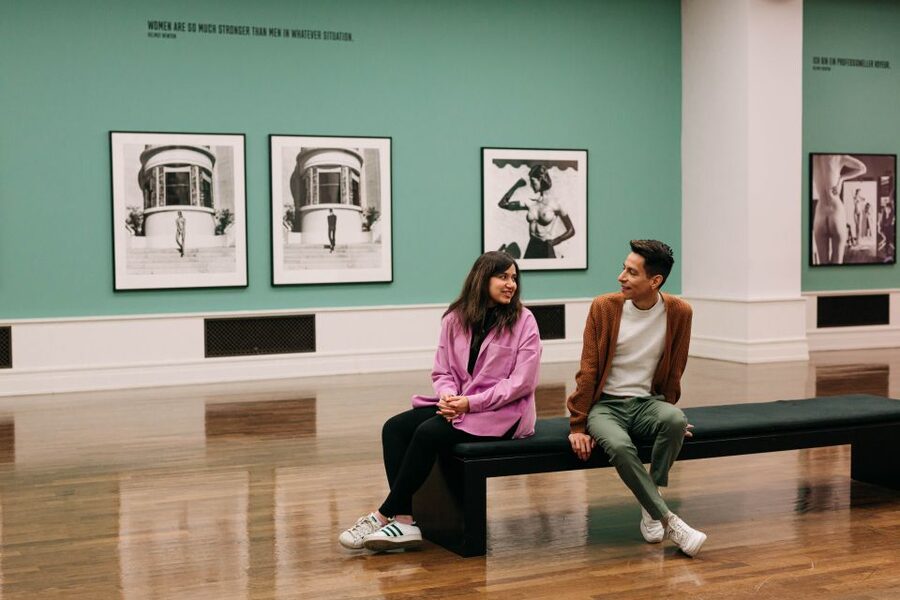
The museum also presents temporary exhibitions, including shows such as Body Performance and Post-War Modern Photography. The exact program can change, so check what is on display when you plan your visit.
Body Performance suggests a focus on how the body is presented, posed, recorded, or interpreted through photography. That theme can connect naturally with fashion photography, while also moving into questions of identity, movement, and artistic expression.
Post-War Modern Photography places attention on the period after the Second World War. It can help you see how photographers responded to a changed society and how modern photographic styles developed. The details of the exhibition can vary, but the subject gives the permanent collections a wider historical frame.
The temporary galleries are especially useful if you have already seen some of Berlin’s major museums and want an exhibition that changes over time. They also help keep the museum from feeling like a static archive.
Do not assume that every temporary show will suit your taste. Contemporary photography can be demanding, and a theme that interests one person may leave another cold. Since your ticket covers the museum for one day, you have room to spend more time with the displays that speak to you and move quickly through those that do not.
More tickets around Germany:
- Ubud: Tegalalang Rice Terrace Photos Tour with Swing Ticket
★ 4.7 · 177 reviews - Amsterdam: Foam Photography Museum Admission Ticket
★ 4.2 · 141 reviews - Los Angeles: Academy Museum of Motion Pictures Ticket
★ 4.7 · 84 reviews - Park Guell Private Photoshoot with Skip the Line Ticket
★ 5.0 · 75 reviews
How Much Time Should You Allow?
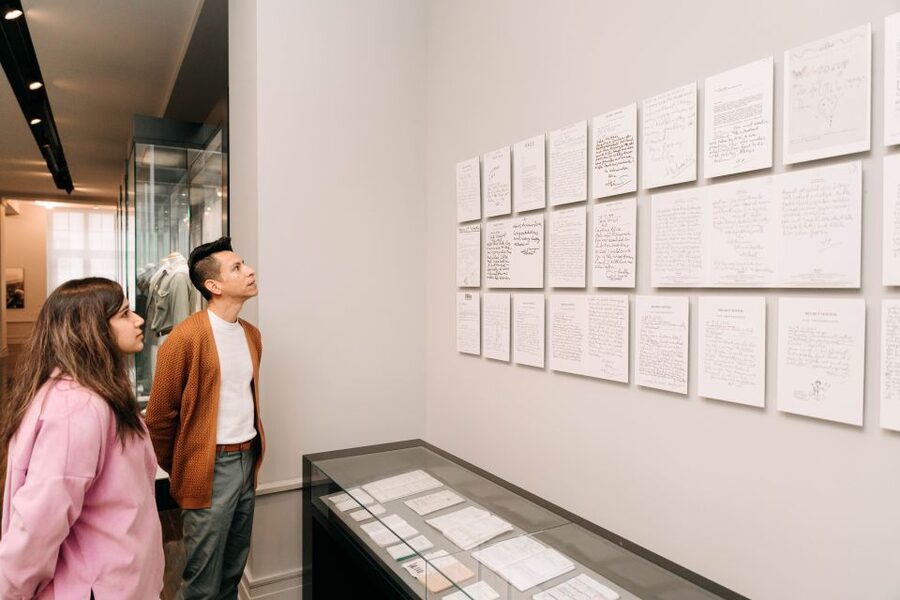
The ticket is valid for one day, but the information does not set a required visit length or a guided starting time. You go directly to the museum entrance and explore independently.
That flexibility is one of the best parts of the admission. You do not need to keep pace with a guide or reach a particular room by a fixed hour. You can make the visit short and focused, concentrating on Helmut Newton, or spend much longer comparing the five collection areas and temporary exhibitions.
I would plan at least enough time to see the Newton exhibition, the permanent photography holdings, and the current temporary displays without rushing. The museum’s range makes a quick stop possible, but a hurried visit may leave you with only a general impression.
You can also treat it as a flexible indoor stop during a day in Berlin. Since the ticket lasts for one day, the format may suit you if you prefer to take breaks and return to the displays rather than absorb everything in one pass. The supplied details do not confirm re-entry terms, so ask museum staff before leaving if that matters to your plan.
What the $14 Ticket Really Buys You
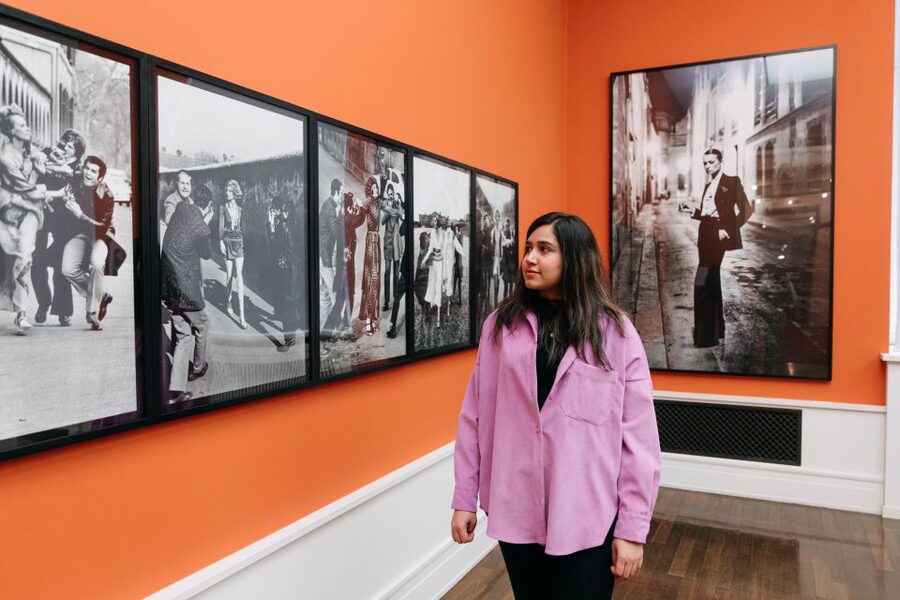
At $14 per person, the ticket is reasonably priced for a museum with several permanent collection areas, a dedicated Helmut Newton exhibition, and temporary shows. The value is strongest if you have a genuine interest in photography and expect to spend time with more than one section.
You are not paying for a guided tour, a lecture, or transportation. You are paying for entry and the booking fee, then choosing your own route through the museum. That makes the ticket simple and flexible, but it also means the experience depends on how much attention you bring to the displays.
For a visitor who wants only a quick look at Newton’s most famous fashion images, the price may feel less attractive if the wider collections do not hold your interest. For anyone curious about photography across time, the five collection areas add substance.
The 4.5 rating from 88 reviews suggests that the experience works well for most people, while the single one-star comment is a useful warning not to build the entire visit around an imagined version of the museum. Go expecting a broad photography museum with a strong Newton section, not a Newton-only gallery.
Practical Rules Before You Enter
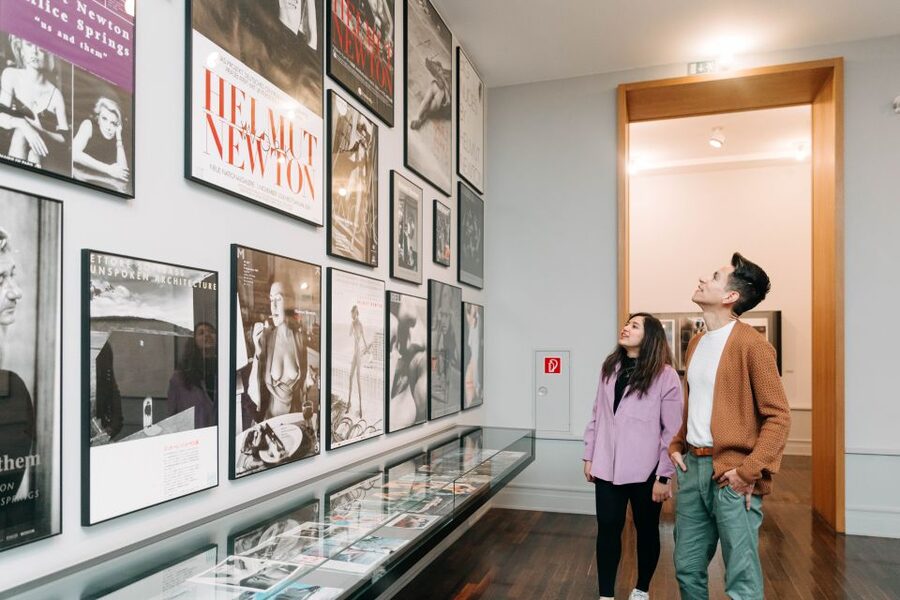
Go directly to the museum entrance. There is no separate meeting point or outdoor tour route, and the activity ends back at the same location.
Pack lightly. Backpacks and oversize luggage are not allowed, so avoid arriving with a large day bag or suitcase. Food and drinks are also not permitted in the exhibition areas.
Heavy jackets and coats, along with wet clothing, may not be taken into the exhibitions because of conservation concerns. This matters on a cold or rainy Berlin day. You may need to plan what to do with bulky outerwear before you begin looking at the displays.
A medical or FFP2 mask is recommended but not mandatory. Follow the museum staff’s instructions, particularly when moving between galleries or handling personal belongings.
The museum is wheelchair accessible. The activity itself is non-refundable, so check your plans before purchasing, especially if you are booking around uncertain weather or a changing schedule.
Who Will Enjoy This Museum Most?
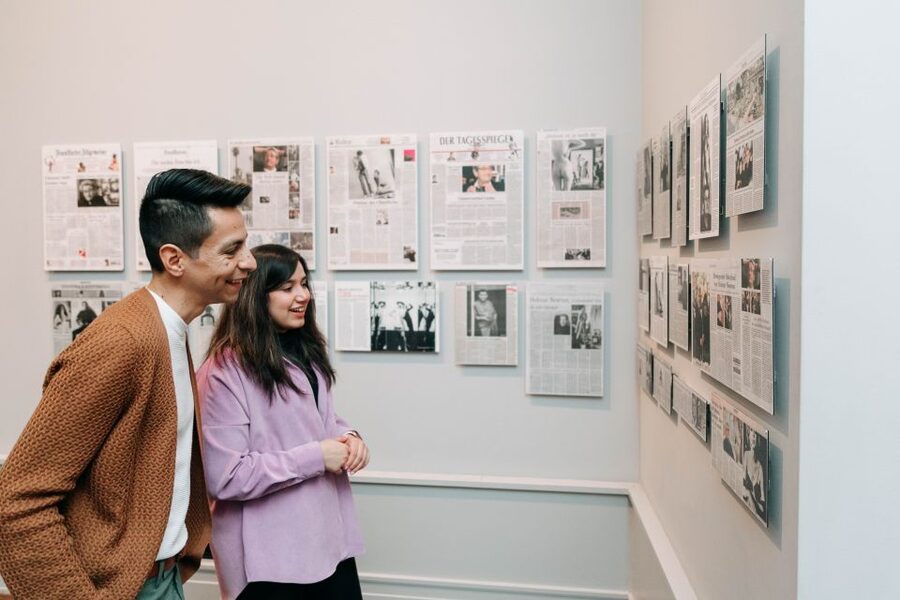
I would recommend this museum to you if you enjoy photography as an art form, a historical record, or a technical medium. It suits people who like comparing periods and styles instead of seeing only one famous collection.
The Helmut Newton exhibition makes it a strong choice for anyone interested in fashion photography. His cameras, art collection, and Newton-mobile add enough personal material to make the display more than a standard sequence of framed photographs.
It can also work well for first-time museum visitors who want a self-guided experience. You can choose your own pace, skip sections that do not interest you, and spend more time with images that catch your attention.
Families and mixed-interest groups may find the museum less predictable. Some people will be drawn to fashion and personal artifacts, while others may prefer the historical archive or postcards. Because the museum covers so many areas, it does not offer one single style from beginning to end.
If you want a highly social or guided activity, this may not be the right pick. The ticket does not include a guide, and the visit is built around your own reading and observation.
Should You Book the Museum of Photography?
Book it if you want a substantial photography museum with a clear Helmut Newton focus and enough variety to fill part or all of a day. The $14 price is fair for the range of permanent holdings and temporary exhibitions, especially if you plan to look beyond the most famous photographs.
Do not book it expecting only glamorous fashion images. The broader collections are central to the visit, and the museum may feel more historical and technical than you imagined. My practical advice is simple: go for Newton, stay for the five collection areas, and check the temporary program before you commit.
FAQ
Where is the experience located?
The experience takes place at the Museum of Photography in Berlin, Germany.
How long is the ticket valid?
The ticket is valid for one day.
Do I need to meet a guide?
No. Go directly to the museum entrance and explore the museum independently.
What is included in the ticket?
The ticket includes the entrance fee and booking fee.
Is the museum wheelchair accessible?
Yes, the activity is wheelchair accessible.
Can I bring a backpack or oversize luggage?
No. Backpacks and oversize luggage are not allowed.
Can I bring food and drinks into the exhibitions?
No. Food and drinks are not allowed in the exhibitions.
Is the ticket refundable if I change my plans?
No. This activity is non-refundable.
Fresh shoots around Germany
- Instagram Tour in Berlin★ 5.0 · 2 reviews
- Instagram tour of Cologne with a private photographer★ 5.0 · 2 reviews
- Heidelberg: Sunset Photo Walk★ 5.0 · 2 reviews
- Heidelberg at Night – Photo Walk★ 5.0 · 3 reviews
- Discover Berlin Underground through Mobile Photography★ 5.0 · 5 reviews
- Bonn: Private Drone Photoshoot Experience★ 5.0 · 3 reviews
- Berlin: Premium 60-Minute Photoshoot at Iconic Landmarks★ 5.0 · 2 reviews
- Berlin: Ticket for Photography Exhibitions at C/O Berlin★ 4.5 · 39 reviews
Germany Photo Tours & Photoshoots, frame by frame.
Berlin Essentials: Private Photoshoot at Berlin’s top sites
Read our review →
5hours: Guide, Chauffeur & Photographer in Berlin private Tour
Read our review →
Berlin: Private Photo Session with Professional Photographer
Read our review →
Berlin: Ticket for Photography Exhibitions at C/O Berlin
Read our review →
Berlin: Early Morning Private Photoshoot to avoid the Crowd
Read our review →
This shoot also appears in