
Review · JAPAN
From Miyakojima: 1Irabu and Kurima Islands Guided Photo Tour
Irabu and Kurima islands pack a lot into one day, and this tour gives you the best reason to leave Miyakojima’s main island: spectacular crossings over clear blue water. You move from long white beaches to a National Natural Monument, then finish with broad sea views and a scenic drive back across Kurima Bridge.
I like the tour for two practical reasons. First, your guide handles the driving, so you can watch the turquoise water instead of watching the road. Second, the included photo service means you can enjoy the stops without turning every moment into a camera job. The guide also shares local food tips, which helps at lunchtime.
The main consideration is pace. Six hours sounds generous, but Irabu, Shimoji, and Kurima islands offer several stops, and much of the day is spent getting between them. Bring water, sunscreen, and a towel, and remember that lunch is not included.
Key points to know before you book
- Japan’s longest free bridge: Cross Irabu Ohashi with open views of the sea between Miyakojima and Irabu Island.
- An easy beach walk: Toguchi-no-Hama stretches for about 800 meters and is known for gentle waves and clear water.
- Two saltwater ponds: Toriike Pond is a National Natural Monument surrounded by greenery and local legends.
- A striking final viewpoint: 17END on Shimoji Island offers wide ocean views and bright blue bands of water.
- A local-food advantage: Your guide can recommend a restaurant for lunch and suggest places that match your preferences.
- Photos are part of the service: You receive photo data after the tour, adding value for anyone who wants a record of the day without handling a camera constantly.
Why this six-hour island loop works
Miyakojima is easy to admire from a beach, but its character becomes clearer once you cross the bridges and see how the islands connect. This outing links several different settings in one half-day: a major bridge, a quiet beach, unusual ponds, an airfield-side sea viewpoint, and Kurima’s cafes and shops.
That variety is the strongest part of the plan. You are not spending six hours at one beach or riding around without getting out. You have short walks, photo stops, open views, and free time for food and browsing.
The experience costs $87 per person. That is more than a simple sightseeing bus ride, but the price includes hotel pickup and return in the Miyakojima and Kurima areas, an English-speaking guide, photo data, local dining suggestions, special coupons, information on lesser-known stops, insurance, and carbon offsetting for transport emissions.
The value depends on how you normally explore. If you already have a rental car and enjoy planning every stop yourself, you may prefer independence. If you want someone else to drive, frame photos, explain where to stop, and help with lunch, the price is easier to justify.
More Photography Tours in Japan
- Tokyo Cyberpunk Street Photo Tour
★ 5.0 · 165 reviews - Tokyo by Night Photography Tour (Private Option Available)
★ 5.0 · 151 reviews - Tokyo Shinjuku Night Photo Tour with Pro Gota
★ 5.0 · 142 reviews
Crossing Irabu Ohashi from Miyakojima
The tour begins with pickup at your accommodation in Miyakojima or Kurima. The exact time arrives by message the day before, and you should contact the operator by that evening if no message has come through.
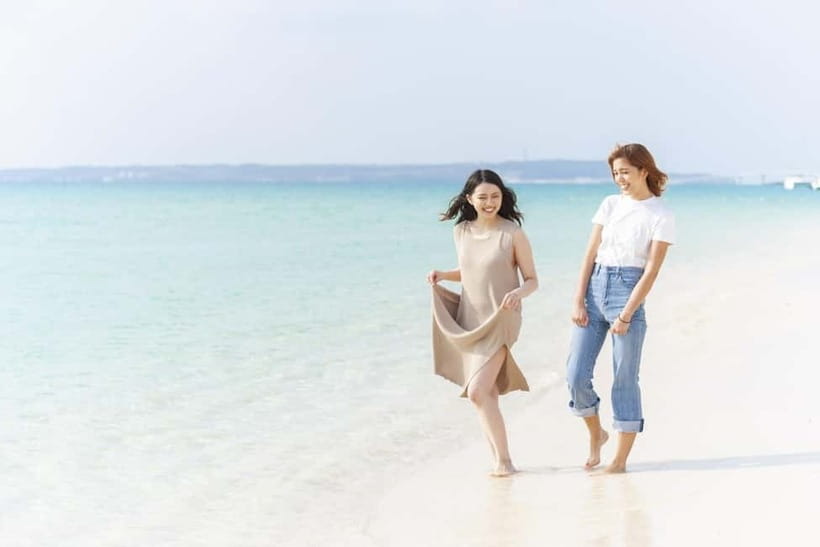
The first major sight is Irabu Ohashi, the bridge linking Miyakojima with Irabu Island. It is Japan’s longest free bridge, and the crossing itself is part of the attraction. From the road, you get wide views of turquoise water and the low island edges stretching away on both sides.
This is not a bridge you simply cross and forget. The open water gives you an immediate sense of the area’s geography. Miyakojima is not one compact island with a few side trips. It is a chain of close neighbors, joined by long roads over the sea.
Your guide handles the driving, which matters here. You can look out the windows, take photos, and listen for suggestions about the stops ahead. I would keep your camera ready, but do not expect a long dedicated walking break on the bridge itself. The memorable part is the crossing and the changing view.
Walking the 800-meter shore at Toguchi-no-Hama
Toguchi-no-Hama Beach gives you time to stretch your legs after the bridge crossing. The beach runs for about 800 meters, with white sand, clear water, and gentle waves.
The gentle water makes this a calmer stop than a surf beach. You can walk along the shore, look through the clear shallows, and take photos without needing a demanding hike. The long curve of sand also gives your guide room to find a pleasing angle for pictures.
Bring the towel listed among the recommended items. The tour does not include one, and you may want it after contact with the sand or water. Sunscreen is also your responsibility, as are drinks. The sun can feel strong even when a sea breeze makes the air comfortable.
This is a scenic stop, not a promised swimming session. The supplied details do not state how long you can swim or use the water, so treat it primarily as a beach walk and photo stop. If you are hoping to spend hours on the sand, this itinerary may feel too active. If you want a beautiful shoreline without giving up the rest of the islands, the timing should suit you.
Toriike Pond and the island’s stranger side
Toriike Pond changes the mood. Instead of an open beach, you reach two connected saltwater ponds surrounded by greenery. The site is designated a National Natural Monument, and local legends add a sense of mystery without requiring you to know the stories in advance.
The twin ponds are the main reason to visit. Their unusual form and connection to the sea make them more than ordinary inland pools. You can expect a quieter, more enclosed setting than at Toguchi-no-Hama, with natural textures and water views that photograph very differently from the beach.
This stop is a good example of why a guide helps. A quick online list of Miyakojima beaches may leave Toriike off your day, while a local guide can explain how it fits into the island’s natural character. The tour also includes information about special spots, so you can ask questions as you go.
Do not expect a major cultural complex or a long formal presentation. The attraction is the ponds, the setting, and the local stories. Wear shoes that feel secure for walking, and keep your pace comfortable. People with back problems should note that this experience is not considered suitable for them.
Same backdrop, another way to frame it:
- Tokyo: Kimono Dressing, Walking, and Photography Session
★ 4.9 · 427 reviews - Osaka: Sumo Stage Show with Bento or Snack + Fight & Photo
★ 4.3 · 364 reviews - Best Go Kart Experience in Shibuya Crossing with Iconic Photos
★ 5.0 · 348 reviews - Tokyo Ryogoku Sumo Morning Practice + Photo Shoot with Wrestlers
★ 4.5 · 277 reviews
17END, where the sea takes over the view
At the northern end of Shimoji Island, 17END offers one of the tour’s broadest views. The name is tied to the runway area, while the appeal for you is the ocean: wide sightlines and clear bands of blue that change across the shallows.
This is a stop for looking outward. You get a strong sense of space, with the sea taking up most of the view and the island feeling pleasantly small beneath it. It is also one of the better places to let the guide take photos while you simply look around.
Weather and field conditions can affect the timing of this stop. The operator notes that meeting and return times may change for those reasons, so keep your schedule flexible after the tour. That is sensible on islands, where wind, rain, and sea conditions can alter the best way to use a viewpoint.
The tour gives you time to enjoy 17END, but the exact length is not stated. I would not plan a separate appointment immediately afterward. Let this be a proper pause rather than a rushed photograph from the roadside.
Lunch with help from a local guide
Lunch is not included, but the guide recommends a local restaurant and can take your preferences into account. This is a small feature with real value. Food stops can be awkward on a busy island day, especially when you do not know which places fit your budget, appetite, or schedule.
Tell the guide what you want early in the day. The supplied information does not promise a particular restaurant or cuisine, so you should think of this as practical local help rather than a fixed food experience.
You should also carry water and bring money for lunch. The tour includes no drink, and there is no promise that food will be available at every viewpoint. A simple bottle of water will make the beach and outdoor stops more comfortable.
The two French guests who provided feedback gave special attention to the guide’s friendliness, scenic discoveries, and food recommendations. That matches the tour’s strongest personal touch: you are not only being taken to marked viewpoints. You can ask for suggestions that make the day easier.
Kurima Bridge and views toward Yonaha Maehama
Later, the route crosses Kurima Bridge. From the bridge, you can look toward Yonaha Maehama Beach, often described as one of Asia’s most beautiful beaches. The view helps connect the final section of the tour with Miyakojima’s best-known shore.
Kurima Island then offers a change of pace. You have time to explore cafes, local shops, and scenic viewpoints at your own speed. This is less structured than the earlier stops, which is useful if you want a break from taking photos on command.
The phrase at your own pace should be read sensibly. You are still working within the tour’s six-hour schedule, so you will not have unlimited browsing time. Ask your guide how much time remains before wandering too far from the pickup point.
Kurima is a good finish because it gives you choices. You can browse, stop for a drink if timing allows, or focus on one more view. The tour then returns you to your hotel in Miyakojima or Kurima.
Photos, coupons, and the human side of the tour
The included photo data is one of the clearest reasons to choose this outing over a basic island transfer. Your guide can take photos throughout the day, allowing you to put the phone down for parts of the experience. The supplied information does not specify how many images you receive or when they arrive, so ask if that detail matters to you.
The photo service also makes the tour useful for solo visitors, couples, and families who find it hard to get everyone into the frame. You still should bring your own camera for scenery and personal snapshots, but you will not have to depend entirely on selfies.
Special coupons and local dining tips are included as well. The exact coupons are not specified, so consider them a bonus rather than a reason to book by themselves. The more useful benefit is the guide’s knowledge of where to eat and what to see during limited free time.
The English-language guiding is another practical advantage. Two verified bookings from France gave the experience five-star ratings, with particular praise for the friendly guide, beautiful scenery, and good food suggestions. One note names Lyre as a pleasant guide. Since guide assignment can vary, treat that name as useful context, not a guarantee that Lyre will lead your date.
Who will get the most from this island tour
I would choose this tour if you want to see several connected islands but do not want to rent a car. It suits people who value scenery, easy walks, photo help, and local advice more than a long swim or a highly detailed historical lecture.
It is also a good match for couples and small groups who want photos of themselves in attractive settings. The combination of included transport and photo data removes two common problems: deciding who drives and finding someone to take the picture.
The tour may be less suitable if you have back problems, dislike changing locations, or want a slow beach day. It also may not fit smokers, since smoking is not allowed during the activity.
Pickup is available only for accommodations in the Miyakojima and Kurima areas. If you stay on Irabu, Shimoji, or Ikema, contact the operator ahead of time about a meeting location. Do not assume a pickup will be arranged automatically.
What to bring for a comfortable six hours
Pack a towel, camera, sunscreen, and water. Lunch is extra, and sunscreen and drinks are not supplied.
Wear clothing and shoes suited to outdoor stops and beach walking. The information provided does not specify a dress code or footwear requirement, so comfort matters more than formality.
Keep the day open around the stated six-hour duration. Weather and field conditions may change meeting and return times. You will receive the final details the day before, including the pickup time and location.
Free cancellation is available up to 24 hours before the activity, and you can reserve now and pay later. Those policies help if your island schedule is still shifting, but they do not remove the need to check the final weather and meeting message.
Should you book the Irabu and Kurima photo tour?
Book it if you want a polished introduction to the islands beyond Miyakojima’s main beaches. The bridge crossings, Toguchi-no-Hama, Toriike Pond, 17END, and Kurima viewpoints give you a strong mix of scenery in six hours, while the guide takes care of driving and photos.
Skip it if you want several uninterrupted hours at the beach, prefer total control over your route, or cannot manage a day with multiple stops. At $87, the value rests on the included transport, English guidance, photo data, and local food help.
For most visitors staying in Miyakojima or Kurima, I would consider it a practical way to see more of the island chain without renting a car. Bring water, protect yourself from the sun, tell the guide your lunch preferences, and leave room in your schedule for island weather to have the final word.
FAQ
How long does the tour last?
The tour lasts six hours. Meeting and return times can vary because of weather and field conditions.
Where does hotel pickup take place?
Pickup and return are available for accommodations in the Miyakojima and Kurima areas.
Can I be picked up on Irabu, Shimoji, or Ikema Island?
Pickup is not available in those areas. Contact the operator in advance to discuss a meeting location.
Is the tour offered in English?
Yes. The activity includes a live English-speaking guide.
Is lunch included?
No. Lunch is not included, but the guide can recommend a local restaurant and consider your food preferences.
What should I bring?
Bring a towel, camera, sunscreen, and water. You should also plan to pay for your own lunch.
Are photos included?
Yes. Photo data is included in the tour.
Is the tour suitable for someone with back problems?
No. The activity is listed as unsuitable for people with back problems.
Can I cancel for a full refund?
Yes. You can cancel up to 24 hours in advance for a full refund. You can also reserve now and pay later.
Fresh shoots around Japan
- Kamakura Tour with Pro Photographer: Anime Train & Fuji view★ 5.0 · 2 reviews
- Asakusa Kimono/Yukata Rental & Photography_Tsutsuji★ 5.0 · 12 reviews
- Kanazawa: Private Photoshoot with Professional Photographer★ 5.0 · 2 reviews
- Fukuoka: Private Photo Session with a Local Photographer★ 5.0 · 3 reviews
- Osaka Dotonbori Night Photoshoot Private | Pro Photographer★ 4.5 · 6 reviews
- ASAKUSA: Kimono Portrait tour by pro photographer★ 5.0 · 2 reviews
- Asakusa Kimono Photography Tour★ 5.0 · 8 reviews
- Kyoto: Private Gion District Photoshoot Experience★ 5.0 · 79 reviews
Japan Photo Tours & Photoshoots, frame by frame.
Kimono Dressing, Walking, and Photography Session
Read our review →
Sumo Stage Show with Bento or Snack + Fight & Photo
Read our review →
Best Go Kart Experience in Shibuya Crossing with Iconic Photos
Read our review →
Tokyo by Night Photography Tour (Private Option Available)
Read our review →This shoot also appears in