Review · KYOTO
Kyoto: Private Photoshoot Service
Kyoto’s famous streets look lovely in a snapshot, but getting a good portrait there is another matter. This private session puts local photographer Micky behind the camera, helping you relax, pose naturally, and find quieter angles around old lanes, temples, bridges, and gardens.
I like two things right away: you receive every photo from the session, not just a small handpicked set, and you can choose which images receive professional editing. The fast delivery, often within a few days, is another useful touch. The main consideration is that this is a photoshoot, not a full cultural tour, and the one-hour format limits how many parts of Kyoto you can cover.
Key points at a glance
- Micky’s local eye: He knows how to work around crowds and find Kyoto backdrops that feel more personal.
- 200 or more images: You receive the original high-resolution JPEG files from the session.
- Your choice of edits: Select the photos you want retouched, including natural skin adjustments and lighting corrections.
- Private and flexible: Solo visitors, couples, families, and proposal shoots are welcome.
- Several Kyoto settings: Choose among Gion, Pontocho, Nanzenji, Arashiyama, and Fushimi Inari areas.
- Best timing: An early session, roughly 8:00 to 11:00 AM, helps in spring and autumn when popular streets fill quickly.
What this Kyoto photoshoot really offers
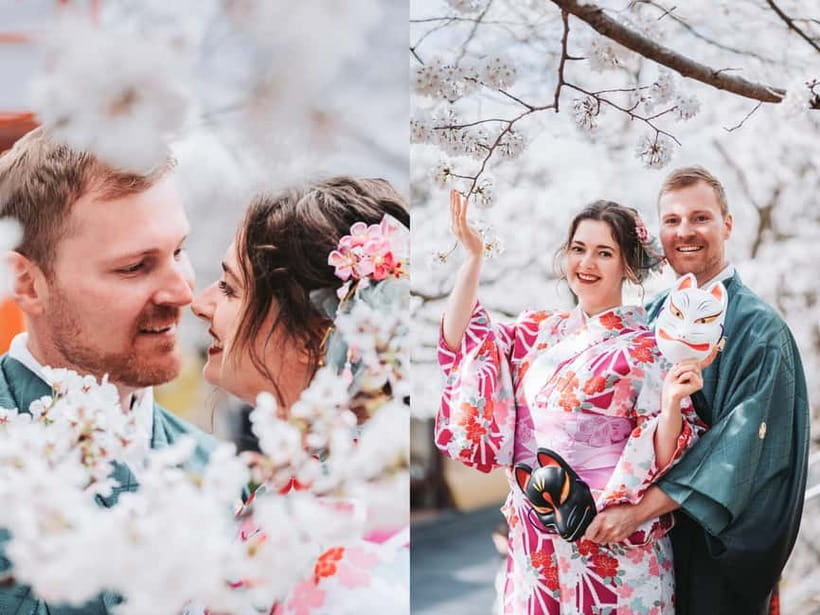
I see this experience as a practical way to come home with the Kyoto pictures you hoped to take but could not quite manage yourself. A friend can take a quick photo, but a professional can watch the light, adjust your position, remove distracting people from the frame, and keep the session moving.
The tone is relaxed rather than stiff. Micky gives clear posing instructions, then looks for candid moments between the formal portraits. That matters if you feel awkward in front of a camera. You do not need a collection of clever poses before you arrive.
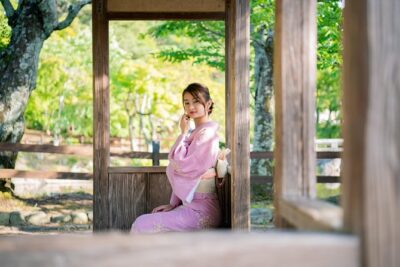
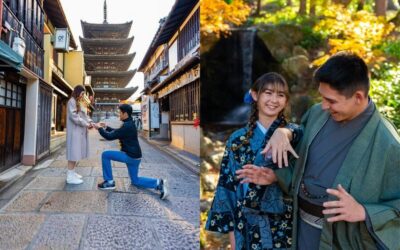
The session is private, so the attention stays on you and your group. Couples can ask for romantic portraits, families can mix group photos with individual shots, and solo visitors can get a proper portrait collection instead of relying on phone selfies. Past sessions have also included surprise proposals, with Micky helping choose a suitable location and timing.
The listed price is $78 per person. That is not a group price, so enter the correct number of participants when booking. For the cost, you receive the photographer’s time, a large set of original images, selected edited photos, and a private session lasting about one hour to 90 minutes. The value is strongest if you care about the finished photographs and want more than a few casual vacation snaps.
More Private Photoshoots in Japan
- Tokyo by Night Photography Tour (Private Option Available)
★ 5.0 · 151 reviews - Your Private Vacation Photography Session In Kyoto
★ 5.0 · 110 reviews - Osaka: Private Vibrant Nighttime Photoshoot (Dotonbori)
★ 4.9 · 80 reviews
The shooting style: natural light and gentle direction
This is an outdoor photoshoot using natural light. There is no studio, makeup room, or indoor backup included. Your final results will depend partly on weather, season, time of day, and the crowds at your chosen area.
Micky’s approach combines posed portraits with candid frames. He may ask you to walk, turn, look toward a doorway, or pause beside a bridge. These small prompts create pictures that feel less forced than simply standing and smiling at the lens.
You can expect direction throughout the session. That is especially useful for first-time photo subjects, couples who are unsure how to stand together, or families trying to keep children engaged. The photographer has also accommodated specific requests, solo portraits, couple shots, family images, and videos when possible.
The experience is not a formal guided walk through Kyoto’s temples and traditions. If you want detailed explanations of architecture or religious customs, you will need a separate guide. You will still move through attractive parts of the city, but the main purpose is finding good compositions and making photographs.
Choosing the right Kyoto setting
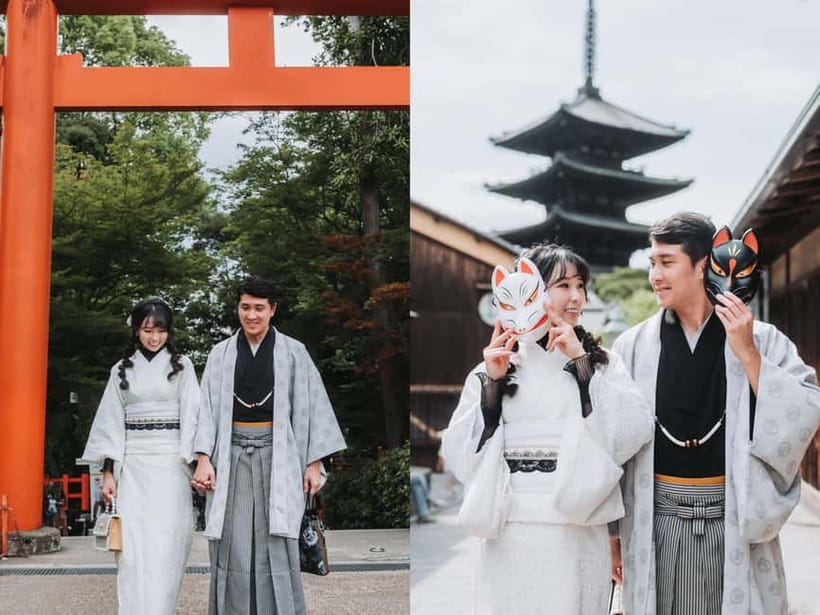
The locations are not all visited in one session. You choose a starting point or area, then work through nearby backdrops within the available time. Ask about the exact route when you book, especially if you have your heart set on one landmark.
Gion, Shirakawa Canal, and Pontocho
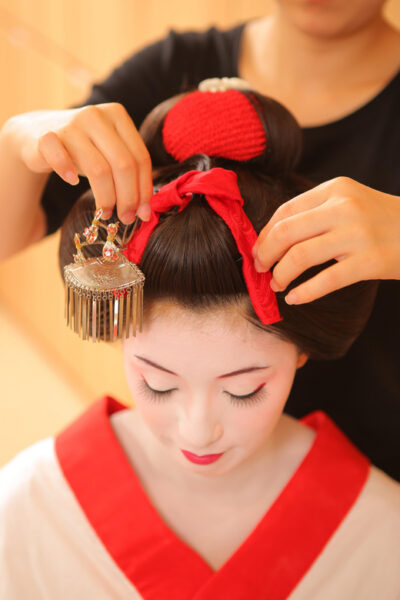
The old lanes around Gion offer the classic Kyoto look: wooden façades, narrow streets, traditional details, and the Shirakawa Canal. The Shirakawa area is linked with Kyoto’s historic hanamachi districts, where tea houses and geisha and maiko traditions remain part of the local setting.
Pontocho and Pontocho Alley add another strong option. The lane is narrow and atmospheric, making it useful for close portraits and walking shots. The drawback is space. You may need to pause and wait for people to pass, and you should expect the photographer to follow local rules about where and how photos are taken.
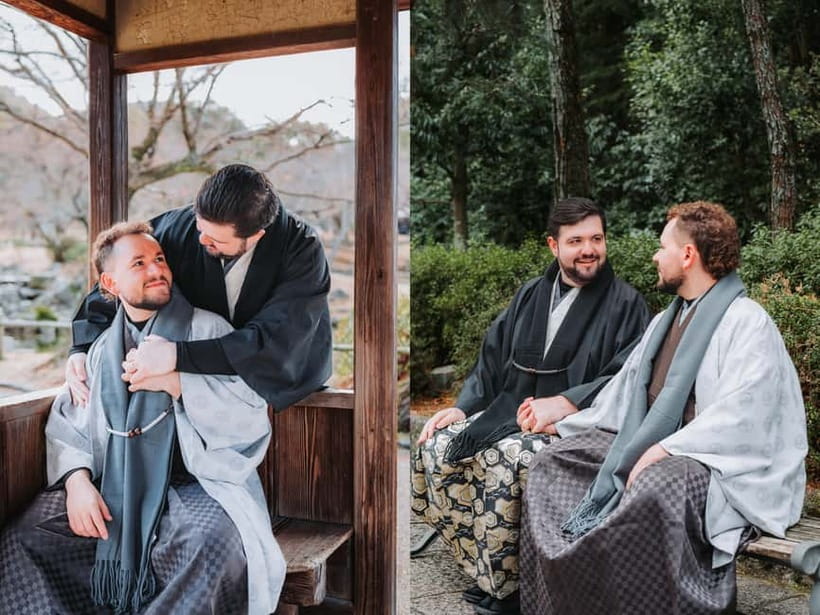
Gion works especially well for kimono portraits, though kimono rental is not part of the package. The provider can recommend a nearby rental shop, but you arrange and pay for that separately. Allow enough time before the shoot if you plan to dress traditionally.
More Private Photoshoots in Kyoto
- Kyoto: Private Gion District Photoshoot Experience
★ 5.0 · 79 reviews - Private Photoshoot Experience in Kyoto ( Gion )
★ 5.0 · 61 reviews
Higashiyama, Maruyama Park, and Nene no Michi
Higashiyama gives you a broad mix of old Kyoto streets, temple views, small lanes, and open park space. Maruyama Park is useful when you want a little breathing room around the portraits, while Nene no Michi offers a more traditional street setting.
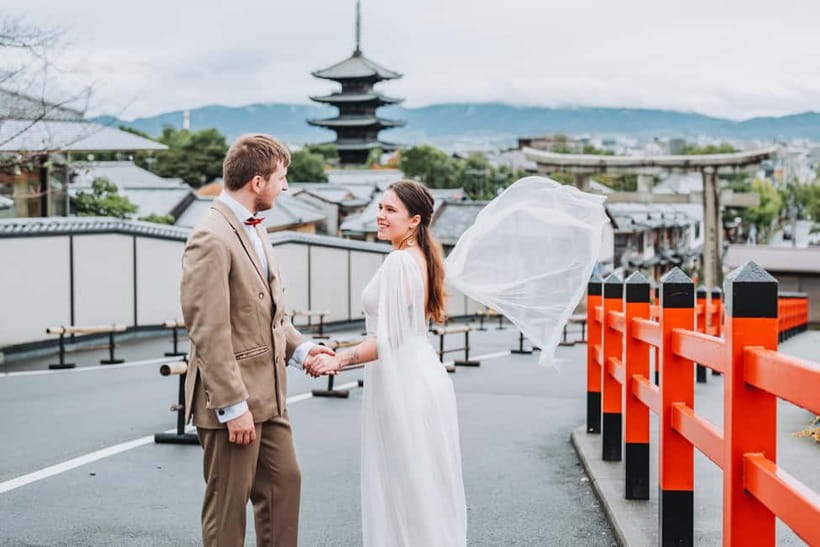
Hōkan-ji Temple, often recognized by its Yasaka Pagoda, is one of the area’s most recognizable backdrops. The pagoda can make a portrait immediately readable as Kyoto, but the surrounding streets can be busy. Micky’s skill in choosing the angle matters here. Several sessions have produced clean-looking pictures even when the area was crowded.
Yasaka Shrine appears among the possible sightseeing points, but the instructions specifically say photography there is not permitted. Treat it as a nearby reference point or meeting-area landmark, not a guaranteed photo location. The actual shooting plan must follow current site rules.
Nanzenji and the Keage Incline
The Nanzenji area sits in northern Higashiyama and offers a different mood from Gion. The temple grounds and nearby Keage Incline provide strong architectural lines, stone textures, and seasonal scenery.
This area may suit you if you want photographs with more space and a calmer temple setting. It is also a sensible choice for visitors who have already seen the busiest Gion lanes. As always, the session is outdoors, and temple access or photography rules can affect exactly where the camera is used.
Arashiyama Bamboo Forest and Togetsukyo Bridge
Arashiyama gives you two very different settings. The bamboo forest creates tall, repeating lines around the portraits, while Togetsukyo Bridge offers a wider backdrop and a sense of open space beside the river.
The bamboo forest is one of Kyoto’s most popular photo spots, so crowds are a real issue. An early appointment is especially valuable here. Micky has been able to frame photographs with few or no people close behind the subject, but no photographer can guarantee an empty path.
The Kimono Forest, near the Arashiyama transport area, adds colorful patterned columns and works well for playful portraits. It is convenient to pair with nearby sights, though the full area cannot be covered in detail during a short session. Choose your priority before arriving.
Fushimi Inari Taisha
Fushimi Inari is known for its long runs of vermilion torii gates. It can create a strong visual background for both solo and couple portraits, but the site is popular and includes uphill walking.
Wear comfortable shoes and carry water. The activity is not designed for climbing or strenuous hiking, and the photography time is limited. If Fushimi Inari is your main goal, confirm the meeting point and route so you do not lose part of the session finding the right section of the shrine grounds.
How the 60 to 90 minutes usually works
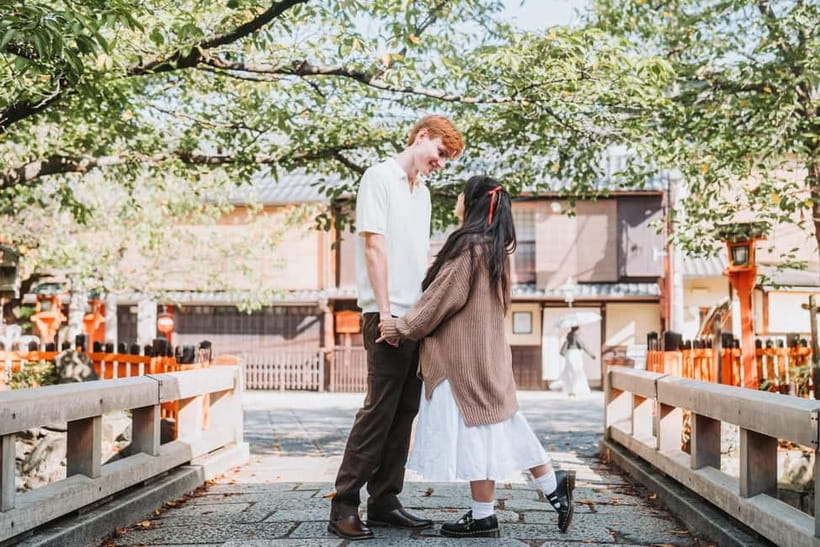
You begin at one of several possible meeting points, depending on the option you book. Listed starting choices include Inari Station, the Gion Weeping Cherry Tree, a Higashiyama roadside Buddha landmark, and an address near Shinchō. The repeated location wording makes it worth checking your confirmation carefully.
The itinerary lists several possible stops, including Maruyama Park, Pontocho, Arashiyama, Hōkan-ji, Nanzenji, Fushimi Inari, and the Togetsukyo Bridge. These should be understood as location choices, not a promise that you will visit every one. A one-hour session cannot realistically include all of them.
Within the chosen area, the photographer moves you between several nearby backgrounds. You may get a formal portrait, a walking image, a close-up, and a few candid frames. Micky may show you previews during the shoot, which helps you adjust a pose or request a different style while there is still time.
A 90-minute booking gives you more breathing room. It may allow extra locations, more individual portraits, or a larger family combination. The exact number of photos varies, but the stated expectation is around 200 or more, and one couple received 456 images during a one-hour session.
The photos, edits, and delivery
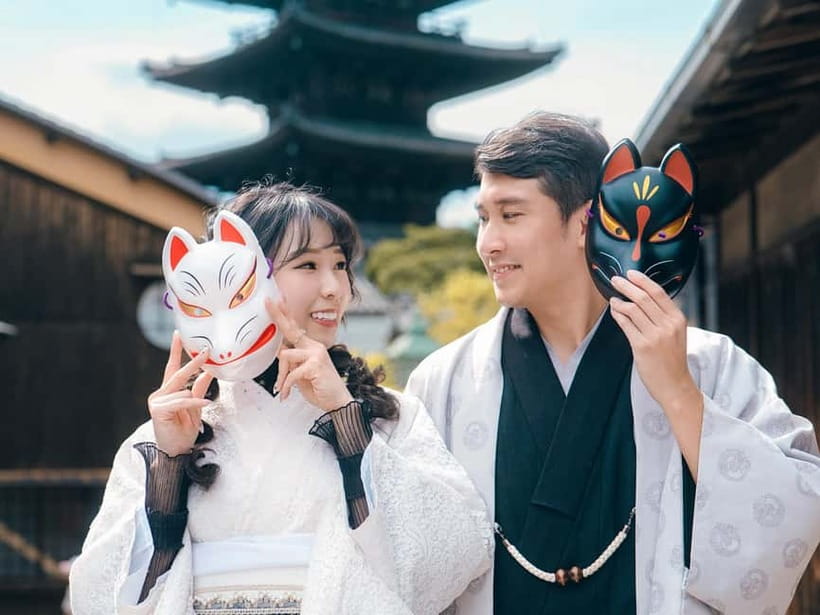
You receive all original pictures as downloadable JPEG files through an online album. This is a major advantage if you dislike having someone else decide which five or ten photographs deserve to survive.
The package also includes selected edited photos. The number can depend on the package, so check the current booking details. One described arrangement allowed a couple to choose 35 favorites for professional retouching. Extra edited images are available as an add-on.
Editing includes natural skin retouching and adjustments to lighting, angles, and small distractions. The stated style is natural rather than heavily altered. You can select the images you truly like after seeing the full set, which is much better than trying to choose favorites from the back of the camera during the session.
Raw files for further editing are available as an add-on. Printed photographs are not included, and permanent data storage is not included either. Download and back up the album promptly. The delivery promise is within two to three days, though some files have arrived sooner.
When to book and what to wear
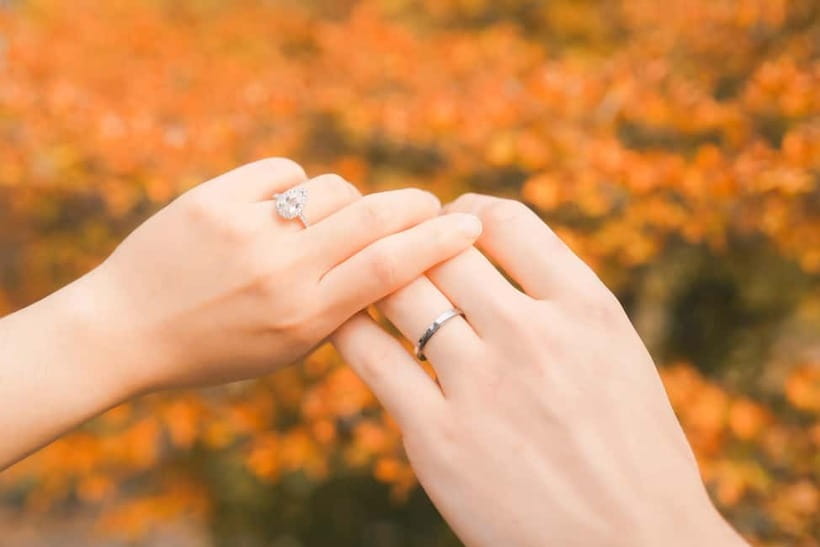
For spring and autumn, I would choose an early time, ideally between 8:00 and 11:00 AM. Kyoto’s best-known streets and bamboo paths become harder to photograph as the day goes on. Early light also gives you a more relaxed pace.
Wear comfortable shoes, even if your main goal is elegant portraits. You may walk between lanes, parks, bridges, and temple approaches. Bring water and sunscreen, particularly in warmer months.
If you plan to wear a kimono, remember that rental is separate. Give yourself enough time to collect and return it, and tell the photographer in advance so the route and timing make sense. A kimono can look wonderful in Gion or Higashiyama, but it can become tiring in heat, cold, or on uneven streets.
Weather matters because this is an outdoor service. One session was adjusted because conditions were poor, and another took place in snow and cold. Flexibility helps. You should also be comfortable with ordinary public-place rules: no climbing, touching plants or exhibits, making excessive noise, or carrying oversized luggage.
Who will get the most from it
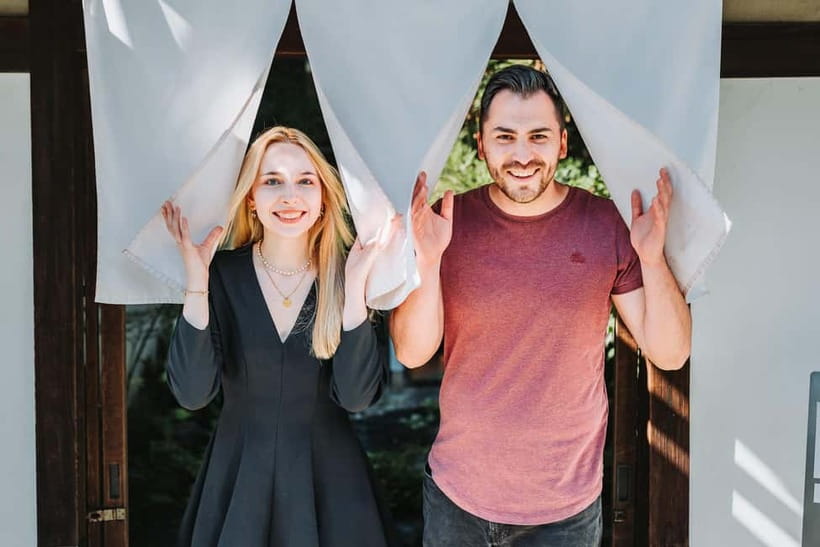
I would recommend this to couples, solo visitors, families, and anyone marking a special moment in Kyoto. It is particularly useful for proposals, anniversaries, honeymoons, birthdays, and first trips when you want a permanent record of the people as well as the places.
Families should note that babies under one year are not considered suitable for this activity. Older children can be included, but tell the photographer your group size and needs ahead of time.
This service also suits people who dislike posing. Micky’s role is not just to press the shutter. He gives instructions, watches the background, and helps you look natural. If you already have a precise editorial style in mind, check the photographer’s website or Instagram first to make sure his visual approach fits you.
You may want something else if your main goal is a long temple tour, detailed cultural commentary, indoor portraits, or a full-day itinerary. This is a focused photography appointment, not an all-purpose Kyoto excursion.
Booking details worth checking
The activity is offered as a private group experience, with English, Thai, and Japanese available. Free cancellation is allowed up to 24 hours before the session, and you can reserve now and pay later, which helps when your Kyoto schedule is still changing.
The meeting point varies by the option selected. Confirm the exact starting location, the chosen neighborhood, the number of edited photos, and whether you are booking 60 or 90 minutes.
At $78 per person, the service offers good value for anyone who will actually use the files. You get a large collection, selected retouching, and a private photographer rather than a shared group setup. The value is weaker if you only want one quick landmark photo or if you do not plan to download and preserve the images.
Should you book Micky’s Kyoto photoshoot?
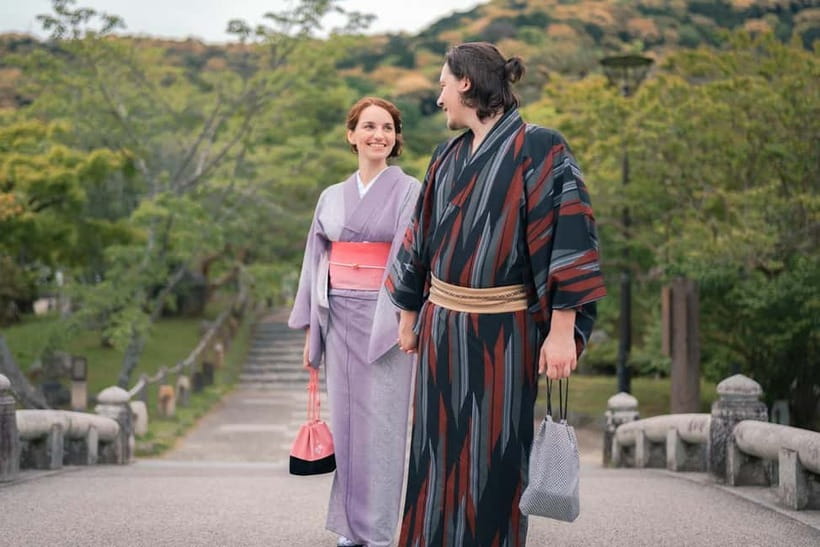
I would book it if you want polished Kyoto portraits without spending half your holiday figuring out angles, poses, and empty corners. The strongest reasons are Micky’s calm direction, his ability to work around crowds, the large number of included images, and the chance to choose your own edited favorites.
Pick your location with care. Choose Gion or Higashiyama for old streets and kimono portraits, Arashiyama for bamboo and bridge scenes, Nanzenji for temple architecture, or Fushimi Inari for torii gates. Book early in spring and autumn, wear shoes you can walk in, and remember that Yasaka Shrine photography is not permitted.
If those conditions suit your plans, this is a smart way to turn a short Kyoto walk into a useful collection of personal photographs.
FAQ
How long does the Kyoto private photoshoot last?
The session lasts from one hour to 90 minutes, depending on the option and availability.
How much does the photoshoot cost?
The listed price is $78 per person. It is not a price for the entire group, so enter the correct number of participants when booking.
How many photos will I receive?
You can expect around 200 photos or more from one session. One reported session produced 456 images in an hour, though the final number can vary.
Do I receive all the photos?
Yes. All pictures from the session are provided as downloadable, high-resolution JPEG files through an online album.
Can I choose which photos are edited?
Yes. The package includes selectable edited photos, and extra edited photos are available as an add-on. The exact number of included edits depends on the package you select.
Is kimono rental included?
No. Kimono rental is not included. A nearby rental shop can be recommended if you need one.
Is this a guided Kyoto tour?
No. It is a photography session rather than a full tour guide service. The photographer can help you move between photo spots, but detailed historical guiding is not included.
Can I cancel the booking?
You can cancel up to 24 hours in advance for a full refund. The activity also offers a reserve-now, pay-later option.
Fresh shoots around Japan
- Asakusa Kimono/Yukata Rental & Photography_Tsutsuji★ 5.0 · 12 reviews
- Kamakura Tour with Pro Photographer: Anime Train & Fuji view★ 5.0 · 2 reviews
- Kanazawa: Private Photoshoot with Professional Photographer★ 5.0 · 2 reviews
- Fukuoka: Private Photo Session with a Local Photographer★ 5.0 · 3 reviews
- From Miyakojima: 1Irabu and Kurima Islands Guided Photo Tour★ 5.0 · 2 reviews
- Osaka Dotonbori Night Photoshoot Private | Pro Photographer★ 4.5 · 6 reviews
- ASAKUSA: Kimono Portrait tour by pro photographer★ 5.0 · 2 reviews
- Asakusa Kimono Photography Tour★ 5.0 · 8 reviews
Kyoto Photo Tours & Photoshoots, frame by frame.